


A/C Repair
Air conditioning repair encompasses the diagnostic evaluation, component replacement, and mechanical servicing of central cooling units, heat pumps, or ductless mini-split systems intended to address operational interruptions and support cooling functionality.
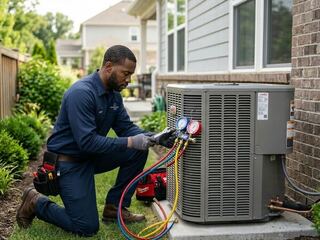
6 possible tasks · typical 4-step process
What it is
This service generally covers identifying and addressing electrical faults, mechanical wear, airflow variations, and closed-loop fluid issues across split systems, packaged units, and heat pumps. Service providers typically inspect, calibrate, or replace specific functional assemblies such as run capacitors, blower fan motors, contactor switches, circuit control boards, and condensate drain lines. The scope of repair work can vary based on system design, but it generally focuses on targeted component adjustments and localized replacements rather than complete system installations, extensive ductwork alterations, or routine seasonal maintenance inspections.
What A/C Repair can include
Electrical Component Replacement
Can involve evaluating and exchanging worn run capacitors, contactor relays, switches, circuit boards, or wiring assemblies that display evidence of thermal wear or degraded connectivity.
Refrigerant Leak Detection and Repair
May include testing pressurized closed-loop copper lines using electronic detection devices or pressure monitoring, sealing identified connection points, and introducing refrigerant according to manufacturer specifications.
Fan Motor and Blower Repair
Typically includes assessing outdoor condenser fan motors, indoor blower assemblies, fan wheels, and associated bearings, followed by mechanical alignment or part replacement as applicable.
Thermostat Troubleshooting and Rewiring
Can involve reviewing low-voltage communication wiring connecting the thermostat to indoor handling equipment, securing electrical terminals, recalibrating control sensors, or replacing the wall interface.
Condensate Drain Clearing and Pump Replacement
Often involves clearing particulate build-up from condensate lines using vacuum or pressure methods, rinsing drain collection pans, or servicing mechanical condensate removal pumps.
Compressor Diagnostics and Hard Start Installation
May involve testing compressor motor electrical resistance, reviewing electrical starting demand, or mounting start-assist capacitor modules to support compressor motor activation.
How the work is typically performed
- 1
Initial Diagnostic Assessment
Technicians typically inspect outdoor condensing units and indoor air handlers, verify electrical supply parameters, evaluate control communication, and review operating pressures to locate performance deviations.
- 2
Component Testing and Isolation
Individual electrical or mechanical parts can be isolated and evaluated using specialized instruments such as multimeters or manifold gauges to review operational integrity.
- 3
Part Repair or Replacement
Identified components may be adjusted or replaced with compatible parts, with technicians reconnecting associated wiring harnesses, drain piping, or tubing assemblies as required.
- 4
Post-Service Operational Check
The cooling system is typically activated to observe startup sequences, verify electrical consumption, assess airflow and temperature differentials, and review system response to thermostat inputs.
Common reasons customers look for this service
- Observations of warm or ambient air circulating through supply registers during active cooling cycles
- Audible clicking, humming, or buzzing sounds originating from indoor or outdoor equipment cabinets
- Moisture accumulation or pooling water near the base of the air handler or drainage areas
- Visible frost or ice accumulation on outdoor refrigerant tubing or indoor evaporator coil assemblies
- Frequent electrical breaker trips or irregular equipment cycling patterns during normal operation
- Unusual rattling, screeching, or vibrating sounds during fan or compressor operation
About A/C Repair
What factors are commonly considered when reviewing repair options in comparison to equipment replacement?
Technicians often review the age of the cooling unit, the availability of compatible replacement parts, the type of refrigerant the system utilizes, and the physical condition of major assemblies such as compressors and coils. Circumstances can vary, and determinations often depend on the cumulative state of the entire system.
What does refrigerant servicing typically involve during an air conditioning repair?
Because cooling circuits function as sealed loops, servicing often involves locating potential leak points along copper tubing or connection joints, sealing or repairing those areas, and replenishing refrigerant to designated factory specifications, with exact procedures varying depending on system architecture.
What factors can influence the overall scope of an air conditioning repair visit?
The scope of a repair visit can vary based on equipment accessibility, the specific components involved, and part availability. Straightforward electrical part replacements or condensate clearing tasks typically involve different steps than procedures requiring refrigerant leak testing, copper brazing, or compressor mechanical servicing.
This page provides general information about A/C Repair for reference only. It is not professional, safety, medical, legal or financial advice, and it does not describe the services of any particular provider. Scope, methods and timing vary by provider and situation. Kuldesac does not perform these services; contact a qualified provider directly to discuss your specific needs.