


Non-Emergency Medical Transport
Non-emergency medical transport encompasses pre-arranged vehicular travel and mobility assistance for passengers attending outpatient consultations, therapy appointments, or community facilities.
6 possible tasks · typical 5-step process
What it is
Non-emergency medical transport describes pre-scheduled vehicle services arranged for riders seeking transit accommodations beyond standard street-hail or private car options. Companies in this sector typically utilize retrofitted passenger vans, accessible minivans, or modified fleet vehicles configured with ramps, hydraulic platforms, or dedicated anchoring points for specialized equipment. Trips frequently involve travel between private residences, care communities, diagnostic clinics, or therapy locations. Depending on the service model, offerings can range from basic curb pickup to interior escort support where personnel accompany riders through doorways and lobbies. This category focuses on logistical travel arrangements rather than acute clinical transport, functioning as an accessible transit option for routine schedules.
What Non-Emergency Medical Transport can include
Wheelchair-Accessible Van Transport
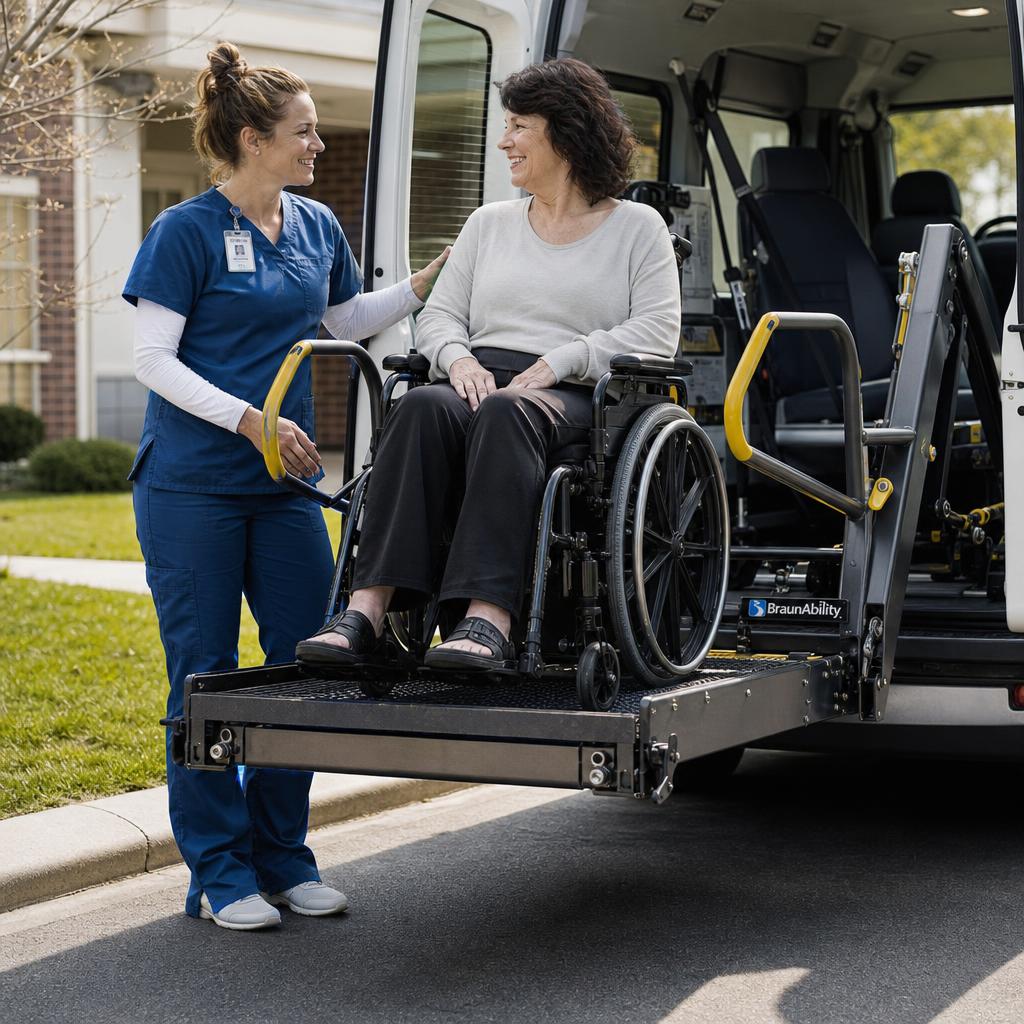
Boarding support, interior equipment fastening, and vehicle travel for passengers utilizing manual chairs or powered mobility devices, commonly featuring ramp access or mechanical lift platforms adapted for varied chair profiles.
Stretcher and Gurney Transit
Vehicle travel arranged for passengers remaining in horizontal or semi-reclined postures, utilizing specialized transport litters alongside compatible floor-anchoring track systems.
Door-Through-Door Assistance
Attendant escort extending past vehicle boundaries, where staff navigate interior building corridors, entry vestibules, stairways, or elevator banks to accompany individuals between interior points of origin and destination.
Ambulatory and Fall-Prevention Escort
Physical guidance, arm-assist navigation, and boarding coordination for walking passengers who utilize walking canes, walkers, or personal support while traversing entryways and vehicle steps.
Bariatric Patient Transport
Travel coordination utilizing reinforced loading ramps, wider mobility apparatus, and adapted vehicle capacities configured to accommodate larger equipment dimensions.
Recurring Treatment Shuttle Coordination
Regularly arranged travel plans aligned with repeated appointment intervals, such as recurring therapy sessions, ongoing clinical visits, or routine outpatient services.
How the work is typically performed
- 1
Intake and Equipment Verification
Dispatch coordinators gather trip logistics, noting pickup locations, destination details, structural access features like steps or ramps, specific mobility hardware utilized, and requests for accompanying travel companions.
- 2
Arrival and Initial Transfer
Transit staff arrive at the designated meeting point and assist the passenger from the interior room or entrance toward the vehicle, utilizing platform lifts, vehicle ramps, or steadying support as applicable.
- 3
Cabin Securement
Inside the passenger cabin, attendants secure wheelchairs, mobility carts, or stretchers using floor-mounted tracks, strapping assemblies, or docking clamps, alongside passenger seatbelt mechanisms.
- 4
Direct Transit and Monitoring
The driver navigates the planned transit itinerary while overseeing cabin conditions, including passenger seating positioning and interior climate settings during the drive.
- 5
Facility Check-In and Hand-Off
Upon arrival, staff release equipment restraints, guide the passenger off the vehicle, and accompany them into the building foyer, reception area, or appointment registration desk.
Common reasons customers look for this service
- Arranging transportation for planned clinic visits, dental appointments, or diagnostic laboratory testing
- Coordinating transit departures following planned discharges from short-term care or rehabilitation facilities
- Organizing rides when personal vehicles lack ramps, lifts, or interior room for specialized mobility devices
- Managing repetitive weekly travel schedules for outpatient therapies or ongoing treatment appointments
- Navigating access to sprawling medical complexes featuring extensive interior hallways or multi-tier parking structures
About Non-Emergency Medical Transport
What distinguishes non-emergency medical transport from standard vehicle ride services?
Non-emergency transport commonly uses modified vehicles equipped with mechanical lifts, wheelchair ramps, or gurney track fasteners, whereas regular passenger rides typically involve standard automobiles. Furthermore, providers in this field frequently provide hands-on escort services into buildings rather than remaining at the curb. Specific equipment configurations and service boundaries often vary among individual transit providers.
How are accompanying companions or support animals handled during transport?
Transport providers often allow an attendant, family member, or service animal to accompany the passenger during transit. Available space depends on vehicle seating arrangements, equipment footprint requirements, and company guidelines, which can be reviewed during the initial booking conversation.
What type of care is provided during non-emergency transport services?
Non-emergency transportation operates primarily as a logistical travel service rather than a clinical health intervention. Personnel assist with vehicle boarding, equipment attachment, and building navigation rather than providing medical treatments, medication dispensing, or medical observation.
This page provides general information about Non-Emergency Medical Transport for reference only. It is not professional, safety, medical, legal or financial advice, and it does not describe the services of any particular provider. Scope, methods and timing vary by provider and situation. Kuldesac does not perform these services; contact a qualified provider directly to discuss your specific needs.
More Mobile Health Services services
- Wheelchair / Stretcher Transport
- Senior Companion Transport
- In-Home Nursing Visit
- Mobile Blood Draw / Phlebotomy
- Mobile IV Hydration Therapy
- Mobile Vaccinations & Flu Shots
- Mobile Covid / Lab Testing
- In-Home Physical Therapy
- In-Home Occupational Therapy
- Home Health Aide / Personal Care
- Post-Surgery / Recovery Care
- Hospice Support Visits
- Wound Care Visit
- Medication Management Visit
- Mobile Chiropractic
- Mobile Massage Therapy
- Mobile Foot / Nail Care
- Mobile Dental / Hygiene
- Bedside Medical Notary