


Fireplace Service
Fireplace service involves cleaning, general inspections, component testing, and mechanical upkeep for gas, wood-burning, pellet, and electric fireplace appliances.
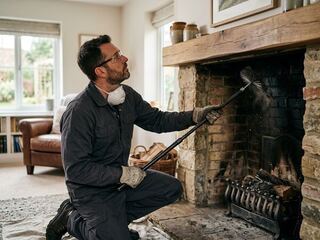
6 possible tasks · typical 5-step process
What it is
This service encompasses physical cleaning, mechanical adjustments, operational checks, and basic hardware evaluation of indoor fireplace inserts and freestanding units. Technicians may examine combustion chambers, clean accessible venting pathways, review ignition assemblies, assess fuel connections, and inspect door seals. The scope typically focuses on the appliance itself and its integrated operational components, distinct from structural chimney reconstruction, extensive flue relining, or exterior masonry work.
What Fireplace Service can include
Burner and Pilot Assembly Maintenance
Service can involve cleaning pilot orifices, clearing dust or debris from burner ports, reviewing ignition wiring, and testing thermocouples or thermopiles to observe flame engagement.
Firebox and Refractory Panel Inspection
The interior combustion chamber may be examined for surface wear, panel integrity, and joint condition, followed by dry brushing and minor refractory material adjustments where applicable.
Blower Fan and Motor Cleaning
Circulation fans can be accessed to remove lint, hair, and dust deposits from motor housings and impellers, which helps reduce buildup around moving parts.
Glass Enclosure Cleaning and Gasket Resealing
Ceramic glass doors are typically cleaned with specialized conditioning solutions, and perimeter fiberglass gaskets are reviewed for signs of wear or hardening.
Damper and Air Control Calibration
Throat dampers, intake shutters, and manual draft controls can be evaluated, cleaned, and adjusted to facilitate standard movement and alignment during operation.
Gas Pressure and Leak Detection
For gas-fueled systems, service may include testing manifold and inlet pressures against manufacturer reference points and checking accessible fittings using detection tools.
How the work is typically performed
- 1
Site Preparation and Initial Assessment
Protective coverings are typically placed near the hearth area, utility supplies are managed for service access, and a preliminary visual examination of the appliance exterior is conducted.
- 2
System Disassembly and Component Scrubbing
Internal elements such as decorative media, log sets, burners, or ash containers may be removed to facilitate vacuuming of the firebox and surface cleaning of carbon residue.
- 3
Mechanical Testing and Electrical Calibration
Electrical connections, switches, remote modules, and automatic shutoff sensors may be checked with diagnostic meters to evaluate resistance, voltage, and circuit continuity.
- 4
System Reassembly and Alignment
Components, baffles, and glass assemblies are returned to their designated positions following manufacturer layout guidelines for proper fit and spacing.
- 5
Live Combustion and Exhaust Verification
The unit may be operated briefly to observe the flame pattern, monitor visible venting behavior, and evaluate general draft performance.
Common reasons customers look for this service
- The pilot mechanism or main burner does not activate as expected
- Accumulations of white haze, soot, or film appear on the interior glass panel
- Unusual noises such as humming or rattling arise from the circulation blower
- Odor or draft irregularity is noted around the unit during use
- Flame patterns appear visibly uneven, weak, or differ from previous operation
- Periodic inspection is desired prior to or following periods of frequent use
About Fireplace Service
What does typical fireplace service involve?
Service visits generally involve cleaning interior chambers, clearing residue from burners and blowers, inspecting seals and gaskets, and checking the responsiveness of ignition and control parts.
What is the difference between fireplace service and chimney sweeping?
Fireplace service primarily focuses on the heating appliance, its internal mechanisms, controls, and firebox. Chimney sweeping generally addresses the venting flue, liner, and exterior cap, focusing on the removal of soot, creosote, or external obstructions.
What types of cleaners are typically utilized on fireplace glass?
Technicians typically utilize non-abrasive conditioning cleaners formulated for high-temperature ceramic materials, as standard household window cleaners may leave residues that react to heat.
This page provides general information about Fireplace Service for reference only. It is not professional, safety, medical, legal or financial advice, and it does not describe the services of any particular provider. Scope, methods and timing vary by provider and situation. Kuldesac does not perform these services; contact a qualified provider directly to discuss your specific needs.