


One-Time Bin Cleaning
One-time bin cleaning refers to an individual washing service tailored to address accumulated surface films, grime, and odors in exterior trash and recycling containers without an ongoing contract.
6 possible tasks · typical 5-step process
What it is
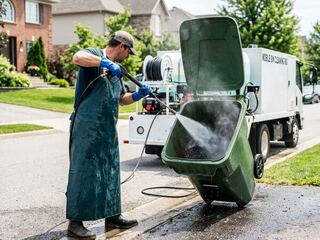
A single-visit bin cleaning service focuses on laundering, degreasing, and deodorizing outdoor trash carts, recycling receptacles, or commercial waste containers. Providers frequently deploy specialized vehicles outfitted with high-pressure washing hardware to treat both inner and outer surfaces, addressing organic grime, food remnants, and general residue buildup. These appointments generally concentrate on surface cleansing rather than mechanical adjustments, hardware repair, replacement of broken lids or wheels, chemical cleanup, or removal of standard uncollected trash bags.
What One-Time Bin Cleaning can include
Debris Inspection and Pre-Clearing
Crews often check receptacles for dry remnants or loose items, clearing out minor loose particles so the interior cavity is accessible for washing.
High-Pressure Hot Water Blast
Washing equipment frequently utilizes multi-directional rotating spray mechanisms that discharge heated water under pressure, designed to dislodge stubborn deposits and grease from interior corners and walls.
Exterior Shell and Hardware Scrubbing
Wash solutions and mechanical or manual brushes are commonly applied to external surfaces, including lift points, handles, lids, and wheel housings where grime often collects.
Broad-Spectrum Sanitization
Cleaning agents or surface treatments may be introduced across internal container walls, intended to target organic buildup and household surface residues.
Odor Neutralization
Specialized deodorizing solutions are frequently dispersed to assist in freshening the bin interior after washing away trapped refuse films.
Self-Contained Wastewater Recovery
Mobile wash apparatus typically captures dirty runoff within an integrated storage tank, designed to prevent water discharge onto driveways or adjacent ground.
How the work is typically performed
- 1
Staging and Readiness Check
Operators typically locate empty containers, assess basic physical access, and roll the units toward the mobile wash apparatus.
- 2
Hydraulic Lift and Inversion
Containers are often fastened to a mechanized cradle that elevates and turns the receptacles upside down directly over a sealed catch basin.
- 3
Automated High-Heat Wash Cycle
Enclosed high-pressure spray heads deliver hot water spray inside the container interior, intended to loosen stubborn films and wash residues downward into the collection tank.
- 4
Manual Detailing and Sanitation
Containers are commonly brought down for review, where technicians can wipe exterior touch points, scrub remaining spots, and apply deodorizing mists.
- 5
Drying and Placement
Residual rinse moisture is typically tipped out or left to evaporate before the container is returned to its designated location on the property.
Common reasons customers look for this service
- Situations involving noticeable odors surrounding outdoor container storage spaces
- Accumulation of sticky food spills, grease deposits, or dried residues within receptacles
- Presence of insect activity, larvae, or food remnants inside bins
- Property turnover situations such as moving into or out of a residence with previously used receptacles
- Periods following large gatherings, family events, or parties involving higher amounts of organic waste
- Warmer weather conditions when higher ambient temperatures accelerate the breakdown of waste materials
About One-Time Bin Cleaning
What condition is expected of receptacles prior to a cleaning appointment?
Service providers typically request that bins be completely empty of routine household waste before service occurs. While minor stray debris at the container bottom may be cleared during initial steps, standard trash bags are generally not collected or hauled away by wash technicians.
How is wastewater managed during a mobile bin cleaning service?
Mobile cleaning vehicles often feature onboard graywater containment systems. These setups gather runoff, dislodged solids, and wash solutions into a self-contained tank for transport to appropriate disposal facilities according to local provider procedures.
What factors can influence the duration of a bin cleaning visit?
The time spent on an appointment can vary depending on container count, the style of wash equipment utilized, and the volume of caked-on material present on the receptacle surfaces.
This page provides general information about One-Time Bin Cleaning for reference only. It is not professional, safety, medical, legal or financial advice, and it does not describe the services of any particular provider. Scope, methods and timing vary by provider and situation. Kuldesac does not perform these services; contact a qualified provider directly to discuss your specific needs.