


Pool Cage Rescreen
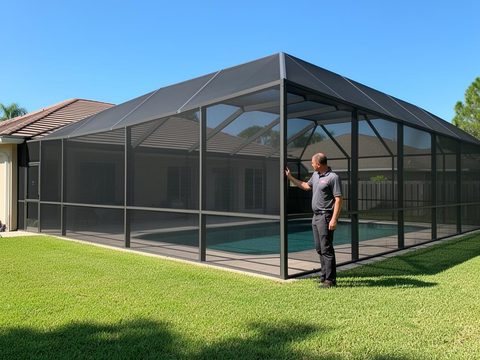
Pool cage rescreening is the complete or partial replacement of mesh panels and retaining spline across an outdoor aluminum pool enclosure structure.
6 possible tasks · typical 5-step process
What it is
Pool cage rescreening involves the removal of weathered screen mesh and existing retaining spline from aluminum framing channels, followed by the insertion of new fiberglass or synthetic mesh and fresh spline material. The service can address perimeter wall sections, overhead roof sections, chair rails, and integrated screen doors. Typical rescreening projects focus on the mesh and spline materials and do not generally include structural aluminum beam fabrication, concrete anchor replacement, structural engineering modifications, frame painting, or pool filtration equipment servicing.
What Pool Cage Rescreen can include
Panel-by-Panel Mesh Replacement
Technicians measure, position, and secure fresh fiberglass or heavy-duty synthetic mesh across individual framed openings within the aluminum enclosure structure.
Spline Extraction and Renewal
Installers remove aged, dried, or loose spline material and roll new flexible vinyl or rubber spline into aluminum channels to hold the mesh in place.
Roof and Mansard Panel Installation
Technicians utilize access equipment such as ladders, walkboards, or scaffolding to install new mesh across elevated flat, peaked, mansard, or dome roof sections.
Channel Cleaning and Preparation
Service providers clear dirt, loose debris, moss, and aged spline fragments from framing grooves prior to rolling new materials into the channels.
Screen Door Reconditioning
The service can include replacing mesh on enclosure access doors and updating door hardware components such as sweeps, handles, or standard pneumatic closers.
Flush Trimming and Finishing
Installers trim excess mesh along the exterior edge of the spline groove using specialized utility blades, intended to leave clean edges along the framing.
How the work is typically performed
- 1
Enclosure Assessment and Site Prep
Technicians typically examine the enclosure layout, identify panel dimensions, note access points, and move outdoor patio items or place protective coverings over deck areas.
- 2
Material Removal and Channel Prep
Service providers pull out old retaining spline and damaged screen sections, followed by clearing residual dirt or loose material from the aluminum grooves using hand tools.
- 3
Mesh Alignment and Tensioning
Installers position rolls of screen across each bay, aligning the material weave evenly with the aluminum frame members to minimize wrinkles or uneven alignment.
- 4
Spline Seating and Perimeter Trimming
Technicians press new vinyl spline firmly into the track using roller tools to seat the mesh before trimming away excess fabric flush against the aluminum channel edge.
- 5
Final Quality and Cleanup Check
Workers review the newly installed panels for uniform positioning, collect trimmed screen scraps and discarded spline from surrounding areas, and check the operation of screen doors.
Common reasons customers look for this service
- Tears, splits, or punctures in mesh panels resulting from weather events, wildlife, or falling branches
- Mesh material exhibiting surface fading, brittleness, or thinning from prolonged outdoor exposure
- Screen sections separating or pulling free from aluminum framing channels
- Aged, cracked, or loosened spline material along framing tracks
- Discoloration, algae accumulation, or embedded environmental residue on older screening
About Pool Cage Rescreen
What types of mesh materials are commonly used for pool cage rescreening?
Installers typically work with standard 18x14 fiberglass mesh, tighter weave micro-mesh designed for smaller insects, or heavier synthetic polyester screening designed for higher tear resistance.
What is the difference between partial and full pool cage rescreening?
Partial rescreening addresses isolated panels that have incurred localized damage, whereas full rescreening involves replacing the mesh and spline across every wall and roof opening across the entire structure for uniform appearance.
How long does a pool cage rescreening project typically take?
Project duration can vary depending on the overall size of the enclosure, the height and style of the roof design, on-site weather conditions, and the size of the installation crew, often taking from one to several days.
This page provides general information about Pool Cage Rescreen for reference only. It is not professional, safety, medical, legal or financial advice, and it does not describe the services of any particular provider. Scope, methods and timing vary by provider and situation. Kuldesac does not perform these services; contact a qualified provider directly to discuss your specific needs.