


Junk Removal Services
Junk removal generally involves the gathering, transport, categorization, and drop-off of unwanted household items, bulky materials, and non-regulated goods from residential or commercial properties.
4 services · typical 5-step process
What it is
Junk removal services encompass the manual handling and vehicular hauling of non-regulated property, yard trimmings, renovation remnants, and oversized furnishings. Teams typically deploy cargo vehicles, basic moving tools, and physical labor to relocate objects from inside structures, accessory buildings, or outdoor spaces. Depending on the company and local processing hubs, items can be sorted for drop-off at donation facilities, regional material recovery centers, salvage yards, or municipal waste transfer locations.
Services that can fall within Junk Removal
General Junk Removal
General Junk Removal can encompass gathering, sorting, and hauling assorted non-regulated goods from interior living areas, workspaces, or outdoor perimeters. This can involve boxed sundries, textiles, compact electronic gear, organic garden trimmings, and miscellaneous household items, which are commonly routed to regional transfer centers or resource recovery facilities.
Learn moreFurniture / Appliance Removal
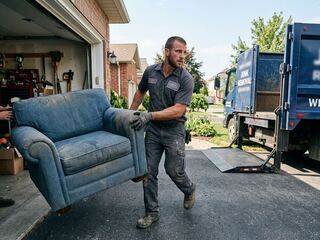
Furniture / Appliance Removal involves transporting sizable or heavy personal furnishings, such as sofas, dining surfaces, bedding foundations, cooling units, laundry machines, and water heaters. Field staff commonly navigate items through doorways, stairwells, and entry corridors with the aid of dollies or hand carts, and units with mechanical assemblies or coolants may be routed to designated recovery depots.
Learn moreConstruction Debris Removal
Construction Debris Removal entails collecting and carrying leftover trade materials stemming from building, structural adjustments, or renovation projects. This often includes discarded wallboard, dimensional lumber, ceramic pieces, masonry remnants, floor coverings, and scrap metals, which are typically loaded onto flatbeds or enclosed trailers for subsequent sorting or drop-off.
Learn moreGarage / Attic Cleanout
Garage / Attic Cleanout involves extracting grouped belongings from elevated lofts, crawl zones, outbuildings, subterranean levels, and storage lockers. Teams commonly assist with assembling, staging, and carting away storage bins, seasonal decorative goods, out-of-use implements, and decommissioned tools, which can be followed by general surface sweeping of the clear area.
Learn more
How the work is typically performed
- 1
Site Assessment and Pathway Planning
Personnel often review the collection of items, relative dimensions, and overall volume to allocate vehicle space and coordinate hauling approaches. Navigational pathways through interior corridors, portals, and steps are frequently evaluated prior to item handling.
- 2
Item Disassembly and Handling
Bulky structural components may be broken down, detached appliances prepared for haulage, and smaller stray items placed in sacks or cartons. Crews commonly utilize equipment like moving skids, lifting harnesses, and pathway coverings to facilitate transport across flooring.
- 3
Vehicle Stowing and Fastening
Pieces are placed into the hauling vehicle, where crew members generally arrange cargo to distribute volume and balance cargo bulk. Restraints, tie cords, or tarps are commonly placed over cargo compartments prior to transit.
- 4
Item Allocation and Delivery
Collected materials are hauled to regional facilities, where goods may be categorized by type, such as scrap components, untreated timber, electronic devices, or general bulk discard. Viable home items may be diverted to charitable drop points, while non-usable remnants are often brought to local transfer depots.
- 5
Area Tidy
Following the removal of designated goods, crews frequently conduct a visual review of the workspace and can provide basic dry sweeping across exposed floor surfaces to gather loose surface grit.
Common reasons customers look for this service
- Preparing a property for marketing, leasing, or occupancy changes
- Relocating remnant materials following property updates, remodeling, or teardowns
- Discarding worn interior furnishings, outdated appliances, or oversized broken items
- Reallocating open square footage across garaged areas, attics, basements, or outbuildings
- Managing estate clearing, residential transitions, or end-of-lease clearances
About Junk Removal
What materials can be excluded from standard hauling collections?
Hauling providers often exclude certain controlled substances, which can include wet finishes, petroleum products, harsh chemicals, automotive liquids, biological remnants, and pressurized cylinders. Specific restrictions can vary depending on local processing rules and individual business guidelines.
How can items be arranged prior to a hauling pickup?
Arrangement options often vary according to the service tier chosen and company operational protocols. Certain teams manage item retrieval directly from rooms, crawlspaces, or backyards, whereas other arrangements can focus on items pre-staged near driveways or curbsides.
How do hauling companies categorize items for resource recovery?
Categorization methods depend on local regional infrastructure and specific hauling practices. Crews often separate goods during staging or after collection, potentially transferring usable household pieces to local charitable outlets, while metal items, electronics, and timber can be transported to specialized reprocessing depots.
This page provides general information about Junk Removal for reference only. It is not professional, safety, medical, legal or financial advice, and it does not describe the services of any particular provider. Scope, methods and timing vary by provider and situation. Kuldesac does not perform these services; contact a qualified provider directly to discuss your specific needs.