


Landscaping Services
Landscaping refers to the alteration, arrangement, and ongoing spatial development of outdoor environments through the integration of living botanical elements, soil shaping, and structural exterior installations.
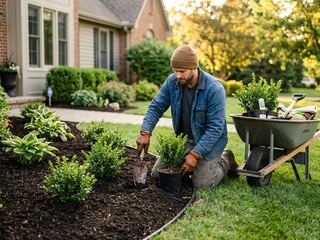
5 services · typical 5-step process
What it is
Landscaping includes a variety of procedures intended to reshape outdoor ground contours, cultivate vegetation, and build functional exterior features. Projects can address terrain grades, surface soil conditions, and plant arrangements to establish organized outdoor spaces. Service scopes typically incorporate horticultural components, such as ground covers, shrubs, and sod, alongside non-living structures like modular paver systems, decorative stonework, and soil-retaining barriers. Depending on the site and provider, work can range from basic vegetation planting to extensive multi-phase exterior installations.
Services that can fall within Landscaping
Landscape Design
Landscape design entails the spatial planning and visual mapping of exterior grounds through diagrams, planting plans, and structural outlines. The process can involve evaluating site lighting conditions, natural slopes, and existing vegetation to outline plant configurations, pedestrian corridors, and built structures prior to ground disturbance.
Learn moreMulch Install
Mulch installation encompasses the placement of organic or mineral protective coverings, such as bark nuggets, wood chips, pine needles, or crushed aggregate, across exposed planting beds. This service can involve delineating garden boundaries, removing existing ground debris, and distributing materials to help moderate soil temperatures and suppress weed emergence.
Learn moreHardscape / Paver Install
Hardscape and paver installation relates to the construction of paved surfaces, such as exterior walks, patios, and vehicular areas, utilizing concrete units, brick, or natural stone. Typical tasks can involve subsoil excavation, aggregate foundation placement, surface leveling, unit layout in designated patterns, and joint filling to encourage surface continuity.
Learn moreSod Install
Sod installation is the laying of cultivated turfgrass sections onto prepared ground to introduce established grass cover. The process can include soil grading, surface conditioning, fitting turf rolls or slabs in offset patterns, and rolling or irrigating the material to support connection with the underlying soil base.
Learn moreRetaining Wall Install
Retaining wall installation involves erecting vertical or terraced structures using concrete blocks, stone, or timbers to hold back soil along variable elevations. Tasks can encompass foundation trenching, aggregate base compaction, interlocking course construction, and placement of granular backfill or drainage channels to accommodate water flow behind the face.
Learn more
How the work is typically performed
- 1
Site Evaluation and Layout Planning
Technicians typically examine property perimeters, ground contours, and targeted project boundaries. Working outlines, installation zones, and grade references are often designated across the terrain using stakes, string lines, or ground markings.
- 2
Site Clearing and Ground Excavation
Existing plant cover, surface rock, and organic accumulation are often removed using hand implements or mechanical excavators. Earth is excavated to designated depths, and subgrade layers are shaped to match planned project contours.
- 3
Base Preparation and Drainage Setup
Subsurface layers can be reinforced through the application of geotextile underlayments, aggregate stone layers, and mechanical compaction. Drainage lines, aggregate backfill, and utility conduits can be situated during this phase to support site drainage and feature integration.
- 4
Structural Placement and Planting
Hardscape components, including wall units, curbing, and pavers, are assembled with designated edge restraints. Planting zones receive soil enrichment, followed by the positioning of trees, shrubs, perennials, and turfgrass sections according to the layout plan.
- 5
Joint Treatment and Site Finishing
Paver joints are typically filled with stabilizing sand, masonry caps are secured with adhesives or fasteners, and ground beds receive mulch coverage. Vegetation and turf sections can receive initial irrigation, and surface detritus is gathered and removed from the property.
Common reasons customers look for this service
- Interest in altering the layout or aesthetic configuration of outdoor residential or commercial spaces.
- Modification of uneven terrain, natural slopes, or ground elevations across exterior areas.
- Establishment of living ground cover, lawn areas, or ornamental plantings on bare or cleared land.
- Replacement or reconfiguration of aged, uneven, or settled hardscape walkways and patios.
- Addition of vertical soil retention features or bordered garden beds to structure the outdoor environment.
About Landscaping
What is the distinction between hardscaping and softscaping?
Hardscaping pertains to built, non-living structures such as stone retaining walls, interlocking paver patios, concrete walkways, and gravel pathways. Softscaping encompasses the horticultural, living elements of a site, which can include turf, deciduous trees, evergreens, flowering perennials, soil mixtures, and organic ground covers.
What factors influence how sod integrates into the soil?
Sod integration into the underlying dirt can depend on the specific turf variety, regional weather patterns, underlying soil preparation, and watering practices. The rate of root penetration and overall ground adaptation varies according to individual site conditions and ongoing horticultural care.
How is drainage incorporated into retaining wall structures?
Retaining wall construction frequently incorporates washed stone aggregate and slotted drainage tubing positioned directly behind the block or stone face. These materials are intended to provide a pathway for subsurface water movement away from the structure, with configurations varying according to wall height and ground topography.
This page provides general information about Landscaping for reference only. It is not professional, safety, medical, legal or financial advice, and it does not describe the services of any particular provider. Scope, methods and timing vary by provider and situation. Kuldesac does not perform these services; contact a qualified provider directly to discuss your specific needs.