


Tree Removal
Tree removal is the dismantling and clearing of trees from a property using specialized rigging, cutting, and hauling methods.
7 possible tasks · typical 5-step process
What it is
Tree removal generally involves taking down trees either through directional felling in open spaces or sectional dismantling in constrained areas, followed by debris handling and site clearing. The general scope of work can include branch removal, trunk cutting, chipping, and trimming the main stem down close to ground level. Basic tree removal typically does not encompass below-grade stump grinding, subterranean root system excavation, or post-removal landscape restoration unless arranged as separate, complementary services.
What Tree Removal can include
Sectional Dismantling
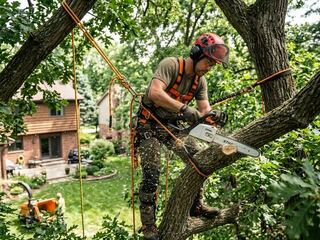
Climbers or aerial lift operators remove limbs and trunk segments progressively from the upper crown downward, often using rigging ropes and friction devices to lower pieces through confined spaces.
Directional Felling
In open areas without nearby structures or obstacles, crews can make targeted directional cuts at the base of the trunk to drop the tree intact into a designated landing space.
Rigging and Lowering
Ropes, pulleys, slings, and friction-control devices may be used to guide the controlled descent of cut branches and heavy wood sections away from structures, utility lines, and fences.
Brush Chipping and Mulching
Twigs, foliage, and small branches can be fed through a commercial wood chipper on-site, converting vegetative debris into wood chips that may be hauled away or retained on the property.
Log Bucking and Loading
The primary trunk is typically crosscut into manageable log segments and loaded onto trailers, flatbeds, or grapple vehicles for transport, disposal, or repurposing.
Low-Stump Cutting
Crews cut the remaining base of the trunk as close to the surrounding ground level as surface roots, soil, rocks, and saw clearances permit.
Site Sweep and Debris Clearing
Work zones are typically raked and swept to gather loose leaves, sawdust, and scattered twigs from lawns, walkways, patios, and driveways.
How the work is typically performed
- 1
Site Inspection and Rigging Planning
Service providers review the tree's structure, surrounding space, access routes, and nearby elements to determine suitable dismantling approaches, equipment access, and landing areas.
- 2
Canopy Stripping
Workers access the upper crown using climbing techniques or aerial bucket lifts to cut and lower side branches systematically, which can reduce total canopy mass and spread.
- 3
Stem Dismantling or Base Felling
The remaining trunk is either cut down into cylindrical sections from the top down using controlled lowering lines or felled directly from the base if adequate space is present.
- 4
Wood Processing and Debris Removal
Cut branches are processed through chipping equipment, larger logs are collected with loaders or manual handling, and debris is staged for transport according to project specifications.
- 5
Final Raking and Quality Check
Ground workers collect residual debris from paved and landscaped surfaces and review the work site to confirm that stump cut heights correspond to agreed-upon parameters.
Common reasons customers look for this service
- Trees exhibiting substantial fungal growth, trunk cavities, or internal decay
- Visible branch failure, trunk cracks, or canopy loss following severe weather events
- Dead trees or specimens showing widespread defoliation and lack of new seasonal growth
- Crown or root competition interfering with planned landscaping, foundations, or utility pathways
- Site preparation requirements for property development, driveway construction, or building additions
- Noticeable alterations in tree posture, soil heaving, or pronounced lean relative to surrounding structures
About Tree Removal
Does standard tree removal typically include removing the stump below ground?
Standard tree removal services usually involve cutting the main stem relatively close to the soil surface, leaving a low-profile stump. Removing subterranean root flares or grinding the stump below grade is generally scheduled as a separate, specialized service depending on the contractor.
How are trees typically removed when located near buildings or other obstacles?
When working in tight clearances, tree services often utilize sectional dismantling. Technicians use climbing gear, bucket trucks, or cranes to attach rigging lines to individual limbs before cutting, allowing ground crews to lower pieces away from roofs, overhead lines, and nearby features.
Can property owners arrange to keep wood or mulch from the removed tree?
Property owners can often request that processed materials remain on-site. Depending on the equipment and service provider, branches can be converted into mulch chips and trunk logs can be bucked into specific lengths for firewood or other property uses.
This page provides general information about Tree Removal for reference only. It is not professional, safety, medical, legal or financial advice, and it does not describe the services of any particular provider. Scope, methods and timing vary by provider and situation. Kuldesac does not perform these services; contact a qualified provider directly to discuss your specific needs.