


Residential Vent Cleaning
Residential dryer vent cleaning involves the removal of accumulated lint, dust, and debris from clothes dryer duct lines, transition pieces, and exterior exhaust terminations to help maintain airflow pathways.
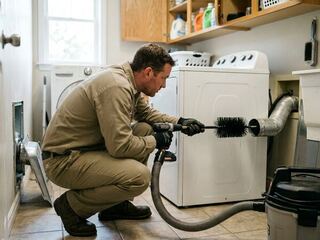
6 possible tasks · typical 5-step process
What it is
Residential dryer vent cleaning generally addresses the exhaust pathway leading from a clothes dryer to an outdoor exhaust vent. The process may cover flexible transitions, rigid or semi-rigid duct sections, inline booster fans, and outdoor termination dampers or hoods. The service typically does not encompass internal mechanical or electrical repairs to the appliance itself, nor does it typically involve general HVAC supply and return duct systems.
What Residential Vent Cleaning can include
Airflow and Backpressure Testing
Technicians may measure exhaust airflow velocity or static pressure at the dryer connection or exterior termination to evaluate exhaust line movement before and after service.
Transition Duct Cleaning and Inspection
The duct connecting the appliance to the wall structure can be disconnected, cleared of debris, and reviewed for general physical condition such as bends or material wear.
Full-Length Duct Line Mechanical Brushing
Rotary brushes or flexible rods are often guided through the duct run to dislodge lint buildup along the interior walls of the pipe.
High-Efficiency Vacuum Extraction
High-volume vacuum equipment is typically connected to the duct line to capture loose debris, lint, or other material dislodged during the cleaning process.
Exterior Termination Hood and Damper Servicing
The exterior vent hood, louvers, pest barriers, and damper flaps can be cleared of lint accumulation and checked for mechanical movement.
Lint Trap Cavity Cleaning
Service providers may use specialized vacuum attachments to remove residual lint from the appliance's lint screen housing and the surrounding cabinet opening.
How the work is typically performed
- 1
Initial System Inspection
A service provider typically inspects the transition ductwork, notes the layout and general length of the run, and examines the accessible exterior termination point.
- 2
Containment and Vacuum Hookup
Vacuum extraction equipment is often attached to an access point on the exhaust line to draw out debris and help minimize the release of dust into interior rooms.
- 3
Rotary Scouring of the Line
Mechanical brushes or specialized cleaning tools are pushed along the duct run to loosen lint accumulation from the pipe interior.
- 4
Exterior Vent and Damper Clearing
The exterior cap and backdraft damper are cleared of accumulated lint or nesting material to allow the flapper or louvers to open and close.
- 5
Reconnection and Airflow Verification
Duct connections are typically reattached, and the dryer may be operated briefly to verify that exhaust air is exiting through the outdoor termination.
Common reasons customers look for this service
- Observations of longer drying cycles for typical laundry loads
- Perceptible heat buildup in the laundry area or around the appliance casing
- Visible lint or debris gathering around the exterior exhaust hood or louvers
- Unusual odors noticed in the laundry area during dryer operation
- Routine maintenance intervals established by property owners or managers
About Residential Vent Cleaning
How does residential dryer vent cleaning differ from whole-home HVAC air duct cleaning?
Dryer vent cleaning focuses on the dedicated exhaust line that directs moisture and lint from a dryer to the building exterior. HVAC duct cleaning addresses the broader network of supply and return ductwork that circulates conditioned air throughout a home's living areas.
What access points are typically used during a dryer vent cleaning service?
Service providers often utilize access points both inside and outside the home. Interior access allows disconnection of the transition duct and cleaning near the appliance, while exterior access enables technicians to inspect the termination hood, clear damper flaps, and insert cleaning tools into longer duct runs.
What materials are commonly found in dryer transition duct connections?
Dryer transition ducts can be made from rigid metal, semi-rigid aluminum, or flexible foil and vinyl materials. Depending on local building practices and provider standards, rigid or semi-rigid metal options are frequently used to establish the connection between the dryer and the wall outlet.
This page provides general information about Residential Vent Cleaning for reference only. It is not professional, safety, medical, legal or financial advice, and it does not describe the services of any particular provider. Scope, methods and timing vary by provider and situation. Kuldesac does not perform these services; contact a qualified provider directly to discuss your specific needs.