


Roofing Services
Roofing services involve the assessment, upkeep, mending, and renewal of external protective roof assemblies and related drainage elements on various types of structures.
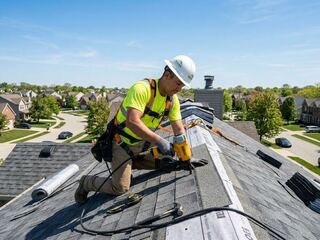
3 services · typical 5-step process
What it is
Roofing assemblies serve as upper building envelopes designed to guide moisture runoff and contribute to general weather protection. Professional roofing services can involve work on primary covering layers, structural decking, ventilation accessories, water diversion pieces, and joint flashings. Contractors frequently handle a variety of materials, such as composite shingles, metal sheets, clay tiles, concrete pieces, and slate, with procedures tailored to the specific architecture and material profile of the building.
Services that can fall within Roofing
Roof Leak Repair
Roof leak repair can address localized apertures in the covering caused by shifted materials, aged sealants, or compromised flashings around chimneys, pipes, and skylights. Technicians typically inspect suspected pathways of moisture migration, detach surrounding components, place fresh membrane patches, reseal seams, and integrate new matching exterior units designed to redirect precipitation.
Learn moreFull Roof Replacement
A full roof replacement involves stripping existing external materials down to the underlying sheathing, followed by an appraisal of the exposed timber boards. Workers may replace deteriorated decking, lay down protective drip metal, add water-resistant barriers, mount starter strips, apply the primary shingles or panels, and incorporate ventilation components along roof ridges.
Learn moreRoof Inspection
A roof inspection involves an observational review of outer roof planes and associated hardware to evaluate material condition, weathering patterns, or physical shifts. Technicians commonly observe covering surfaces, gutter tie-ins, perimeter fascia, flashings at transitions and penetrations, and reachable attic areas to view underside sheathing and airflow provisions.
Learn more
How the work is typically performed
- 1
Site Assessment and Protection
Work frequently begins with an external review of the structure to map staging spaces, note structural features, and place tarps or protective coverings across surrounding landscape areas to catch loose debris.
- 2
Substrate Exposure and Diagnostics
Technicians detach chosen surface materials and underlying underlayments to observe the condition of the wooden decking, looking for dampness, softness, or loose mechanical fasteners.
- 3
Decking Preparation and Structural Repair
Crews can swap compromised plywood or OSB sheets and fasten loose rafters or trusses to establish an even, firm foundation before new underlayment products are positioned.
- 4
Barrier and Flashing Installation
Specialists position self-adhering membranes along lower edges and valleys, roll out protective synthetic underlayment across open spans, and fit custom metal flashings along valleys, sidewalls, and roof penetrations.
- 5
Finish Material Application and Cleanup
Workers fasten primary shingles, tiles, or metal sections across the deck area, affix ridge caps and exhaust vents, and use cleanup implements such as magnetic tools to gather stray fasteners from surrounding property surfaces.
Common reasons customers look for this service
- Visible water marks on ceilings or moisture accumulation in attic framing
- Shingles or tiles that appear cracked, detached, curled, or missing
- Loose mineral granules collecting in rain gutters or around drainage spouts
- Daylight entering through gaps in upper attic roof boards
- General surface weathering or noticeable age on exterior materials
- Property transfers or scheduled real estate assessments
About Roofing
How are potential moisture entry locations identified when an interior stain does not align directly with an exterior leak?
Precipitation can track down rafters, insulation, or internal framing before surfacing on interior drywall. Service providers often examine areas higher on the roof pitch, evaluate nearby penetrations, lift surrounding shingles to check base layers, and may utilize moisture meters or infrared imaging devices to trace damp paths.
What distinguishes an overlay application from a complete roof tear-off?
An overlay involves affixing a new layer of shingles directly over an existing covering without removing the previous assembly. A complete tear-off entails stripping away every prior layer down to the underlying roof deck, which allows technicians to inspect the bare timber and install fresh moisture barriers and metal flashing.
What areas and materials are typically evaluated during a roof inspection?
An inspection usually addresses the state of primary roofing materials for cracking, loosening, or granule shedding. Evaluators also review metal flashings around chimneys, vent pipes, and wall junctions, check eave and ridge ventilation channels, observe drainage attachments, and view visible interior roof decking from within attic areas.
This page provides general information about Roofing for reference only. It is not professional, safety, medical, legal or financial advice, and it does not describe the services of any particular provider. Scope, methods and timing vary by provider and situation. Kuldesac does not perform these services; contact a qualified provider directly to discuss your specific needs.