


Pool & Spa Services
Pool and spa services encompass general care, water chemistry evaluation, mechanical assessments, and seasonal adjustments designed to assist with the ongoing operation of recreational water installations.
3 services · typical 5-step process
What it is
This broad category addresses the mechanical care, water testing, and surface cleaning associated with residential or commercial swimming pools, integrated spas, and standalone hot tubs. Service providers typically review circulation equipment, evaluate water parameters, skim and brush structural surfaces, and inspect hydraulic components. These offerings are designed to assist with water clarity, support the functioning of operational equipment, and address interior finishes over time without altering the underlying construction.
Services that can fall within Pool & Spa
Weekly Maintenance
Regularly scheduled visits can involve sampling water to evaluate sanitizer presence, pH balance, and total alkalinity. Technicians often skim floating matter from the surface, brush vertical surfaces and waterline tiles, vacuum floor sediment, and clear collection baskets situated at skimmers and circulation pumps. Visits may also involve backwashing media filters or rinsing cartridge assemblies.
Learn moreEquipment Repair
Equipment repair offerings focus on examining and addressing operational or electrical issues associated with water circulation and conditioning systems. This work can involve diagnosing circulation pumps, drive motors, filtration tanks, heating units, chemical dispensers, and automated control interfaces. Procedures can include replacing worn seals, cleaning internal impellers, and adjusting or repairing plumbing valves.
Learn morePool Opening / Closing
Seasonal opening procedures can include taking off protective covers, replacing drain fittings, reassembling circulation gear, and initiating chemical balancing. Conversely, closing procedures can involve lowering surface water levels, expelling water from plumbing lines, introducing seasonal water conditioning additives, and securing exterior covers across the basin.
Learn more
How the work is typically performed
- 1
Initial System Inspection and Diagnostics
A service appointment often commences with an observation of the basin structure, adjacent decking, and the equipment staging pad. Technicians can check for noticeable moisture accumulation, observe acoustic profiles from operational motors, and note pressure gauge levels across filtration housings and distribution lines.
- 2
Comprehensive Water Chemistry Analysis
Water samples are tested to gauge values such as sanitizer concentrations, pH, total alkalinity, mineral hardness, and stabilizer levels. These readings help providers determine appropriate chemical applications tailored to water volume and standard target spectrums.
- 3
Physical Cleaning and Debris Removal
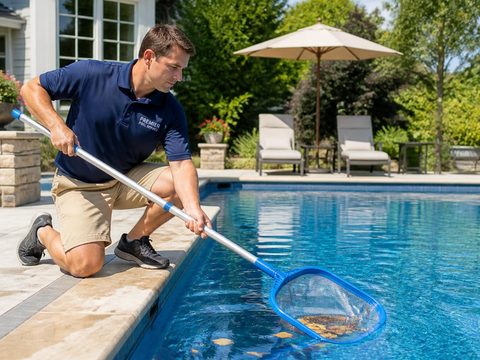
Technicians often skim organic material and surface debris, brush basin walls and waterline tiles, and vacuum settled floor particles. Debris containment areas, including skimmer baskets, strainer housings, and cleaner bags, are also emptied during this stage.
- 4
Filtration and Mechanical Servicing
Technicians can review pressure gauges on filtration vessels to observe flow patterns and determine if media cleaning is appropriate. Common tasks can include backwashing sand systems, washing cartridge elements, lubricating housing gaskets, and verifying basic functionality on auxiliary components like heaters or chlorinators.
- 5
Chemical Balancing and Service Logging
Chemical additions, including sanitizers, pH adjusters, or conditioning agents, can be introduced based on testing observations. Technicians typically record tested metrics, chemical products applied, and completed service tasks within an account log for reference.
Common reasons customers look for this service
- Alterations in water transparency, coloration, or surface clarity
- Auditory changes, hums, or vibrations emanating from motor housings
- Diminished circulation or lower water flow observed at return ports
- Discrepancies on filter pressure gauges or air visible inside circulation lines
- Shifts in seasonal weather patterns that correspond with pool opening or winterizing
- Modifications in water basin levels that prompt a review of plumbing or surface integrity
About Pool & Spa
What is typically involved in pool water testing and chemical balancing?
Testing generally focuses on evaluating sanitizer levels, acidity, alkalinity, and mineral content. Depending on the provider, water balancing involves introducing measured conditioning products to bring chemical parameters toward target ranges, with testing approaches tailored to pool volume and climate factors.
What factors can contribute to variations in filter pressure readings?
Filter pressure can shift depending on debris accumulation within the tank, media condition, or pump velocity settings. As particulates collect inside sand, cartridge, or diatomaceous earth systems, resistance to water movement can rise, often leading to elevated gauge readings until the filter media is rinsed or backwashed.
What procedures are involved in clearing plumbing lines during seasonal pool winterization?
During winterization procedures in colder climates, technicians often use specialized air blowers to expel standing water from underground circulation pipes. Plugs or fittings are then inserted into return inlets and skimmer throats to help limit moisture re-entry throughout the colder months.
This page provides general information about Pool & Spa for reference only. It is not professional, safety, medical, legal or financial advice, and it does not describe the services of any particular provider. Scope, methods and timing vary by provider and situation. Kuldesac does not perform these services; contact a qualified provider directly to discuss your specific needs.