


Gutter Service Services
Gutter service encompasses the installation, evaluation, cleaning, repair, and protection of exterior water drainage systems designed to channel roof runoff away from building structures.
4 services · typical 5-step process
What it is
Gutter service covers the physical management of roof runoff through pitched troughs, collection outlets, and downspouts. Service providers review, clear, repair, and install gutter profiles with the goal of supporting water movement and reducing moisture exposure around exterior walls, foundations, and surrounding soil. The scope can include the removal of accumulated organic matter, structural realignment, on-site custom trough forming, and the addition of protective covers.
Services that can fall within Gutter Service
Gutter Cleaning
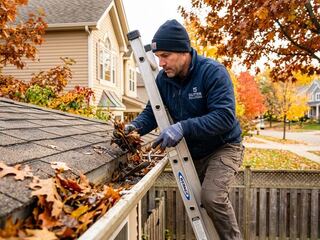
This service can involve removing leaves, silt, and organic debris from collection troughs, clearing downspout pathways, and rinsing channels with water to check general flow. Providers may also clear accumulation from nearby roof valleys and drip edges as part of the process.
Learn moreGutter Repair
Repair work typically addresses loose mounting hardware, uneven pitch alignment, minor punctures, or leaking joints using exterior sealants. Tasks can also include reattaching disconnected downspout elbows and replacing specific sections showing wear, corrosion, or physical impact.
Learn moreGutter Install
Installation typically involves measuring roof perimeters, assembling or forming seamless or sectional troughs, and attaching brackets along fascia boards. Service providers commonly cut outlet openings, connect downspouts, and fit directional elbows aimed at guiding runoff away from the immediate structure.
Learn moreGutter Guard Install
Guard installation involves placing mesh screens, perforated covers, or surface-tension hoods over gutter channels to limit debris entry while allowing water to enter the trough. Providers attach these covers to gutter rims or roof edges according to the profile of the roof and gutter type.
Learn more
How the work is typically performed
- 1
Assessment and Pitch Calculation
Providers review the roofline, fascia boards, and existing gutter sections to observe general condition, joint stability, and slope alignment using leveling tools.
- 2
Debris Clearing and Flushing
Accumulated leaves, twigs, and sediment are removed from the troughs, and downspout lines may be flushed with water to observe drainage transit toward ground outlets.
- 3
Structural Repair and Re-Pitching
Fasteners may be secured or replaced, exterior sealants applied to leaking joints, and hanger positions adjusted to support consistent downward slope.
- 4
Custom Fabrication and Mounting
When installing new components, seamless troughs may be formed on site to match roof dimensions, fitted with internal brackets, and secured to the fascia.
- 5
Flow Verification and Guard Attachment
Water may be run through the system to observe transit and identify remaining seam leaks, followed by the attachment of chosen guard or screen products.
Common reasons customers look for this service
- Water spilling over trough edges during rainfall
- Visible trough sagging, separation, or pulling away from the fascia
- Water accumulating or pooling near the building foundation
- Paint peeling, moisture marks, or signs of wear along soffits or exterior siding
- Loose, disconnected, or misaligned downspout elbows and joints
- Accumulated leaves, plant growth, or standing water inside troughs
About Gutter Service
How do service providers typically evaluate whether gutters need repair or replacement?
Evaluation generally depends on the scope of visible wear across the drainage run. Isolated concerns, such as a loose bracket or a single leaking joint, are often addressed through localized repairs. More widespread corrosion, continuous splitting, multiple sagging sections, or recurring drainage issues can lead property owners and providers to discuss partial or complete replacement options.
What slope or pitch is typically used in gutter installations?
Gutter runs are commonly installed with a slight downward slope toward the downspouts, often around one-quarter inch of drop for every ten feet of horizontal run. The exact pitch can vary depending on the length of the run, the specific gutter profile, and provider assessment of the structure.
How do gutter guards function within a drainage system?
Gutter guards are designed to reduce the entry of larger debris, such as leaves and small branches, while permitting water to enter the channel. Smaller matter, including roof grit, pollen, and needles, can still settle on top of guard surfaces or enter small perforations over time, so maintenance needs can vary based on local foliage and guard design.
This page provides general information about Gutter Service for reference only. It is not professional, safety, medical, legal or financial advice, and it does not describe the services of any particular provider. Scope, methods and timing vary by provider and situation. Kuldesac does not perform these services; contact a qualified provider directly to discuss your specific needs.