


Painting Services
Professional painting encompasses various coating applications, surface conditioning, and substrate preparation across interior spaces, exterior architectural structures, and cabinetry.
3 services · typical 5-step process
What it is
Painting services typically involve applying liquid coatings to architectural substrates such as drywall, woodwork, siding, masonry, and cabinetry. Providers generally address substrate cleanliness, smooth irregular areas, apply primers, and lay down finish coats using manual or mechanical application tools. The scope may range from cosmetic color adjustments to protective coating applications designed for various indoor and outdoor structural elements.
Services that can fall within Painting
Interior Painting
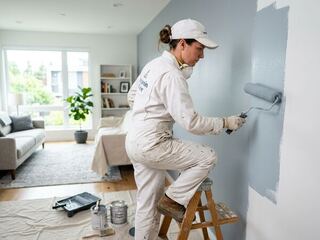
Interior painting can include the preparation and coating of living areas, ceilings, hallways, doors, and trim elements. Tasks often involve smoothing minor wall imperfections, taping borders, covering fixtures, and applying primer and topcoat formulations with rollers, brushes, or sprayers to achieve consistent color and sheen across indoor surfaces.
Learn moreExterior Painting
Exterior painting generally encompasses applying specialized outdoor finishes to facades, siding panels, trim boards, and masonry surfaces. The service can include washing exterior surfaces, clearing loose paint layers, sealing perimeter joints, priming exposed substrates, and applying exterior-grade coatings designed to withstand outdoor environmental conditions.
Learn moreCabinet Refinishing
Cabinet refinishing can involve updating the surface appearance of cabinetry in kitchens, bathrooms, or storage units while preserving the underlying framework. Common steps include degreasing substrates, scuff-sanding, applying bonding primers, and spraying or brushing specialized durable topcoats such as enamels or lacquers to establish a smooth finish.
Learn more
How the work is typically performed
- 1
Site Protection and Masking
Work areas are typically shielded using coverings such as drop cloths, masking paper, and protective film over floors, furniture, and fixed features. Outdoor environments may involve placing tarps over landscaping, walkways, and adjacent building surfaces to manage overspray and material placement.
- 2
Surface Preparation and Repair
Technicians often clean the targeted substrates, scrape away loose material, and fill shallow voids, seams, or surface indentations. Sanding is frequently utilized to smooth repair compounds, followed by the application of flexible caulking along relevant architectural joints and trim edges.
- 3
Primer Application
Undercoats or primers are often applied to seal raw materials, help block potential discoloration, and provide an even base for finish coatings. This stage is intended to promote adhesion and create uniform porosity across treated substrates.
- 4
Finish Coat Application
Topcoat coatings are applied using specialized spray systems, rollers, or hand brushes tailored to the surface material. Painters typically focus on uniform coverage, maintaining wet edges, and allowing drying intervals between successive applications.
- 5
Final Detailing and Inspection
The concluding phase generally involves stripping masking materials, retrieving protective covers, and reattaching hardware or wall plates that were displaced during preparation. Surfaces are commonly evaluated under ambient and directed light to facilitate touch-up applications where desired.
Common reasons customers look for this service
- Appearance of peeling, flaking, or worn coatings on interior walls or exterior cladding
- Color changes, chalking, or fading resulting from environmental exposure
- Interior layout updates, remodeling work, or transitions between design schemes
- Interest in altering the color or finish style of cabinetry
- General property refurbishment or scheduled updates to architectural surfaces
About Painting
What distinguishes cabinet painting from cabinet refinishing?
Cabinet painting typically involves applying standard paint formulations over prepared surfaces, often by brushing or rolling. In contrast, cabinet refinishing can include deeper mechanical prep work, filling wood grain, and spraying multi-part industrial coatings or specialized enamels intended to handle frequent physical handling. Methods and product selections often depend on the service provider.
What does exterior surface preparation typically involve?
Exterior prep work often involves cleaning substrates, scraping away loose paint fragments, smoothing transition zones with abrasives, and applying sealant to open gaps. Primer applications are often utilized over exposed base materials before applying finish paints, with specific approaches varying by the surface material and provider practices.
How many coating layers are commonly applied during interior painting?
Coating layers can vary according to substrate porosity, color transitions, and product chemistry. Projects commonly incorporate an initial primer layer followed by finish coats. Primers are frequently applied over unsealed or patched areas, while subsequent topcoats are applied to support uniform opacity and sheen.
This page provides general information about Painting for reference only. It is not professional, safety, medical, legal or financial advice, and it does not describe the services of any particular provider. Scope, methods and timing vary by provider and situation. Kuldesac does not perform these services; contact a qualified provider directly to discuss your specific needs.