


Mobile Mechanic Services
Mobile mechanic services involve automotive technicians traveling directly to a vehicle's site to provide diagnostic reviews, scheduled servicing, and on-location parts replacement.
4 services · typical 5-step process
What it is
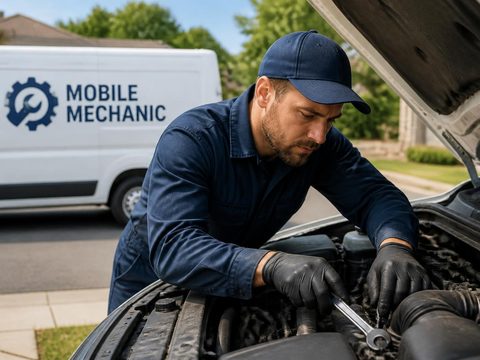
A mobile mechanic service delivers vehicular maintenance, diagnostic evaluations, and mechanical interventions directly at a designated location using service vehicles outfitted with portable gear, scanning hardware, and fluid collection units. Appointments are frequently held in residential driveways or commercial parking zones for passenger cars, light-duty trucks, and vans as an alternative to stationary repair shops. Typical work scopes encompass computer code retrieval, fluid exchanges, brake hardware upkeep, and starting system component replacements.
Services that can fall within Mobile Mechanic
Check Engine / Diagnostics
Technicians can interface diagnostic scanners with onboard computer ports to read stored fault codes across vehicle modules. This procedure can involve reviewing live sensor parameters, tracking engine misfire data, and testing component actuations to evaluate sensors, ignition assemblies, and emissions controls.
Learn moreOil Change
Visits can include draining or siphoning spent engine lubricant, installing a replacement oil filter, and refilling the crankcase with conventional or synthetic motor oil formulated for the specific powertrain. Technicians may also reset service notification displays and inspect fluid reservoirs such as brake fluid, engine coolant, and power steering fluid.
Learn moreBrake Service
Mobile brake appointments typically involve reviewing friction assemblies and replacing items like disc pads, rotors, clips, and associated hardware. Work can also encompass cleaning caliper mounts, applying lubricant to guide pins, inspecting hydraulic lines, and conducting fluid bleeding procedures when air accumulates in the system.
Learn moreBattery Replacement
Service providers can test electrical performance, alternator output, and cranking draw using portable diagnostic meters. Replacement procedures commonly involve unfastening cable terminals, removing the depleted battery, installing an appropriate replacement unit, cleaning cable ends, and performing digital battery management registration when supported by onboard vehicle modules.
Learn more
How the work is typically performed
- 1
Arrival and Setup
The service vehicle is parked adjacent to the customer's automobile on a firm, level area, wheel chocks are positioned, and floor coverings or drip pans can be arranged beneath work zones.
- 2
Initial Assessment
The technician notes customer-provided descriptions, performs a visual inspection of pertinent assemblies, and may run preliminary electronic scans to gather baseline technical details.
- 3
Component Servicing
Utilizing portable jacks, supports, and specialized tools, the technician performs requested mechanical installations, fluid transfers, or part adjustments according to relevant vehicle configurations.
- 4
Functional Checks
The technician can power on the vehicle, observe operational readings, verify fluid containment, clear addressed fault codes, and carry out static or low-speed checks to review installation results.
- 5
Site Cleanup and Reporting
Removed components, residual materials, and drained fluids are packed into the service vehicle for transport, followed by the delivery of a service summary detailing completed items and relevant technical notes.
Common reasons customers look for this service
- Presence of dashboard alert symbols such as engine check, electrical, or braking icons
- Audible noises such as friction squeals or metallic scraping sounds during deceleration
- Reduced cranking performance, clicking noises during ignition attempts, or failure to turn over
- Reaching planned maintenance milestones for engine fluid and filtration changes
- Vehicles located at private residences or workplace lots where travel to a physical garage presents logistical complications
- Visible fluid spots, pools, or drips observed beneath the vehicle body
About Mobile Mechanic
Where can mobile automotive services typically be performed?
Mobile mechanical operations generally require a stable, horizontal surface, such as a paved private driveway or designated parking space, to accommodate vehicle support equipment and tools. Practicality can depend on site accessibility, property policies, local street parking rules, and the nature of the specific task.
How are used fluids and replaced components typically handled?
Mobile technicians typically use sealed collection containers and protective ground covers to manage drained fluids such as motor oil or hydraulic brake fluid. Replaced mechanical parts, old batteries, spent filters, and collected liquids are generally loaded into the service vehicle for off-site processing or material recycling.
What is the procedure if unexpected mechanical wear is discovered?
When unexpected component wear or fluid seepage is observed during an appointment, technicians typically document those conditions through written descriptions or photographs. These observations can then be shared with the owner to outline options before any additional maintenance or replacement work is initiated.
This page provides general information about Mobile Mechanic for reference only. It is not professional, safety, medical, legal or financial advice, and it does not describe the services of any particular provider. Scope, methods and timing vary by provider and situation. Kuldesac does not perform these services; contact a qualified provider directly to discuss your specific needs.