


Toilet Repair / Install
Toilet repair and installation encompasses the inspection of internal tank fittings, replacement of sealing components, maintenance of floor flanges, clearing of integral porcelain trapways, and the setup of traditional, low-flow, or specialty commodes.
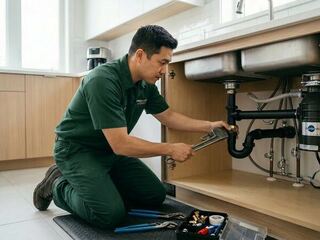
7 possible tasks · typical 5-step process
What it is
Toilet repair and installation involves the diagnostic evaluation, mechanical adjustment, component exchange, and mounting of residential or commercial commode fixtures. Service providers frequently work with gravity-flow systems, dual-flush options, pressure-assisted mechanisms, and modern bidet configurations. The work typically centers around the internal tank controls, floor-level mounting interfaces, and local water delivery connections. Common boundaries of this service exclude structural substructure rebuilding, municipal water main work, and extensive downstream drainage line excavations beyond the immediate fixture connection point.
What Toilet Repair / Install can include
Fill and Flush Valve Replacement
Service providers can swap out deteriorating fill assemblies, overflow tubes, flappers, seals, and trip handles, which is often intended to address continuous water movement through the tank or irregular flush cycles.
Wax Ring and Floor Seal Replacement
Technicians can detach existing wax gaskets or synthetic rubber seals from the base of the bowl and position fresh sealing materials designed to help contain water and sewer gases at the floor transition.
Toilet Flange Repair and Resetting
Plumbing professionals can evaluate, reinforce, align, or exchange damaged closet flanges, and they may replace corroded closet bolts to assist with securing the bowl firmly to the underlying flooring surface.
Complete Fixture Installation
Contractors can assemble, set, level, and anchor two-piece, one-piece, elongated, compact, dual-flush, or smart bidet commodes in accordance with manufacturer technical specifications.
Supply Line and Shutoff Valve Upgrades
This service can entail removing older rigid or braided supply risers and positioning modern quarter-turn angle stops to assist with local water isolation to the fixture.
Tank-to-Bowl Gasket Service
Service specialists can exchange the central rubber spud washer, tank bolts, and associated rubber sealing washers positioned between two-piece tank and bowl assemblies to manage moisture presence.
Mechanical Trapway Clearing
Technicians can deploy manual or powered closet augers designed with protective sheaths to retrieve or dislodge items lodged directly within the internal porcelain curvature of the fixture.
How the work is typically performed
- 1
Site Assessment and Water Isolation
The technician typically reviews the fixture layout, notes mechanical performance, evaluates connection points, and closes the adjacent stop valve before siphoning or sponging out residual water from the tank and bowl.
- 2
Disassembly or Fixture Removal
Components inside the tank are unfastened for mechanical updates, or the floor bolts and flexible water connections are removed to allow the technician to lift the bowl away from the collar.
- 3
Flange Inspection and Surface Prep
The exposed closet flange is scraped clear of residual wax or sealant, examined for physical fractures or uneven elevation, and repaired or reinforced using specialized flange rings if necessary.
- 4
Mounting and Component Fitting
New internal hardware is mounted inside the tank, or the commode is positioned over a fresh wax or foam ring on the flange, with closet fasteners secured gradually on alternating sides to distribute pressure across the porcelain.
- 5
Testing and Caulking
Water delivery is restored, fill levels are adjusted to the designated water line mark, multiple test flushes are conducted to observe sealing, and a perimeter bead of tub-and-tile sealant can be placed around the base.
Common reasons customers look for this service
- Continuous water running into the bowl between regular flush actions
- Moisture accumulation or puddling around the floor perimeter of the commode
- Physical movement or rocking of the fixture against the floor surface
- Visible hairline cracks or chips within the porcelain tank or bowl
- Slow drainage or recurrent blockages situated inside the integrated porcelain trap
- Bathroom updating or transition to alternate fixture styles or water-conserving models
About Toilet Repair / Install
What does toilet repair typically encompass compared to fixture replacement?
Toilet repair usually focuses on modular components such as flapper valves, fill mechanisms, handle linkages, supply hoses, or base wax rings. Fixture replacement typically involves the complete removal of the existing porcelain bowl and tank assembly to introduce a new unit onto the closet flange.
What is typically involved in stabilizing a commode that rocks?
Stabilization procedures generally include inspecting the closet flange, tightening or replacing the floor mounting hardware, and inserting plastic leveling shims beneath the porcelain base. Sealant can then be applied along the floor boundary to assist in maintaining the positioned shims.
How is a site typically prepared prior to a new commode installation?
Preparation generally involves clearing the immediate floor area around the fixture, confirming that the local shutoff valve is accessible, and having the new commode unit, seat, and mounting accessories on site for the technician.
This page provides general information about Toilet Repair / Install for reference only. It is not professional, safety, medical, legal or financial advice, and it does not describe the services of any particular provider. Scope, methods and timing vary by provider and situation. Kuldesac does not perform these services; contact a qualified provider directly to discuss your specific needs.