


Chimney Sweep
Chimney sweeping involves the removal of creosote deposits, soot, and loose debris from flues, smoke chambers, and fireboxes to support venting and exhaust airflow.
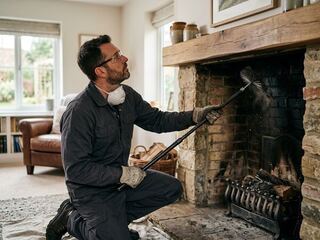
6 possible tasks · typical 5-step process
What it is
Chimney sweeping typically refers to the mechanical clearing of creosote accumulation, soot, and physical obstructions from the internal passages of a venting system. The scope of service can cover sweeping the primary flue liner, scraping the smoke chamber, clearing the smoke shelf, and cleaning the firebox and damper assembly. It is primarily a cleaning procedure and typically does not encompass masonry repair, crown rebuilding, relining, or structural rebuilding of the firebox.
What Chimney Sweep can include
Flue Liner Brushing
Technicians typically run wire or polypropylene brushes on flexible rods or rotary systems through the length of the flue to help dislodge soot and creosote deposits.
Smoke Chamber and Shelf Scraping
Service providers may scrape carbon and creosote accumulations from the angled smoke chamber walls and sweep loose debris from the smoke shelf located behind the damper.
Damper Cleaning and Function Check
Work often includes clearing soot accumulation from the damper plate and frame, as well as checking the basic movement of the assembly to see if it opens and closes.
Firebox and Grate Detailing
Soot, loose ash, and unburned wood particles can be cleared from the firebrick floor, side walls, and grate area.
Obstruction and Nest Extraction
This task can involve clearing twigs, leaves, or animal nesting materials that may be present within the flue passage or near the cap.
HEPA Dust Containment
Providers commonly use drop cloths and specialized vacuum equipment designed to help manage airborne soot and particulate within the immediate hearth area during cleaning.
How the work is typically performed
- 1
Site Setup and Living Space Containment
The technician typically arranges protective tarps across the hearth area, covers the opening, and sets up vacuum equipment to help control dust dispersion.
- 2
Initial Flue and Deposit Assessment
An initial check is often performed to view the firebox, observe surface deposits, check for visible blockages, and select suitable brush sizes.
- 3
Mechanical Sweeping
Using an approach from either the roof or through the hearth, the technician brushes and scrapes the interior surfaces of the flue liner to loosen accumulated material.
- 4
Internal Component Clearing
The provider typically scrapes reachable areas of the smoke chamber, clears debris from the smoke shelf, and removes fallen soot around the damper and firebox.
- 5
Final Debris Extraction and Visual Review
Remaining ash and loose debris are collected, equipment is packed, and a visual review of the cleared venting path is typically completed.
Common reasons customers look for this service
- Preparation for upcoming seasonal fireplace usage
- Noticeable soot odors or draft irregularities near the hearth
- Visible accumulation of soot or creosote on interior flue surfaces
- Presence of leaves, twigs, or signs of nesting activity inside the chimney
- Recent property transactions where prior maintenance history is not documented
- Routine scheduling following extended periods of fireplace operation
About Chimney Sweep
How do service providers control soot and dust during a chimney sweep?
Providers typically employ floor coverings, hearth seals, and specialized vacuum systems designed to capture loose particulate during the sweeping process. Methods and equipment can vary depending on the provider and the specific fireplace design.
What is the difference between a chimney sweep and an inspection?
A chimney sweep is focused on the physical clearing of soot, creosote, and debris from the exhaust passage. An inspection typically involves examining structural components, clearances, and liner surfaces, sometimes utilizing specialized camera equipment, depending on the scope of the assessment.
How long does a standard chimney sweeping service take?
A typical sweeping appointment often ranges from 45 to 90 minutes for a single flue. Duration can vary based on the extent of creosote accumulation, accessibility, presence of obstructions, and whether multiple venting systems are addressed.
This page provides general information about Chimney Sweep for reference only. It is not professional, safety, medical, legal or financial advice, and it does not describe the services of any particular provider. Scope, methods and timing vary by provider and situation. Kuldesac does not perform these services; contact a qualified provider directly to discuss your specific needs.