


Weekly Maintenance
Regular pool and spa maintenance generally involves recurring water analysis, chemical additions, surface sweeping, and mechanical reviews designed to support circulation performance and water transparency across aquatic installations.
6 possible tasks · typical 5-step process
What it is
Routine maintenance arrangements typically involve scheduled on-site visits where service personnel assess chemical readings, capture floating or sunken material, and review the mechanical functioning of pool and spa components. Standard visits commonly encompass light vacuuming, perimeter brushing, collection basket clearing, and observation of pump or filtration gauge readings. These ongoing service visits typically focus on basic operational upkeep and do not encompass major structural replastering, comprehensive motor rebuilds, below-ground pipe restorations, or specialized leak diagnostic testing, which generally constitute distinct project assignments managed under separate agreements.
What Weekly Maintenance can include
Water Chemistry Testing and Balancing
Service personnel typically collect fluid samples to evaluate baseline markers, which can include sanitizer levels, pH balance, total alkalinity, dissolved minerals, and conditioning agents. Adjustments often involve the introduction of liquid, granular, or tablet treatments intended to moderate algae development and mineral deposits.
Surface Skimming and Brushing
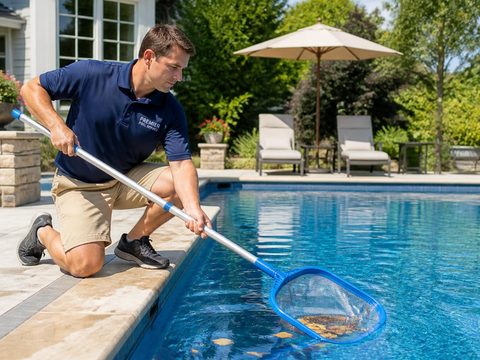
This component generally includes using specialized net extensions to collect airborne foliage, organic matter, and insects from the water surface, alongside manual sweeping of the waterline tile, submerged steps, and interior walls to assist in disturbing localized residue.
Debris Removal and Vacuuming
Personnel may deploy manual extraction hoses, specialized suction heads, or automated cleaning devices to capture accumulated sand, fine sediment, and submerged organic debris settling along the pool floor or seating areas.
Skimmer and Pump Basket Clearing
Visits frequently involve opening and emptying the collection baskets situated within deck skimmers and primary pump housings, an activity intended to facilitate relatively unhindered liquid movement toward filtration media.
Filter Pressure Inspection and Backwashing
Technicians often check operating pressure gauges against typical operational baselines and may conduct backwashing sequences, rinse filtration beds, or extract and rinse cartridge elements depending on system configurations and provider practices.
Equipment Operation Verification
Visits can encompass general external assessments of above-ground hardware on the equipment pad, such as circulation pumps, filtration chambers, supplemental heaters, and automated chlorination units, noting discernible moisture, atypical noises, or system notification displays.
How the work is typically performed
- 1
Arrival and Visual Inspection
The technician typically reviews the overall water clarity, approximate water levels, and the general condition of the pool deck and equipment area.
- 2
Water Sample Extraction and Analysis
A sample of water is gathered from an appropriate depth and evaluated through testing reagents, photometer units, or test strips to examine active sanitizer proportions and baseline stability factors.
- 3
Physical Cleaning and Debris Extraction
The technician empties accessible strainer pots and skimmer trays, glides collection nets across the water surface, brushes perimeter surfaces, and conducts vacuuming procedures across the floor.
- 4
Chemical Dosing and Adjustment
Following analytical results, corrective treatments such as sanitizing compounds, alkaline balancers, acid adjustments, or clarity aids may be introduced directly to the body of water or through dedicated distribution canisters.
- 5
System Check and Service Logging
Operational pressure gauges and water return ports are observed during circulation, followed by recording the specific measurements, chemical additions, and cleaning actions performed during the call.
Common reasons customers look for this service
- Warm seasonal conditions or elevated bather frequency that alter chemical consumption patterns
- Settings bordered by overhanging vegetation, deciduous trees, or landscaping features that deposit continuous plant matter
- Desire for regular observation of mechanical assemblies, pump sound profiles, and general circulation activity
- Preferences for third-party assistance regarding physical brushing, skimming, and underwater vacuuming tasks
- Management of outdoor basins exposed to changing weather conditions, windblown dirt, or rain events
About Weekly Maintenance
What chemical parameters are typically evaluated during routine pool service visits?
Service visits commonly feature checks for sanitizer presence, including free and combined chlorine, along with pH levels and total alkalinity. Extended evaluations may encompass calcium hardness, cyanuric acid stabilization levels, and total dissolved solids, with exact testing routines depending on weather exposure, system type, and specific company offerings.
What equipment and materials are typically provided during scheduled service?
Arrangements can vary among local providers. Many contractors transport independent cleaning supplies such as commercial vacuums, telepoles, skimming attachments, and testing kits, often alongside sanitizers and water balancers. Other service models may involve using existing equipment stored on the property or treating the water using chemicals purchased directly by the customer.
What factors influence swimming access following chemical additions?
The interval between chemical introduction and swimming activity can depend on the specific compound applied, total volume, water temperature, and equipment circulation rates. Service personnel typically consult manufacturer container instructions and circulation guidelines regarding the dispersion of applied water treatments.
This page provides general information about Weekly Maintenance for reference only. It is not professional, safety, medical, legal or financial advice, and it does not describe the services of any particular provider. Scope, methods and timing vary by provider and situation. Kuldesac does not perform these services; contact a qualified provider directly to discuss your specific needs.