


Solar Panel Cleaning Services
Solar panel cleaning involves the removal of dust, dirt, pollen, avian residue, and atmospheric particulate from photovoltaic panels. The service is intended to clean glass faces, framework perimeters, and surrounding components using specialized equipment designed for solar installations.
2 services · typical 5-step process
What it is
Solar panel cleaning entails the washing and clearing of photovoltaic panel surfaces, mounting hardware, and frame assemblies. Over time, outdoor installations can accumulate fine dust, agricultural soil, combustion soot, organic matter, and industrial fallout. These environmental residues may form a film over the solar glass, which can reduce the amount of light reaching the underlying photovoltaic cells. Service providers generally utilize low-pressure rinsing systems, specialized water filtration equipment, and non-abrasive agitation tools designed to clean surface glass without damaging delicate anti-reflective coatings, framework gaskets, or adjoining wiring.
Services that can fall within Solar Panel Cleaning
Residential Panel Cleaning
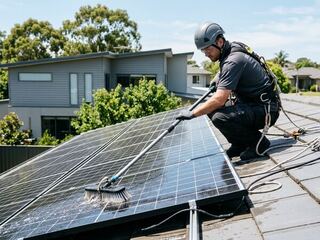
This service can encompass the washing of rooftop arrays, carport canopies, and ground-mounted solar installations on single-family homes or residential multi-unit complexes. Technicians typically utilize reach poles, soft-bristled brush heads, and low-pressure rinse systems to clear seasonal pollen, dirt layers, and bird droppings from panels while working around residential roof features.
Learn moreCommercial Panel Cleaning
This service can address expansive solar installations positioned on commercial roofs, industrial distribution warehouses, shade canopies, agricultural facilities, and ground-based arrays. Providers often deploy high-capacity water purification units, mechanical rotary brush systems, or specialized access gear to handle large volumes of panels spread across broad surface areas.
Learn more
How the work is typically performed
- 1
Visual Inspection and Array Assessment
Technicians typically begin with an initial visual review of the array to note existing surface conditions, broken glass, dislodged wiring, frame separation, or heavy debris concentration before applying water or mechanical equipment.
- 2
Dry Debris Clearing
Loose materials such as leaves, pine needles, twigs, and loose dirt are often brushed or blown away from panel faces, frame channels, and underside wiring before liquid washing begins, which can help prevent mud buildup during the wash cycle.
- 3
Purified Water Application and Scrubbing
The array is commonly washed using deionized or reverse-osmosis treated water paired with soft cleaning brushes or rotating cleaning tools. The use of mineral-free water is intended to wash away environmental soot and pollen without leaving residual mineral scale on the glass.
- 4
Targeted Treatment of Stubborn Soiling
Areas with concentrated residue, such as baked-on droppings, tree pitch, or industrial oils, may receive focused scrubbing or the application of mild, specialized cleaning solutions intended for coated solar glass.
- 5
Final Rinsing and Post-Clean Verification
Panels often receive a final rinse with treated water to leave a clean surface designed to dry naturally without water spotting. Providers may then complete a concluding walk-around to observe surface clarity and verify the surrounding workspace is cleared.
Common reasons customers look for this service
- Accumulation of dust, dirt, pollen, or sand observed across photovoltaic surfaces
- Changes in recorded system energy generation during typical operating periods
- Presence of bird droppings, biological matter, or tree residue on panel glass
- Environmental debris after regional windstorms, construction, or harvesting activity
- Visible water spotting, mineral film, or coastal salt residue on module glass
- Periodic property maintenance routines organized by homeowners or property managers
About Solar Panel Cleaning
How is water selection typically approached in solar panel cleaning?
Service providers often utilize deionized, distilled, or reverse-osmosis purified water rather than standard tap water. Municipal tap supplies and well water frequently carry dissolved minerals like calcium and magnesium, which can leave residue or hard water spots as moisture evaporates. The use of purified water is intended to achieve a spot-free rinse without requiring chemical drying agents, though specific water processing methods can vary depending on the provider and regional water conditions.
What tools and cleaning agents are commonly utilized on solar arrays?
Technicians generally use low-pressure fluid delivery systems paired with non-abrasive brushes, microfiber wash heads, or specialized rotating attachments engineered specifically for solar glass. High-pressure spraying and harsh abrasive detergents are typically avoided in standard practices, as pressurized water can potentially challenge weatherproofing seals and abrasive chemicals may degrade protective glass coatings. Cleaning solutions, when used, are typically mild and designated for photovoltaic applications.
How can environmental accumulation affect solar panel operations?
Photovoltaic modules require light penetration through the front glass to generate an electrical current. When dust, soot, or organic material rests on the glass, it can cast shade over individual cells or strings within the array. This partial or full shading can diminish the volume of sunlight received by the silicon wafers, which may lower the overall electrical output produced by the system during daylight hours.
This page provides general information about Solar Panel Cleaning for reference only. It is not professional, safety, medical, legal or financial advice, and it does not describe the services of any particular provider. Scope, methods and timing vary by provider and situation. Kuldesac does not perform these services; contact a qualified provider directly to discuss your specific needs.