


Burst Pipe Cleanup
Burst pipe cleanup is a water damage restoration service focused on extracting standing water, drying affected building materials, and addressing moisture issues resulting from ruptured plumbing lines.
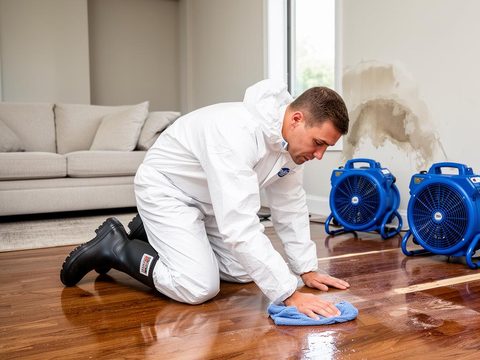
6 possible tasks · typical 5-step process
What it is
This service addresses water intrusion caused by compromised, aging, or frozen plumbing lines within wall cavities, ceilings, subfloors, and crawlspaces. Restoration providers typically work to locate moisture migration pathways, remove accumulated water, detach porous building materials that have absorbed moisture, and set up drying equipment to address structural framing. While burst pipe cleanup generally focuses on moisture containment, structural drying, and surface cleaning, it often does not encompass mechanical plumbing repairs to mend the pipe assembly itself or broad aesthetic reconstruction.
What Burst Pipe Cleanup can include
Emergency Water Extraction
Providers may deploy extraction units or submersible pumps to draw pooling water from floor coverings, subfloors, and affected structural cavities.
Moisture Mapping and Thermal Imaging
Technicians may utilize infrared cameras and moisture meters to help identify the pathways of water migration behind wall assemblies, below flooring materials, and within ceiling areas.
Controlled Demolition and Material Removal
This work can involve opening sections of damp drywall, taking out saturated insulation, and removing affected flooring layers to expose framing members for ventilation.
Industrial Dehumidification and Air Movement
Crews often place dehumidifiers and air-moving units throughout affected zones to facilitate evaporation and extract moisture from structural components.
Antimicrobial Treatment and Sanitization
Providers may apply antimicrobial or cleaning formulations to exposed framing, subfloors, and adjacent surfaces to help inhibit surface microbial activity.
Psychrometric Monitoring and Documentation
Technicians can take periodic readings of ambient temperature, relative humidity, and moisture levels in structural materials to monitor drying progress over time.
How the work is typically performed
- 1
Site Assessment and Containment Setup
Technicians typically survey the affected spaces, check the general layout, and may set up plastic containment barriers around the damp zones.
- 2
Bulk Water Removal
Crews use extraction equipment to draw pooled water from carpets, hard floor coverings, and lower structural areas.
- 3
Cavity Access and Cavity Stripping
Service providers can remove wet baseboards, saturated insulation, and portions of damp drywall to improve airflow within enclosed wall or ceiling cavities.
- 4
Thermodynamic Structural Drying
Crews set up combinations of air movers and dehumidification systems to promote ongoing evaporation and moisture reduction throughout structural components.
- 5
Final Moisture Verification and Clearance
Providers periodically assess structural materials with moisture meters to check drying progress against target readings before removing drying equipment.
Common reasons customers look for this service
- Accumulation of standing water near baseboards, interior walls, or lower levels
- Noticeable sound of running water behind walls or above ceilings
- Unexplained drop in plumbing pressure observed alongside damp patches on building surfaces
- Moisture seeping through drywall seams, ceiling panels, or trim work
- Water release following the thaw or cracking of interior plumbing pipes
About Burst Pipe Cleanup
What does burst pipe cleanup typically cover compared to plumbing repairs?
Burst pipe cleanup generally focuses on moisture extraction, removal of wet building materials, and structural drying. Plumbing repairs that involve fixing, soldering, or replacing the damaged pipe itself are typically handled as a distinct service by plumbing specialists.
What factors can influence the timeline of the structural drying process?
The duration of drying can vary depending on the volume of water released, how long materials were exposed to moisture, ambient humidity levels, and the types of materials involved, such as dense hardwood, framing lumber, or multiple layers of drywall.
How can opening walls or removing drywall assist during cleanup?
Drywall and insulation can retain moisture within wall cavities. Removing lower portions of wet drywall allows air circulation from drying equipment to reach framing members, which is intended to support thorough evaporation within enclosed spaces.
This page provides general information about Burst Pipe Cleanup for reference only. It is not professional, safety, medical, legal or financial advice, and it does not describe the services of any particular provider. Scope, methods and timing vary by provider and situation. Kuldesac does not perform these services; contact a qualified provider directly to discuss your specific needs.