


Appliance Repair Services
Appliance repair describes the technical evaluation, diagnostic testing, and component replacement associated with residential and commercial equipment.
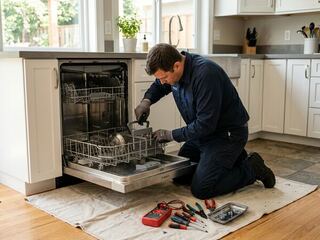
4 services · typical 5-step process
What it is
Appliance repair involves evaluating mechanical subsystems, circuitry, and fluid assemblies in kitchen, laundry, and utility machines. Service personnel examine touch panels, wiring, thermal units, electric motors, circulating pumps, and refrigerant conduits to observe equipment behavior. Work can encompass swapping worn parts, reading onboard fault signals, and investigating functional inconsistencies across gas, electric, or induction platforms.
Services that can fall within Appliance Repair
Refrigerator
Procedures can include evaluating compressor function, condenser and evaporator fans, defrost relays, and digital control boards when temperature variations, condensation, or frost patterns occur. Work may also involve clearing drainage pathways, replacing door sealing strips, and reviewing icemaker assemblies.
Learn moreWasher / Dryer
Technicians can examine motor couplings, extraction pumps, suspension rods, water mixing valves, heating elements, and thermal limit controls. The work may address drum balance irregularities, cycle interruptions, slow water expulsion, operational vibrations, or variations in heating cycle temperatures.
Learn moreDishwasher
Diagnostics often encompass circulation impellers, spray arm manifolds, auxiliary heating rods, water level float switches, and central microprocessors. Service may involve clearing debris from spray openings, replacing door gasket material, servicing latch sensors, and addressing wastewater evacuation paths.
Learn moreOven / Range
Service activities can involve inspecting or substituting bake and broil elements, gas metering valves, surface igniters, and temperature regulating switches. Technicians may also calibrate thermal sensors, service cooktop burner heads, and realign door counterbalance mechanisms.
Learn more
How the work is typically performed
- 1
Diagnostic Evaluation
Technicians typically initiate integrated service diagnostic routines, retrieve stored system codes, and review connections to electrical or gas utilities. Testing often includes assessing circuit continuity, electrical resistance, and mechanical movement using meters to evaluate components linked to operational irregularities.
- 2
Component Isolation
Individual assemblies are evaluated against standard operating baselines to check electrical continuity, fluid tolerances, or thermal responses. This procedure is designed to clarify whether operational anomalies relate to an isolated mechanical element, an electronic relay, or utility supply conditions.
- 3
Hardware Replacement
Components exhibiting wear or irregular operation, such as pumps, intake solenoids, heating coils, or control cards, can be removed and substituted with compatible parts. Technicians may clean terminal connections, apply specified lubricants, and reattach internal wire routings.
- 4
System Adjustments
Procedures can include reviewing utility fittings, confirming ground paths, inspecting water conduits, and resetting digital control processors. Functional parameters, latch interlocks, and cabinet seals may be adjusted to align with general equipment configurations.
- 5
Test Cycle Operation
The unit is typically run through an operational sequence to monitor heat levels, fluid intake, drum agitation, and fluid evacuation. Technicians observe the machine in use to record whether acoustic anomalies, thermal shifts, or liquid seepage remain evident.
Common reasons customers look for this service
- Display of diagnostic trouble codes or flashing alert symbols on an electronic console
- Variations in the ability of an appliance to reach or sustain expected thermal settings
- Presence of pooled water, delayed fluid drainage, or external moisture around equipment bases
- Audible operational sounds such as squealing, clicking, grinding, or recurring thumps
- Intermittent electrical flow, tripped circuit breakers, or unresponsiveness upon activation
- Interrupted operational sequences where cleaning, heating, or tumbling halts mid-program
About Appliance Repair
What considerations are common when evaluating an appliance repair?
Providers typically review factors such as replacement component availability, equipment vintage, general mechanical condition, and the complexity of the reported issue. Situations involving accessible hardware, like external switches, heating coils, or discharge pumps, are frequently addressed through targeted part substitution, whereas complications involving internal framing or sealed refrigerant circuits can involve broader assessment.
What categories of replacement parts can be utilized during service?
Service may involve either original equipment manufacturer components or compatible aftermarket alternatives, depending on component availability and individual provider practices. Original parts are sourced from the equipment builder, whereas third-party parts are fabricated by independent manufacturers and can be utilized when original items are out of production.
How is an area typically prepared prior to an appliance service visit?
Service visits generally involve providing direct physical access to the appliance interior and perimeter. Preparation often involves clearing garments, cookware, or foodstuffs from inside the equipment and removing obstacles from the surrounding floor area. Personnel typically require open pathways to shut-off valves, electrical connections, and service panels associated with the appliance.
This page provides general information about Appliance Repair for reference only. It is not professional, safety, medical, legal or financial advice, and it does not describe the services of any particular provider. Scope, methods and timing vary by provider and situation. Kuldesac does not perform these services; contact a qualified provider directly to discuss your specific needs.