


TV Mounting
TV mounting refers to the mechanical process of affixing a display screen to an interior wall or overhead surface utilizing specialized bracket systems and mounting hardware.
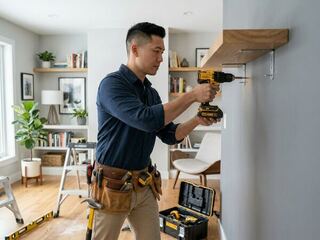
6 possible tasks · typical 5-step process
What it is
This service generally entails the setup and attachment of flat-screen, curved, or multi-panel video displays onto diverse wall types, such as drywall, plaster, masonry, concrete, or framed surfaces. Providers typically handle assembling compatible bracket hardware, setting anchors into supporting wall elements, joining the display to its framework, leveling, and bundling visible low-voltage connection cables. The work is focused on physical positioning and external line routing. Standard service typically excludes structural building alterations, in-wall electrical modifications, or installing recessed power outlets.
What TV Mounting can include
Bracket Installation
Securing fixed-position, tilt-capable, or articulating arm assemblies to framing members, solid wall materials, or specialized wall anchoring hardware.
TV Unit Attachment
Connecting corresponding bracket plates or vertical rails directly to the rear casing of the television using manufacturer-specified screw patterns.
Surface Cable Concealment
Grouping and dressing visible audio, video, and power wires along baseboards or wall faces using external channels, track covers, or ties.
Soundbar and Peripheral Mounting
Installing auxiliary brackets, shelving, or cradle units designed to hold companion audio bars, streaming boxes, or media accessories.
Leveling and Articulation Calibration
Adjusting horizontal placement with precision levels and setting the desired tension on tilt, pan, or extension mechanisms.
Hardware Safety Verification
Fastening mechanical locking bars, set screws, or retention latches designed to keep the display seated within the wall bracket.
How the work is typically performed
- 1
Site Review and Layout Measurement
The technician typically reviews the designated surface, identifies underlying wall framing, cross-references screen dimensions, and marks the proposed height and placement.
- 2
Wall Plate Attachment
Pilot openings are typically made in structural studs or solid substrate, followed by fastening the base bracket using structural bolts or specialized anchors.
- 3
Display Hardware Attachment
Mounting arms or adapter plates are fastened to the rear of the monitor, aligning with the screen’s threaded hole configuration.
- 4
Display Placement and Interlocking
The monitor is lifted onto the anchored wall plate, aligned horizontally, and locked into position using the bracket mechanism's retention hardware.
- 5
Line Dressing and Device Connection
Peripheral leads and power cords are plugged in and organized across wall surfaces using track covers, ties, or modular sleeves.
Common reasons customers look for this service
- Setting up a newly acquired flat-panel or curved screen display
- Moving into a different residential or commercial property
- Altering a room layout to accommodate different seating arrangements or wall spaces
- Transitioning a screen from furniture-top stand placement to an elevated wall position
- Adding companion hardware like soundbars or media consoles to an existing display setup
About TV Mounting
How are televisions mounted when wall studs are not present at the desired location?
When wooden or steel framing is not aligned with the planned position, installations can sometimes utilize heavy-duty hollow-wall anchors, toggle bolts, or supplemental backer boards spanning between available framing members. Feasibility and methods generally vary based on wall construction and display dimensions.
What is a VESA pattern in the context of TV mounting?
A VESA pattern refers to the standardized spacing between the threaded holes located on the rear panel of a display screen, expressed in millimeters. This configuration reflects which bracket models and screw arrangements correspond with that particular chassis.
How are television cables typically managed during mounting?
Management techniques depend on the project scope and the provider. Approaches often include applying paintable surface raceways, bundling wires into decorative cord sleeves, or routing cables through pass-through faceplates, depending on the wall structure and local service options.
This page provides general information about TV Mounting for reference only. It is not professional, safety, medical, legal or financial advice, and it does not describe the services of any particular provider. Scope, methods and timing vary by provider and situation. Kuldesac does not perform these services; contact a qualified provider directly to discuss your specific needs.