


Flood Cleanup
Flood cleanup describes the process of removing water, clearing sediment, and facilitating structural drying in properties that have experienced water entry from outdoor bodies of water, storm surges, or surface runoff.
6 possible tasks · typical 5-step process
What it is
Flood cleanup encompasses procedures used when external waters infiltrate residential or commercial spaces, such as during storm runoff, tidal movement, or elevated surface water conditions. Typical activities during this service can involve pumping pooled water from indoor areas, extracting sediment, dismantling moisture-laden porous materials, applying cleaning solutions to structural framing, and running specialized air management machinery. Flood cleanup operations generally focus on moisture removal and stabilization rather than long-term structural reconstruction, foundation engineering, or land grading adjustments.
What Flood Cleanup can include
Standing Water Extraction
Technicians can deploy specialized wet vacuums, portable sumps, and commercial water extractors to draw standing water out of below-grade spaces, ground levels, and utility areas.
Silt, Mud, and Debris Removal
This component can involve manual or mechanical removal of soil, mud, sand, and outdoor residues carried inside during an influx of ground water.
Controlled Demolition of Porous Materials
Building materials that readily absorb liquid, such as wet drywall, fibrous insulation, floor coverings, and pad underlayment, can be removed to provide access to structural framing.
Antimicrobial Washing and Decontamination
Exposed framing, masonry surfaces, and concrete slabs can be treated with specialized cleaning formulations and antimicrobial washes suited for structural elements.
Industrial Structural Drying
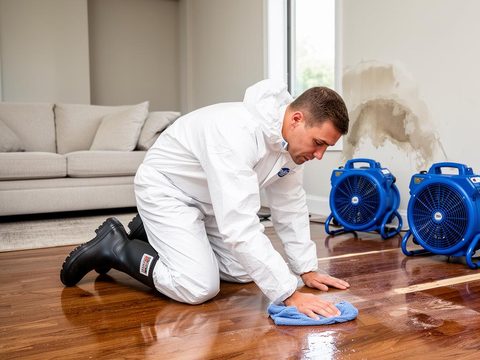
Professionals can install industrial air circulation fans and commercial desiccant or refrigerant dehumidifiers intended to support the evaporation of residual moisture from structural framing.
Moisture Mapping and Psychrometric Monitoring
Moisture levels throughout framing, subflooring, and ambient air can be tracked using moisture meters, thermal devices, and hygrometric tools over the course of the project.
How the work is typically performed
- 1
Site Inspection and Structural Assessment
Service providers review the premises to determine the reach of water infiltration and use electronic moisture meters to map moisture migration across walls and subflooring.
- 2
Bulk Water and Debris Extraction
Submersible pumps and high-volume extractors are positioned to clear standing water, followed by the physical removal of soil, silt, and damaged loose contents.
- 3
Material Removal and Surface Cleaning
Porous wallboards, insulation, and soft coverings can be cut away, after which exposed framing and hard surfaces are scrubbed with designated cleansing agents.
- 4
Targeted Mechanical Drying
Commercial air movers and dehumidifiers are placed throughout the affected structural cavities to promote evaporation and collect airborne moisture.
- 5
Post-Drying Verification
Technicians take follow-up moisture readings of framing elements, floor assemblies, and ambient humidity to evaluate whether materials have reached baseline dryness.
Common reasons customers look for this service
- Infiltration of surface runoff or river water into basement or ground-level areas
- Presence of silt, mud, and standing water across interior flooring or crawlspaces
- Entry of outdoor water through thresholds, low windows, or foundation penetrations
- Submerged floor coverings, drywall sections, and wall cavities following heavy precipitation events
- Moisture absorption within structural lumber, subflooring, and masonry after weather-related flooding
About Flood Cleanup
What is the reason drywall and insulation are frequently removed during flood cleanup?
Outdoor floodwater typically introduces fine soil, silt, and outdoor organic particulates into interior spaces. Porous components such as gypsum drywall and fiberglass batting can trap these particles within their matrix, making topical washing difficult. Removal of these materials is often utilized to expose framing members and masonry for direct washing and drying.
What factors can influence the drying phase during flood cleanup?
Drying timelines can vary based on several property-specific variables, including the total moisture volume, ambient outdoor temperatures, relative humidity, construction materials, and the capacity of the dehumidification equipment utilized. Each situation presents unique structural configurations and drying requirements.
How does flood cleanup differ from standard water leak services?
Standard water damage services often involve clean or semi-clean water from interior plumbing sources, where materials might sometimes remain in place for drying. Flood cleanup typically deals with exterior waters carrying dirt, silt, and particulate matter, which can require more manual clearing of sediment, selective material removal, and direct scrubbing of structural framing.
This page provides general information about Flood Cleanup for reference only. It is not professional, safety, medical, legal or financial advice, and it does not describe the services of any particular provider. Scope, methods and timing vary by provider and situation. Kuldesac does not perform these services; contact a qualified provider directly to discuss your specific needs.