


Residential Driveway Plowing
Residential driveway plowing refers to the motorized removal and repositioning of accumulated winter precipitation from private vehicular surfaces using trucks, compact utility tractors, or loaders equipped with plow assemblies.
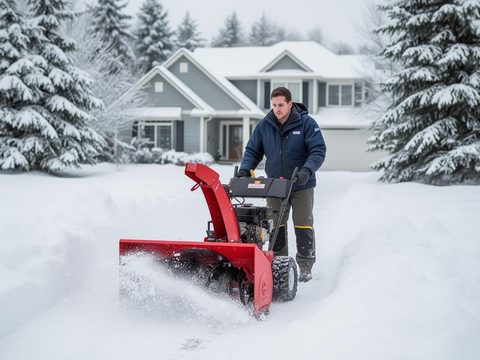
6 possible tasks · typical 4-step process
What it is
This service centers on displacing fallen or drifted snow, as well as street ridges, from private driveways, vehicle turnarounds, and parking pads. Operators use vehicle-mounted blades made of metal, polyurethane, or composite materials to push precipitation off active vehicle tracks and toward designated landscape or perimeter collection zones. The primary operational focus typically remains on vehicular passage corridors. Additional activities, such as hand-shoveling adjacent pedestrian walkways, distributing deicing materials, or mechanically transporting snow off the property entirely, often represent separate services that vary by contractor arrangement.
What Residential Driveway Plowing can include
Main Approach Clearing
Machinery operators typically make linear passes to shift snow across the central width of the primary vehicular driveway.
Municipal Windrow Cut-Through
Front-mounted equipment blades can divide and shift denser bands of compacted snow deposited along the entrance apron by municipal street clearing equipment.
Garage Approach Backdragging
Blades can be placed adjacent to garage doors or structural perimeters to pull snow backward into primary travel lanes for subsequent forward clearing.
Parking Stall and Turnaround Clearing
Ancillary parking spaces, turnouts, and extra vehicle bays can be systematically cleared to maintain open vehicular access across the property.
Snow Storage Stacking
Displaced precipitation can be pushed and piled into prearranged turf sections, landscape margins, or snow deposition zones to allow space for potential future accumulation.
Surface-Specific Blade Adjustment
Equipment can be adjusted with mechanical shoes or fitted with rubberized or polymer cutting edges intended for surfaces like interlocking pavers, textured concrete, or loose stone.
How the work is typically performed
- 1
Site Layout Review
Operators typically observe driveway boundaries, curb lines, utility caps, and property markers prior to engaging plowing equipment on the surface.
- 2
Perimeter Backdragging
Equipment can be positioned facing structures or parked vehicles to pull snow away from edges and toward central clearing lanes.
- 3
Primary Pushing and Angle Clearing
Operators typically utilize forward, angled runs to transfer the bulk volume toward designated lawn edges or collection zones.
- 4
Apron Clearing and Widening
Final passes can be made where the driveway meets the roadway to open the entrance and shape snow accumulation along street boundaries.
Common reasons customers look for this service
- Seasonal weather patterns that produce accumulated snow or slush across private driveways
- Street plowing activities that deposit compacted accumulation across driveway aprons
- Wind events that generate drifts across vehicle parking zones and turnaround spaces
- Temperature fluctuations that produce dense or heavy accumulation along primary vehicle lanes
- General residential vehicle traffic requirements involving family members, guests, or delivery services
About Residential Driveway Plowing
How can plowing equipment accommodate gravel or decorative paver driveways?
Operators often raise adjustable skid shoes so the blade rides slightly above the driveway plane, leaving a thin snow layer intended to reduce aggregate movement on gravel. On materials like interlocking pavers or decorative concrete, providers may use polymer or composite cutting edges to help reduce surface scuffing.
How close to garage doors and parked vehicles can plow equipment operate?
Blades typically keep a buffer spacing away from garage doors, stationary vehicles, and structural walls. Specific clearance can vary depending on equipment dimensions, visibility, and site topography, with closer areas sometimes addressed through backdragging actions or secondary manual tools.
Where is cleared snow typically placed on the property?
Displaced accumulation is commonly pushed to designated yard areas, turf margins, or snow storage zones alongside the driveway. Routine residential plowing generally addresses relocation on the property itself, whereas hauling snow off-site usually involves specialized transport equipment and separate service terms.
This page provides general information about Residential Driveway Plowing for reference only. It is not professional, safety, medical, legal or financial advice, and it does not describe the services of any particular provider. Scope, methods and timing vary by provider and situation. Kuldesac does not perform these services; contact a qualified provider directly to discuss your specific needs.