


Deep Cleaning
Deep cleaning generally describes an intensive residential service focused on addressing built-up grime, dust accumulations, and residues across interior surfaces not typically addressed during routine maintenance.
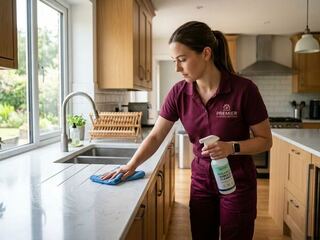
6 possible tasks · typical 5-step process
What it is
A residential deep clean typically concentrates on thorough surface treatment throughout kitchens, bathrooms, living rooms, and corridors. Service providers may scrub grout lines, wipe architectural trim, clean accessible fixtures, and wash floors around reachable furnishings. This type of cleaning generally differs from specialized property restoration, exterior power washing, or environmental remediation, which typically involve distinct cleaning protocols, specialized equipment, and separate protective procedures depending on the provider.
What Deep Cleaning can include
Baseboards, Door Frames, and Trim Detailing
Often involves wiping down or hand-washing baseboard moldings, door surrounds, trim pieces, and wall plates to manage surface dust and contact marks.
Kitchen Degreasing and Appliance Detailing
Can include washing cooktop surfaces, range hood exteriors, cabinet front panels, and splash guards to address cooking splatter and film.
Bathroom Tile and Grout De-scaling
May involve applying specialized cleaners and manual scrubbing across shower enclosures, bathtub surfaces, wall tiles, and floor grout to address soap film and mineral scale.
Air Vents, Light Fixtures, and Ceiling Fans
Typically entails dusting or vacuuming overhead return grilles, fan blades, and reachable light fixtures to remove collected particulate matter.
Window Tracks, Sills, and Blind Detailing
Can encompass wiping interior sills, clearing guide tracks, dusting latches, and wiping accessible window blind slats.
Behind and Under Moveable Furniture
May include shifting lighter household items within manageable limits to sweep, vacuum, or mop previously obscured floor areas.
How the work is typically performed
- 1
Initial Assessment and Surface Pre-Treatment
Technicians may review the rooms to locate areas with heavier buildup, often applying cleaning formulations or degreasers to kitchen and bath surfaces to loosen deposits.
- 2
Top-to-Bottom High-Surface Dusting
Staff typically work from upper levels downward, using extension rods, dusters, or vacuum attachments along ceiling lines, moldings, and vent covers to move debris toward the floor.
- 3
Fixtures and Wet Area Scrubbing
Workers often wash basins, shower surrounds, and cooking ranges using surface-compatible solutions, followed by wiping down glass and metal fixtures to reduce water marks.
- 4
Woodwork and Detailed Trim Cleaning
Cleaners may address lower woodwork by hand, wiping baseboards, running crevice tools along baseboard edges, and wiping accessible areas around heating vents.
- 5
Floor Washing and Final Review
Hard floors and carpets are typically vacuumed and washed with products appropriate for the surface, often ending with an informal review of the finished spaces.
Common reasons customers look for this service
- Preparing interior living areas for tenancy transitions, such as before moving in or after vacating a home.
- Cleaning interior surfaces following minor home remodeling, dry sanding, or painting work.
- Establishing a baseline level of surface cleanliness before starting a recurring cleaning arrangement.
- Addressing general dust and residue buildup during seasonal home maintenance.
- Tackling concentrated soap scale, mineral film, or kitchen splatter after extended periods without detailed cleaning.
About Deep Cleaning
What distinguishes a deep clean from routine housekeeping?
Routine housekeeping generally addresses everyday upkeep like surface dusting, counter wiping, and general floor sweeping. A deep clean often includes more detailed tasks, such as hand-wiping woodwork, scrubbing tile grout, and cleaning built-up grease around kitchen appliances.
What supplies and equipment do cleaning providers typically furnish?
Cleaning companies frequently bring standard cleaning agents, vacuum equipment, microfiber cloths, and basic reach tools. Specific solutions and equipment for specialized materials, such as unsealed stone or historic woodwork, can vary depending on the provider.
What factors influence the time needed to complete a deep clean?
The time required can vary based on home square footage, room layout, the presence of pets, and the extent of accumulated residue. Staffing arrangements and service paces also depend on the provider.
This page provides general information about Deep Cleaning for reference only. It is not professional, safety, medical, legal or financial advice, and it does not describe the services of any particular provider. Scope, methods and timing vary by provider and situation. Kuldesac does not perform these services; contact a qualified provider directly to discuss your specific needs.