


Residential Panel Cleaning
Residential solar panel cleaning entails the clearing of surface dust, pollen, organic matter, and exterior particulate films from rooftop or ground-based photovoltaic installations to maintain module glass exposure to sunlight.
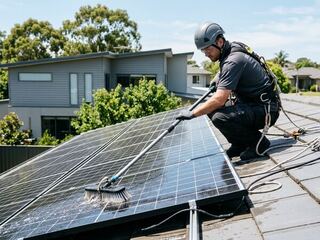
6 possible tasks · typical 5-step process
What it is
Residential solar panel cleaning encompasses the periodic exterior washing of photovoltaic systems, typically utilizing mineral-free water and soft brushes. Common service scopes involve washing surface glass, clearing debris around module borders, and observing exterior mountings from an exterior perspective. Such services generally focus on external surface care rather than electrical troubleshooting, inverter maintenance, roof substrate work, or internal wiring alterations.
What Residential Panel Cleaning can include
Dry Debris Clearing
Providers can brush away fallen foliage, twigs, and loose environmental matter that gather across panel faces, racking channels, and the spaces separating individual modules prior to liquid washing.
Deionized Pure Water Rinsing
Cleaning workflows often involve applying demineralized or filtered water across module faces, which can assist in limiting mineral spots or streaks as surfaces dry.
Non-Abrasive Agitation
Crews may gently scrub module glass utilizing specialized soft-bristle brushes or rotating wash heads designed for delicate photovoltaic glass coatings.
Frame and Channel Flush
Washing procedures can include clearing run-off channels and frame edges where particulate runoff, silt, and plant material tend to gather over time.
Visual Hardware Inspection
Technicians may note noticeable external conditions such as chipped glass, shifted module clips, or physical frame irregularity without dismantling any system hardware.
Post-Clean Production Check
Depending on the contractor, the appointment can involve noting values on homeowner-accessible system interfaces or display units to verify general operational presence following exterior work.
How the work is typically performed
- 1
Site Assessment and Setup
Technicians typically observe placement of the array, roofline pitch, and staging areas while noting existing external panel conditions prior to beginning wash setup.
- 2
Initial Dry Sweep and Pre-Rinse
Crews often clear loose surface plant matter and may mist the modules with water, which can help soften adhering environmental films before scrubbing.
- 3
Surface Scrubbing
Telescoping poles equipped with non-abrasive bristles are generally manipulated across the glass surfaces to loosen settled dust, pollen, and grime without standard household detergents.
- 4
Purified Water Final Rinse
A final pass with deionized or multi-stage filtered water is typically used to carry away suspended particles and facilitate air drying with minimal residue.
- 5
Site Wrap-Up and Review
Field staff usually rinse adjacent surfaces where runoff collected, pack tools, and may provide owners with before-and-after photographs of the array.
Common reasons customers look for this service
- Visible layers of pollen, silt, or particulate settle over photovoltaic surfaces
- Noted variations in recorded energy outputs on system monitoring consoles
- Accumulations of bird refuse, tree residue, or organic deposits on glass
- Environmental occurrences such as dust drift, agricultural tilling, or regional smoke
- Routine exterior property washing cycles or broader exterior building upkeep
About Residential Panel Cleaning
What cleaning materials and supplies are typically used for solar panel cleaning?
Technicians frequently employ demineralized water along with specialized non-abrasive brushes on extendable poles. Filtered water is often chosen because standard municipal supplies can contain minerals that leave spotting, while typical household cleaners can leave behind residues that attract future airborne dust or affect surface coatings.
What factors influence how often solar panel cleaning is performed?
Schedules can depend on local climate conditions, proximity to dirt roadways, surrounding foliage density, and property owner preference. Installations near heavy vegetation, active farmland, or areas with limited seasonal rain can experience dust accumulation at rates that vary widely from arrays situated in other settings.
How do technicians typically access solar arrays situated on roofs?
Access approaches can include working from stable perimeter areas, ladders, or ground level utilizing long water-fed extension rods. Direct footprint contact on module glass surfaces is generally avoided during routine washing procedures.
This page provides general information about Residential Panel Cleaning for reference only. It is not professional, safety, medical, legal or financial advice, and it does not describe the services of any particular provider. Scope, methods and timing vary by provider and situation. Kuldesac does not perform these services; contact a qualified provider directly to discuss your specific needs.