


Permanent Lighting Install
Permanent lighting installation refers to the mounting of low-profile, weather-resistant LED track systems along rooflines, eaves, or soffits for architectural, accent, and seasonal exterior illumination.
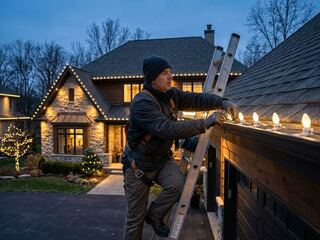
6 possible tasks · typical 5-step process
What it is
Permanent lighting installation involves mounting specialized lighting tracks onto a structure's eaves, fascia, or soffits to integrate illumination with exterior architecture. Project scopes can involve site layout planning, custom track fitting, low-voltage power and data cabling, controller setup, and device pairing. Typical service boundaries often exclude major high-voltage electrical modifications, structural carpentry, or gutter rebuilds, though specific inclusions vary by provider.
What Permanent Lighting Install can include
Linear Roofline Measurement and Planning
Service providers typically measure roofline perimeters, map potential wire paths through attics or soffit voids, and identify suitable locations for low-voltage power supplies.
Custom Channel Fabrication and Mounting
Installers often cut aluminum or composite channels to fit specific roofline dimensions, frequently coordinating track colors with existing trim before mechanically securing them under the roofline.
Diode Strand Insertion and Alignment
Individually addressable or standard LED modules are fitted into the mounting tracks, generally arranged to maintain consistent diode spacing and uniform downward or outward light distribution.
Low-Voltage Wiring and Power Injection
Crews run low-voltage power and data wiring through protected pathways, sometimes incorporating power injection connections along extended runs to help maintain consistent brightness and signal quality.
Smart Controller and Enclosure Setup
This step commonly includes mounting an exterior-rated enclosure to house power transformers and control units, along with connecting the controller to compatible Wi-Fi or Bluetooth networks.
System Testing and Digital Zone Configuration
Technicians typically verify diode operation, assist in configuring digital zones or groups within a control interface, and test basic scheduling, color selection, or animation features.
How the work is typically performed
- 1
Perimeter Inspection and Cable Routing
Installers generally inspect rooflines, fascia, and power access points. They map potential cable paths designed to conceal low-voltage wiring within soffits, trim joints, or nearby architectural channels.
- 2
Track Customization and Fastening
Tracks are cut to accommodate corners, gables, and peaks. Installers then mechanically attach the channel segments flush beneath eaves or overhangs using exterior-rated fasteners.
- 3
Electrical Hookup and Component Housing
Lighting modules are placed within the tracks and connected using weather-resistant wire junctions, which are routed back to power supplies housed in protective enclosures.
- 4
Controller Connection and Network Integration
The control unit is wired into the system and paired with local wireless networks, allowing management through compatible mobile applications or dedicated interfaces.
- 5
System Diagnostic and Operational Review
Technicians often cycle through color channels and lighting patterns to check diode continuity, review basic zone controls, and outline system programming functions.
Common reasons customers look for this service
- Desire to reduce seasonal installation and removal of temporary exterior lights
- Interest in programmable architectural accent lighting for regular evening use
- Seeking customizable exterior color options for holidays, events, or celebrations
- Looking to supplement perimeter downlighting along building walkways and entryways
- Replacing older exterior accent lighting or floodlights with integrated, low-profile track fixtures
About Permanent Lighting Install
How noticeable are permanent roofline tracks during daylight hours?
Permanent track channels are typically matched to the color of the building's trim, fascia, or soffits. Because modules are generally installed beneath overhangs, visibility from ground level during the day is often minimized, depending on the architecture and viewing angles.
How are permanent lighting systems typically controlled?
Most installations utilize digital controllers accessible via smartphone or tablet applications over local Wi-Fi or Bluetooth. These interfaces commonly allow users to select colors, adjust brightness levels, define specific zones, and establish automated operational schedules.
How are individual lights serviced if a component fails?
Many systems utilize modular designs or accessible connections within the track channels. This architecture often allows individual diodes, short light strings, or power components to be serviced or replaced without removing the entire installation, depending on the specific product line used.
This page provides general information about Permanent Lighting Install for reference only. It is not professional, safety, medical, legal or financial advice, and it does not describe the services of any particular provider. Scope, methods and timing vary by provider and situation. Kuldesac does not perform these services; contact a qualified provider directly to discuss your specific needs.