


Senior Companion Transport
Senior companion transport encompasses non-clinical travel support and on-site personal accompaniment for older adults attending appointments, social gatherings, or routine destinations.
7 possible tasks · typical 5-step process
What it is
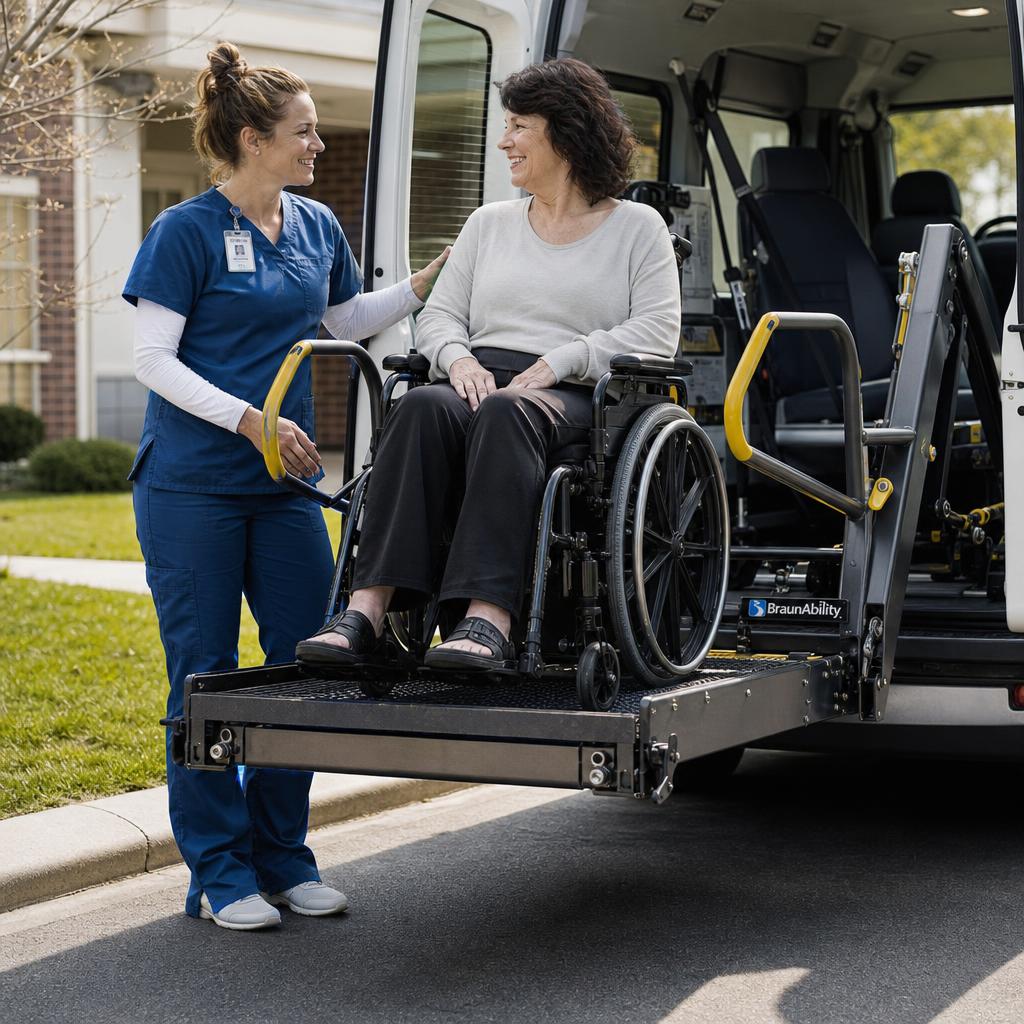
This service category typically combines vehicular travel with individualized physical presence and logistical support from origin to destination. Companion drivers frequently assist individuals between living quarters and the vehicle, support boarding or deboarding, and guide passengers through public venues or commercial centers. Unlike ambulance services or clinical transit programs, companion travel is designed around non-emergency personal aid, social engagement, and practical escorting rather than medical monitoring, specialized therapeutic intervention, or nursing observation.
What Senior Companion Transport can include
Door-Through-Door Assistance
Walking beside or guiding a passenger between interior residential living spaces and the transport vehicle, which can include traversing hallways, entry steps, porches, and exterior walkways.
Mobility Equipment Handling
Collapsing, loading, securing, and unpacking assistive mobility implements such as folding manual wheelchairs, walkers, rollators, or walking canes based on vehicle cargo space.
Vehicle Transfer and Seating Support
Providing steadying arm assistance, stabilizing balance, or adjusting vehicle seating positions during entry into and departure from the passenger compartment.
Appointment Check-In and Navigation
Escorting the passenger into professional offices or public complexes, offering wayfinding assistance through lobbies, corridors, and elevators, and assisting with arrival check-in desks.
Continuous On-Site Supervision
Staying alongside the passenger throughout the scheduled visit, appointment, or event until the departure leg commences.
Multi-Stop Errand Coordination
Facilitating prearranged supplementary stops along the designated route, which can include visits to financial institutions, pharmacies, or retail establishments according to the planned schedule.
Authorized Status Updates
Communicating departure notifications, arrival confirmations, or schedule progress to predesignated family members or point persons as arranged.
How the work is typically performed
- 1
Itinerary and Accessibility Intake
Service providers generally record routing information, destination addresses, estimated timelines, personal mobility equipment details, and specific escorting preferences.
- 2
On-Site Arrival and Departure Preparation
The escort meets the passenger at the residence entrance, assists with gathering personal items such as outerwear or paperwork, and accompanies the individual to the vehicle.
- 3
Assisted Transit and Stowage
The passenger receives guidance into the vehicle cabin, personal mobility equipment is secured within the vehicle trunk or storage zone, and transit proceeds along the designated course.
- 4
Facility Accompaniment and Waiting
Upon arrival at the destination, the companion assists with exiting the vehicle, accompanies the individual into the venue, facilitates desk check-in, and remains in the waiting area or designated room.
- 5
Return Travel and Home Settlement
After the visit concludes, transit returns to the residence, the individual is escorted back inside the entryway, and notification messages can be transmitted to designated contacts.
Common reasons customers look for this service
- Attending routine outpatient appointments where physical presence, wayfinding, or check-in assistance within a facility is desired
- Arranging transportation following outpatient consultations or non-surgical visits where independent vehicle operation is avoided
- Managing routine community outings, retail trips, or personal tasks where having a dedicated escort provides practical support
- Navigating travel schedules when regular family escorts or primary support networks have conflicting obligations
- Transitioning from personal driving toward assisted transportation options for community and social engagements
About Senior Companion Transport
What distinguishes companion transport from conventional taxi or rideshare options?
Conventional rideshare and taxi services generally provide curb-to-curb transit where drivers remain inside the automobile. Companion transport often encompasses entering the residence, providing direct personal assistance during transitions, and remaining present throughout appointments or outings, though service depth can vary by provider.
What level of personal assistance is typically provided during companion transportation?
Companion transport generally centers on non-clinical escorting, mobility aid stowage, arm stabilization, and directional guidance. Providers typically do not administer medications, manage clinical apparatus, or deliver healthcare treatments during transit or appointments.
Which types of mobility aids can typically be transported?
Vehicle capacity and driver policies typically determine which items can be accommodated. Many providers can transport collapsible manual wheelchairs, folding walkers, rollators, and canes in luggage compartments. Transporting motorized electric chairs or non-collapsible devices generally involves specialized ramp-equipped vehicles or specialized transportation services.
This page provides general information about Senior Companion Transport for reference only. It is not professional, safety, medical, legal or financial advice, and it does not describe the services of any particular provider. Scope, methods and timing vary by provider and situation. Kuldesac does not perform these services; contact a qualified provider directly to discuss your specific needs.
More Mobile Health Services services
- Non-Emergency Medical Transport
- Wheelchair / Stretcher Transport
- In-Home Nursing Visit
- Mobile Blood Draw / Phlebotomy
- Mobile IV Hydration Therapy
- Mobile Vaccinations & Flu Shots
- Mobile Covid / Lab Testing
- In-Home Physical Therapy
- In-Home Occupational Therapy
- Home Health Aide / Personal Care
- Post-Surgery / Recovery Care
- Hospice Support Visits
- Wound Care Visit
- Medication Management Visit
- Mobile Chiropractic
- Mobile Massage Therapy
- Mobile Foot / Nail Care
- Mobile Dental / Hygiene
- Bedside Medical Notary