


Driveway / Concrete Wash
Driveway and concrete washing is an exterior cleaning service that utilizes pressurized water, rotary surface equipment, and specialized detergents to address accumulated dirt, surface deposits, and biological growth on outdoor flatwork.
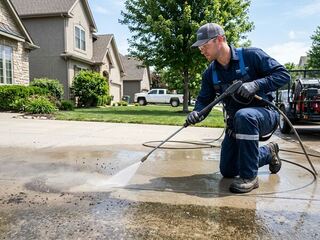
6 possible tasks · typical 5-step process
What it is
This service is designed to clean horizontal surfaces such as poured concrete, exposed aggregate, pavers, and masonry flatwork through mechanical water pressure and targeted chemical applications. Service providers typically focus on removing atmospheric dust, tire markings, fluid residues, moss, and algae utilizing commercial rotary surface cleaners alongside adjustable spray nozzles. Concrete washing is generally focused on surface cleaning and typically does not encompass structural crack repairs, joint re-sanding or stabilization, mechanical leveling, or decorative acid etching. Project scope, equipment selection, and specific wash methods often vary depending on the condition, age, and composition of the paved surface.
What Driveway / Concrete Wash can include
Surface Pre-Treatment
Technicians can apply targeted detergents, degreasers, or mild alkaline surfactants intended to loosen surface grease, tree sap, and organic deposits prior to mechanical pressure washing.
Rotary Surface Cleaning
The service typically includes the operation of walk-behind flat-surface cleaners equipped with dual rotating spray bars, which help distribute water pressure evenly across wide flatwork.
Edge and Joint Detailing
Providers often utilize handheld spray wands or specialized nozzles to clean perimeter borders, expansion joints, masonry edges, and areas inaccessible to larger surface tools.
Slurry Rinsing and Runoff Management
Technicians generally rinse dislodged silt, dirt, and water slurry across the slab toward accessible drainage areas, landscape borders, or designated containment zones.
Targeted Stain Treatment
Specialized spot applications can be used to treat noticeable discolorations, including motor oils, transmission fluids, rust, or irrigation mineral marks.
Algaecide Post-Treatment
An optional chemical rinse or topical post-treatment solution may be applied to help deter rapid organic regrowth and promote uniform surface appearance across the concrete.
How the work is typically performed
- 1
Site Inspection and Protection
The technician typically reviews the work area, noting the substrate condition, surface cracks, or existing damage, and may pre-wet surrounding landscaping to help minimize detergent contact.
- 2
Chemical Pre-Soak
Detergents, emulsifiers, or alkaline pre-treatments are sprayed onto heavily soiled sections or high-traffic paths to help suspend embedded grime and oils.
- 3
Mechanical Surface Washing
The contractor maneuvers a rotary surface cleaning unit across the paved area, using calibrated water pressure and spray tips selected based on the surface material and hardness.
- 4
Perimeter Wash and Rinse
Technicians typically switch to handheld wand attachments to wash slab perimeters, expansion seams, and corners, directing leftover residue and loosened particles toward collection or drainage areas.
- 5
Post-Wash Sanitize and Final Check
A light post-application solution may be distributed across the cleaned concrete to address residual micro-organisms, followed by a walk-through to observe surface consistency.
Common reasons customers look for this service
- Accumulation of green or black biological film, moss, or algae across exterior paving
- Noticeable motor oil drips, fluid marks, or tire rubber deposits on parking pads
- Surface preparation prior to applying sealers, densifiers, or decorative concrete coatings
- Discoloration from ground-in dirt, clay sediment, leaves, or seasonal pollen
- Mineral, rust, or hard water staining resulting from irrigation overspray or metal fixtures
About Driveway / Concrete Wash
How do technicians manage pressure to avoid concrete surface etching?
Washing equipment typically incorporates adjustable pressure regulators, varying spray nozzles, and rotary surface cleaners. Rotary units hold spray tips at a set distance from the substrate, which helps distribute hydraulic force evenly and reduces the likelihood of localized surface marking compared to stationary high-pressure spray patterns.
Can deep oil or fluid stains be fully removed from concrete?
The degree of stain removal can depend on the age of the spill, the depth of penetration, and the porosity of the concrete. While fresh spills often lighten or lift with commercial degreasers, older fluid deposits that have migrated deep into the concrete matrix may leave faint shadows or residual discoloration even after multiple wash cycles.
What is the typical drying time for concrete surfaces after a pressure wash?
Drying times can range from a few hours to a full day depending on ambient air temperature, relative humidity, wind exposure, and sunlight. Porous concrete or shaded sections typically retain moisture longer than exposed slabs in warm, direct sunlight.
This page provides general information about Driveway / Concrete Wash for reference only. It is not professional, safety, medical, legal or financial advice, and it does not describe the services of any particular provider. Scope, methods and timing vary by provider and situation. Kuldesac does not perform these services; contact a qualified provider directly to discuss your specific needs.