


Leak Repair
Leak repair encompasses plumbing services designed to identify, access, and address unintended water release from supply lines, drainage networks, fixtures, and associated residential or commercial piping systems.
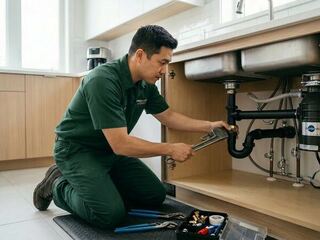
6 possible tasks · typical 5-step process
What it is
This service category generally involves the physical assessment and mechanical intervention on fluid-carrying pipes, drainage configurations, plumbing appliances, and connection interfaces. Providers may substitute degraded segments of piping, introduce fresh sealing elements, apply mechanical fasteners, or complete joint soldering where containment has been compromised. The scope of work typically concentrates on the plumbing infrastructure itself, while secondary tasks such as moisture extraction, drywall patching, finish carpentry, surface repainting, or environmental remediation are customarily handled outside of standard plumbing interventions.
What Leak Repair can include
Pipe Joint and Fitting Repair
Plumbing technicians can address leaking intersections by exchanging worn internal seals, adjusting threaded fittings, resetting compression sleeves, or resoldering copper assemblies along supply branches and manifold configurations.
Damaged Pipe Section Replacement
Portions of metallic or polymer lines exhibiting localized wear, fractures, or erosion can be excised and bridged with matching or compatible pipe sections utilizing press fittings, mechanical couplings, or heat-fused joints.
Fixture Leak Servicing
Work can involve disassembling faucets, shower controls, spigots, or inline shut-off valves to exchange degraded internal cartridges, valve seats, O-rings, stem packings, or related moving parts.
Toilet Flange and Wax Ring Resealing
Technicians can separate the toilet fixture from the floor surface, evaluate the condition of the closet flange, insert a fresh wax gasket or synthetic seal, and resecure the base with new mounting hardware.
Drain and Trap Assembly Repair
P-trap units, continuous waste branches, slip nuts, and tailpiece extensions beneath basins and sinks can be realigned, fitted with fresh friction washers, or swapped with new drainage components.
Appliance Supply Line Replacement
Flexible reinforced braided connectors, copper tubing, or polymeric lines serving clothes washers, dishwashers, ice makers, or water heaters can be disconnected and swapped with alternative flexible supply assemblies.
How the work is typically performed
- 1
System Isolation and Inspection
Water flow to the designated line or structure is temporarily interrupted, permitting the technician to visually assess the components, connection points, or surrounding structural areas.
- 2
Access and Exposure
Technicians may utilize service access panels or create targeted openings in surrounding drywall, subflooring, or cabinetry to expose concealed pipe runs for evaluation.
- 3
Removal and Surface Preparation
Compromised pipe segments, failed gaskets, or worn mechanical assemblies are removed, followed by the cleaning, deburring, and preparation of remaining pipe ends to receive replacement materials.
- 4
Component Installation
New piping, repair couplings, replacement valve cores, or sealing rings are positioned and secured through methods tailored to the material, such as solvent cementing, mechanical crimping, soldering, or threading.
- 5
Pressure Testing and Verification
Water service is reintroduced to the altered segment, enabling the technician to observe the assembly under dynamic line pressure and check for fluid containment across the worked area.
Common reasons customers look for this service
- Discoloration, moisture marks, or peeling paint on sheetrock, ceilings, or trim elements
- Unexplained movement recorded on utility water meters during intervals when fixtures remain idle
- Accumulation of standing moisture, pooling, or mineral crusting under cabinetry, around water heaters, or near fixture bases
- Audible dripping or sounds of liquid movement behind partition walls or beneath floor surfaces
- Perceptible drops or variations in fluid flow across specific household outlets or supply branches
- Persistent damp odors detected in enclosed areas such as under-sink vanities, pipe chases, or crawlspaces
About Leak Repair
What methods are utilized to find concealed pipe leaks?
Plumbing technicians frequently rely on non-invasive diagnostic tools, which can include acoustic listening devices, thermal imaging sensors, or electronic moisture meters. The choice of diagnostic technique depends on the building construction, accessibility, and the specific equipment utilized by the provider.
What approaches are used when repairing a damaged pipe?
Repair techniques vary depending on the pipe composition, location, and condition of the line. Options can involve applying temporary repair sleeves, utilizing slip couplings, joining pipe sections via soldering or crimp rings, or threading new fittings directly into place.
Is structural or surface restoration included with leak repair services?
Plumbing service providers typically focus solely on resolving the mechanical issue within the pipe or fixture assembly. Structural drying, insulation replacement, drywall finishing, and floor repairs are generally handled by separate carpentry or building restoration contractors.
This page provides general information about Leak Repair for reference only. It is not professional, safety, medical, legal or financial advice, and it does not describe the services of any particular provider. Scope, methods and timing vary by provider and situation. Kuldesac does not perform these services; contact a qualified provider directly to discuss your specific needs.