


Screens & Repair Services
Screens & Repair encompasses the fabrication, repair, and replacement of mesh screening, framing materials, and related hardware for residential and commercial windows, doors, and outdoor enclosures.
3 services · typical 5-step process
What it is
This category includes a variety of screening services designed to assist with airflow, daylight transmission, and insect barriers across building openings. Service providers typically work with various materials, such as standard fiberglass, aluminum, pet-resistant vinyl-coated polyester, and solar-shading fabrics. Projects can involve custom window frame construction, sliding screen door adjustments, patio enclosure rescreening, and hardware servicing such as rollers, latches, and retention spline.
Services that can fall within Screens & Repair
Window Screen Repair
This service can involve repairing or replacing torn mesh, bent or damaged aluminum frames, tension springs, pull tabs, and corner keys on standard and custom-sized window assemblies. The work typically includes sizing new screen fabric, pressing spline into the perimeter groove, and setting the completed unit into the window opening to fit properly.
Learn morePool Cage Rescreen
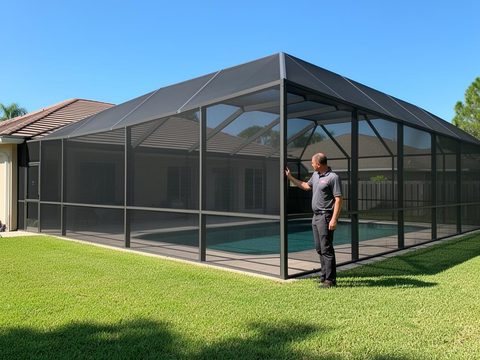
This service involves the replacement of worn, loose, or damaged screening across roof sections, vertical walls, and kickplates of outdoor enclosures, lanais, or pool cages. Providers typically extract weathered spline, inspect aluminum extrusion channels, and secure new fiberglass or polyester mesh panels into individual structural bays.
Learn moreScreen Door Install / Repair
This work covers the maintenance, alignment, and installation of swinging, sliding, and retractable screen door systems. Work can involve replacing worn rollers, handles, tracks, and locking hardware, rescreening existing door frames with specialty or standard mesh, or measuring and installing newly fabricated door assemblies.
Learn more
How the work is typically performed
- 1
On-Site Assessment and Frame Inspection
Service providers typically evaluate the openings, verify dimensions, examine the condition of aluminum frame channels, and note the status of existing mesh, spline, fasteners, and moving hardware.
- 2
Mesh and Material Selection
Property owners and providers typically review material choices depending on the application, such as traditional fiberglass mesh, fine insect screens, heavier pet-resistant fabrics, or UV-filtering solar screens.
- 3
Component Removal and Surface Prep
Technicians typically remove loose or aged spline, take out damaged mesh fabric, address minor frame bends or prepare replacement extrusions, and clear dirt or debris from the spline channels.
- 4
Mesh Rolling and Splining
Fresh mesh is laid across the framework under uniform tension and pressed into the frame channel using a specialized spline roller and matched vinyl or rubber spline material.
- 5
Trimming, Fitting, and Functional Testing
Excess mesh material is trimmed along the spline edge, frames are reinstalled into window or door openings, and sliding or latching mechanisms are checked for basic operational movement.
Common reasons customers look for this service
- Torn, frayed, or punctured screen fabric
- Aluminum frames that appear bent, twisted, or unseated from the opening
- Hardened, loose, or missing spline along screen perimeter channels
- Sliding screen doors that drag, catch, or jump off track guides
- Visible gaps between screen frames and adjacent window or door jambs
- Screening that has experienced discoloration, weathering, or sagging over time
About Screens & Repair
How are bent or warped screen frames typically addressed?
Minor bends in aluminum framing can sometimes be reshaped, depending on the severity of the distortion. When a frame has significant kinks, crimps, or twists that prevent proper spline retention or opening fit, technicians typically cut and assemble new frame pieces using compatible corner keys.
What distinguishes standard fiberglass mesh from pet-resistant screen mesh?
Standard fiberglass mesh is a flexible, lightweight option commonly utilized for general insect filtering and natural ventilation. Pet-resistant screen is typically constructed from vinyl-coated polyester yarn, resulting in a heavier, thicker material designed to withstand increased surface abrasion and impact.
Can individual panels on an outdoor enclosure be replaced independently?
Single panels on pool cages and outdoor enclosures can generally be rescreened on an individual basis if surrounding channels and adjacent panels remain intact. In situations where multiple sections show weathering or loose spline, full or multi-panel rescreening is sometimes selected to achieve a uniform appearance.
This page provides general information about Screens & Repair for reference only. It is not professional, safety, medical, legal or financial advice, and it does not describe the services of any particular provider. Scope, methods and timing vary by provider and situation. Kuldesac does not perform these services; contact a qualified provider directly to discuss your specific needs.