


Gutter Guard Install
Gutter guard installation involves fitting protective covers, screens, or mesh systems over existing gutters to help manage debris accumulation while allowing rainwater to pass into the drainage channels.
6 possible tasks · typical 5-step process
What it is
Gutter guard installation is a specialized exterior service centered on measuring, sizing, and fastening protective barrier systems—such as micro-mesh screens, reverse-curve hoods, or perforated metal panels—onto existing residential or commercial gutter troughs. The primary purpose of these systems is to help limit the entry of leaves, twigs, pine needles, and other outdoor debris while allowing runoff from the roofline to flow into downspouts. Depending on the existing conditions and the specific service agreement, the process can involve clearing out accumulated material from troughs and checking bracket fasteners prior to panel placement. This service generally focuses on the attachment of guard components and does not typically include comprehensive gutter replacement, structural fascia reconstruction, or underground drainage excavation.
What Gutter Guard Install can include
Debris Clearing and Trough Preparation
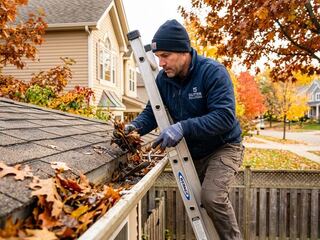
Installers typically clear accessible leaves, organic sludge, and silt from the interior troughs and downspout drop outlets so that guards can be fitted onto clean surfaces.
Gutter Alignment and Pitch Inspection
The existing gutters can be reviewed for proper pitch toward downspout openings, and loose fasteners, brackets, or spikes may be adjusted or secured to support the guard system.
Custom Cutting and Miter Trimming
Technicians measure and cut guard panels on-site using sheet-metal shears or specialized cutting tools to accommodate specific run lengths, end caps, and inside or outside roof miters.
Guard Fastening and Mechanical Securing
Panels are attached along the gutter edge, fascia line, or hidden hangers using self-tapping exterior screws, locking channels, or manufacturer-designed clips depending on the profile.
Downspout Inlet Protection
Where applicable, specialized outlet strainers or transitional covers can be integrated at downspout junctions to help manage smaller debris entering vertical pipes.
Seam and Joint Sealing
Installers align adjacent guard sections and can apply exterior-grade sealants or overlapping connectors at critical intersections to help minimize gaps between panels.
How the work is typically performed
- 1
Site Inspection and Material Selection
The property is evaluated to document gutter sizes, roof pitch, shingle overhangs, and surrounding tree types, which helps determine a compatible guard design, screen aperture, or attachment style.
- 2
System Cleaning and Tune-Up
Existing troughs are generally cleared of loose debris, downspout openings are cleared of obstructions, and loose gutter mounting components can be tightened to stabilize the channel.
- 3
Panel Sizing and Placement
Individual guard sections are trimmed to length, notched around brackets or corners, and laid out sequentially along the entire length of each gutter run.
- 4
Securing and Fastening
Guard sections are mechanically fastened according to product specifications, which can include affixing the front edge to the gutter lip and securing the rear flange near the fascia or drip edge.
- 5
Flow and Alignment Verification
The completed run is inspected visually to check for consistent slope, secure attachments, flush seams, and the absence of gaps that could allow debris bypass.
Common reasons customers look for this service
- Properties situated beneath dense tree canopies that shed leaves, pine needles, or seed pods seasonally
- Gutter channels that frequently accumulate heavy organic matter or standing sludge
- Observation of water overflowing gutter edges associated with clogged downspout drop outlets
- Evidence of birds, pests, or rodents utilizing open gutter channels for nesting
- Homeowner interest in reducing the frequency of routine manual gutter scooping and cleaning
About Gutter Guard Install
What type of maintenance is typically associated with gutter guards?
While gutter guards are designed to help reduce large debris collection, they do not make a drainage system completely maintenance-free. Small particles such as roof grit, pollen, and fine organic material can still accumulate on top of screens or inside the channels over time, which may require periodic surface sweeping, brushing, or rinsing depending on environmental conditions.
How do gutter guard systems typically interact with roof shingles and drip edges?
Attachment configurations vary based on guard brand and roof architecture. Many systems fasten directly to the gutter lip and fascia without contacting shingles, whereas other styles slide slightly beneath the starter shingle course. The specific mounting approach can depend on the provider, the guard design, and the type of roofing installed.
How do gutter guards manage heavy rainfall?
Most micro-mesh, screen, and reverse-curve systems are engineered to direct water into the channel through surface tension or gravitational flow. Performance during high-volume rainfall can vary depending on gutter slope, roof steepness, rainfall intensity, and whether surface debris has gathered over the intake openings.
This page provides general information about Gutter Guard Install for reference only. It is not professional, safety, medical, legal or financial advice, and it does not describe the services of any particular provider. Scope, methods and timing vary by provider and situation. Kuldesac does not perform these services; contact a qualified provider directly to discuss your specific needs.