


Chimney & Fireplace Services
Chimney and fireplace services encompass the evaluation, mechanical brushing, exterior masonry upkeep, and component care associated with residential venting flues, hearth appliances, and firebox enclosures.
4 services · typical 5-step process
What it is
This service category encompasses venting passages, fireboxes, and above-roof masonry or framed chases connected to wood, pellet, and gas hearth units. Service providers evaluate exhaust pathways, address interior soot deposits, manage exterior weather interfaces, and service operational hardware. Work typically centers around draft passage characteristics, precipitation deflection around the flue top, and general upkeep of combustion chambers and connecting pipes. Specific tasks can vary depending on construction materials, fuel types, appliance designs, and the overall configuration of the venting structure.
Services that can fall within Chimney & Fireplace
Chimney Sweep
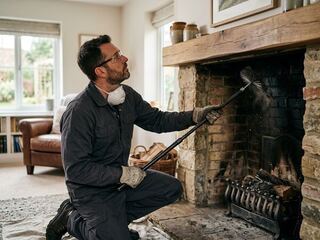
Sweeping typically involves mechanical brushes, flexible rods, and specialized collection vacuums to dislodge and capture soot, creosote, and particulate residue from flue liners, smoke chambers, and damper assemblies. The activity is intended to clear loose debris and manage internal surface deposits throughout the exhaust path.
Learn moreChimney Inspection
Assessments involve visual observation or camera systems lowered into the flue to document the condition of interior liners, connecting joints, firebox walls, and exterior masonry stacks. Findings typically note observable cracks, surface erosion, joint separation, or material wear across accessible venting components.
Learn moreCap / Crown Repair
This work pertains to the top termination of the chimney structure, often involving the application of patching compounds to cracked mortar crowns, the placement of metal caps, or the installation of mesh spark screens. Technicians may apply water-resistant coatings or form new mortar washes designed to deflect precipitation from the flue entrance.
Learn moreFireplace Service
Fireplace maintenance can encompass gas, electric, or solid-fuel configurations. Procedures often entail clearing debris from burners, adjusting pilot assemblies or electronic igniters, cleaning interior glass panels, reviewing refractory brick panels, and lubricating or realigning damper controls.
Learn more
How the work is typically performed
- 1
Containment and Site Preparation
Technicians commonly place protective runners or canvas coverings across the hearth and nearby flooring, frequently pairing these with containment barriers and filtration vacuums intended to manage airborne particulate within the immediate workspace.
- 2
Diagnostic Assessment
Providers typically view the firebox, damper, and flue column using high-output lighting or specialized camera gear to observe soot depth, surface wear, and the general state of accessible components.
- 3
Mechanical Cleaning
Using brushes matched to flue dimensions and lining materials, service personnel sweep the interior surfaces from the rooftop or hearth opening, dislodging particulate while vacuum systems draw in loosened matter.
- 4
Component Repair and Maintenance
Technicians may address worn seals, apply compounds to masonry voids, adjust burner or ignition elements on gas units, or repoint mortar joints within the firebox lining.
- 5
System Testing and Documentation
Technicians often confirm damper articulation, observe exhaust flow tendencies during test operation, and prepare informational summaries outlining the tasks performed and the visible state of the equipment.
Common reasons customers look for this service
- Observed accumulation of soot, ash, or dark residue on firebox surfaces or within the flue opening
- Changes in exhaust movement, such as smoke drafting into interior living spaces rather than rising through the flue
- Visible exterior wear on the chimney stack, such as missing mortar, cracked crowns, or spalling brickwork
- Evidence of water penetration, including moisture on firebox walls or damp spots near the hearth structure
- Altered performance in gas fireplaces, including pilot outages, delayed ignition, or unusual flame patterns
- Inquiries regarding system condition prior to initial seasonal operation or after periods without use
About Chimney & Fireplace
What distinguishes a chimney sweep from a chimney inspection?
A chimney sweep focuses on the physical brushing and vacuuming of soot, ash, and creosote from interior venting passages and the smoke chamber. In contrast, an inspection centers on examining and recording the visible condition of flue linings, structural masonry, clearances, and appliance attachments, often utilizing specialized cameras or lighting.
What functions do chimney crowns and caps typically serve?
Chimney crowns and caps are protective components positioned at the top of the stack. Crowns provide a sloped mortar or concrete barrier intended to direct rainwater away from flue edges, while caps generally incorporate metal hoods and mesh barriers that help deflect precipitation and deter foreign debris or animals from entering the chimney conduit.
What procedures can be involved in a gas fireplace service visit?
Gas fireplace servicing can involve vacuuming dust from log sets and burner pans, clearing ignition ports, testing electrical switches or wall controls, cleaning glass panels, and observing vent line connections. Specific inclusions can vary depending on unit design, venting style, and service provider practices.
This page provides general information about Chimney & Fireplace for reference only. It is not professional, safety, medical, legal or financial advice, and it does not describe the services of any particular provider. Scope, methods and timing vary by provider and situation. Kuldesac does not perform these services; contact a qualified provider directly to discuss your specific needs.