


Fence Repair
Fence repair focuses on addressing structural stability, alignment, and enclosure functionality across damaged or weathered boundary installations by servicing or replacing compromised posts, rails, pickets, mesh, and gate hardware.
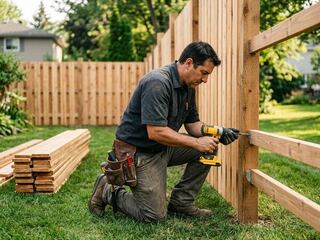
6 possible tasks · typical 4-step process
What it is
Fence repair involves targeted services to address localized structural wear, physical impact damage, soil movement, and hardware degradation across wood, vinyl, composite, chain-link, and ornamental metal fence systems. Fencing professionals evaluate individual runs to reinforce or replace broken posts, realign sagging frameworks, and secure loose infill panels without requiring an entire boundary installation. This service centers primarily on localized rehabilitation, component replacement, and structural alignment; it typically does not involve site-wide land clearing, initial property boundary planning, or professional land surveying services.
What Fence Repair can include
Post Replacement and Footing Resetting
Technicians can excavate damaged, rotted, or frost-shifted posts, clear compromised concrete footings, and place replacement pressure-treated wood, steel, or vinyl posts set in plumb concrete or gravel bases.
Rail and Picket Replacement
Service providers can detach damaged, warped, or missing horizontal backer rails and vertical pickets, installing replacement materials sized to match the existing fence framework.
Gate Realignment and Hardware Repair
Work can involve adjusting out-of-square gate assemblies, resetting hinges, re-anchoring gate posts, and aligning latch mechanisms to address ground clearance issues or improper latch engagement.
Chain-Link Mesh and Top Rail Repair
Professionals can splice damaged chain-link fabric, replace bent top rails, adjust tension wires, and re-fasten mesh sections to terminal posts using matching tension bands and ties.
Vinyl and Composite Panel Splicing
Damaged or dislodged vinyl tongue-and-groove boards, top rails, and snap-in pickets can be disassembled and replaced with compatible manufacturer components.
Section Re-Plumbing and Bracing
Leaning fence sections affected by wind forces or soil shifting can be realigned toward vertical plumb, stabilized with temporary support, and reinforced with sister posts or specialized brackets.
How the work is typically performed
- 1
Inspection and Structural Assessment
Technicians typically examine the fence run, observing post condition, material degradation, fastener wear, and ground stability to identify specific components requiring repair or reinforcement.
- 2
Removal of Compromised Components
Deteriorated pickets, broken rails, and damaged concrete footings are excavated or detached while seeking to preserve adjacent sound sections and structural framework.
- 3
Structural Resetting and Framework Installation
Replacement support posts can be set and aligned, footings cast or backfilled, and replacement horizontal stringers attached to create a stable framework for the infill material.
- 4
Infill Attachment and Hardware Adjustment
Panels, individual pickets, or wire mesh materials are secured to the framework, followed by adjustments to gate hinges, drop rods, and latch hardware to support standard movement.
Common reasons customers look for this service
- Fence posts displaying leaning, loosening, or ground-level separation
- Pickets or infill boards that are loose, cracked, missing, or separated from rails
- Gate frames dragging across ground surfaces or misaligned with latch strikers
- Sections dislodged or deformed following severe weather or impact events
- Chain-link fabric sagging, unravelling, or detaching from supporting rails
About Fence Repair
How can a leaning fence post be addressed without removing the existing footing?
Depending on the post condition and soil situation, technicians may straighten the existing post and drive steel reinforcement spurs or sister brackets into the ground alongside it. If the post base has rotted or the concrete footing has broken, full excavation and replacement are often used instead.
How are replacement wood boards matched to an existing fence?
Service providers generally source lumber of the same species and dimensions as the original structure. Because newer wood has a different tone than weathered boards, appearance can vary initially; exposure to outdoor conditions typically weathers the boards over time, or surface stains can be applied depending on the project scope.
What factors distinguish fence repair from full fence replacement?
Fence repair is commonly utilized when damage or wear is confined to isolated posts, individual panels, or specific hardware components while the remainder of the structure remains intact. When deterioration or mechanical wear is present across the majority of the perimeter run, full replacement is often evaluated as an alternative.
This page provides general information about Fence Repair for reference only. It is not professional, safety, medical, legal or financial advice, and it does not describe the services of any particular provider. Scope, methods and timing vary by provider and situation. Kuldesac does not perform these services; contact a qualified provider directly to discuss your specific needs.