


Gate Install / Repair
Gate installation and repair involves setting up, realigning, reinforcing, or replacing pedestrian and driveway gates, along with their support posts, structural framing, hinges, and latching hardware.
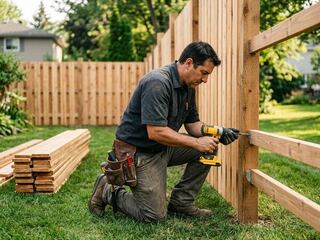
6 possible tasks · typical 5-step process
What it is
Gate installation and repair services generally address the mounting, mechanical adjustment, and hardware replacement for manual and automated entry points within various fencing assemblies. Service providers typically handle wood, vinyl, chain link, composite, and ornamental metal structures to assist with alignment, structural stability, and movement. Projects often focus specifically on the gate leaf, framing, and immediate support posts, while generally excluding full-perimeter fence construction or complex high-voltage utility trenching.
What Gate Install / Repair can include
New Gate Installation
Can include assembling and hanging new single-swing, double-swing, or sliding gate panels, as well as anchoring hinge posts in concrete footings to accommodate operational weight.
Hinge and Hardware Replacement
May involve replacing worn, corroded, or damaged components with adjustable hinges, drop rods, self-closing tension springs, or compatible latching systems.
Gate Realignment and Sag Correction
Can encompass installing diagonal anti-sag turnbuckle cables, adjusting hinge mounting plates, and rehanging gate leaves to reduce ground friction and improve alignment with latch posts.
Post Repair and Reinforcement
Often entails realigning shifted posts, stabilizing loose bases, pouring replacement concrete footings, or inserting internal reinforcement sleeves to support gate movement.
Frame and Slat Restoration
May involve replacing broken pickets, damaged infill boards, rotted cross-rails, or repairing structural frame corners while maintaining general panel squareness.
Automatic Opener Integration
Can involve mounting low-voltage swing arm operators, sliding tracks, guiding rollers, safety sensors, and keypad interfaces onto compatible gate assemblies.
How the work is typically performed
- 1
Site Inspection and Measurement
The service provider typically evaluates the opening width, clearance above grade, swing radius, slope, and the condition and plumb of surrounding posts.
- 2
Post Setting and Structural Anchoring
Terminal posts may be reinforced, reset, or newly embedded into the ground with concrete footings designed to manage dynamic loads.
- 3
Frame Assembly and Hanging
The gate frame is positioned within the opening, fitted with structural hinges, and adjusted to establish uniform clearance along the bottom and sides.
- 4
Hardware Fitting and Adjustment
Latches, handles, drop rods, and stop brackets are installed and aligned to allow consistent engagement between moving parts and stationary posts.
- 5
Dynamic Testing and Handoff
The gate is typically cycled through multiple opening and closing movements to review clearance, hinge swing, latch alignment, and automated system responsiveness where applicable.
Common reasons customers look for this service
- Gate dragging or scraping across the ground surface during travel
- Misalignment between latch mechanisms and corresponding strike plates
- Visible leaning or structural shifting of support posts
- Hinges showing signs of heavy corrosion, binding, or mechanical failure
- Desire to adapt manual openings for wider clearance or automated operators
- Physical or weather-related damage affecting frame integrity
About Gate Install / Repair
What methods are typically used to address gate sagging without post replacement?
Depending on the condition of the support post, sag can often be addressed by adjusting hinge plates, adding diagonal cross-bracing, or installing tensioned anti-sag cable kits across the frame.
What dimensions are commonly utilized for equipment or vehicle gate openings?
Pedestrian and small mower gates are often built between 3 and 4 feet wide, whereas larger equipment, trailers, and passenger vehicles generally require openings of 10 to 12 feet or more, frequently configured as double-swing or sliding gates.
How do gate support posts typically differ from standard fence posts?
Because gate posts bear shifting cantilevered loads rather than shared static panel tension, they are frequently selected with larger diameters, thicker material gauges, or set within deeper concrete footings than standard line posts.
This page provides general information about Gate Install / Repair for reference only. It is not professional, safety, medical, legal or financial advice, and it does not describe the services of any particular provider. Scope, methods and timing vary by provider and situation. Kuldesac does not perform these services; contact a qualified provider directly to discuss your specific needs.