


Diagnostic / Troubleshooting
Electrical diagnostic and troubleshooting refers to an analytical service where technicians examine, test, and pinpoint factors associated with electrical variations, system interruptions, or equipment performance questions within a building.
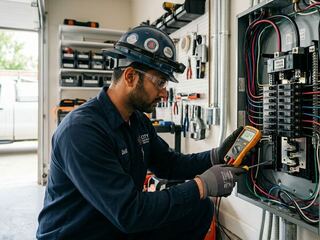
6 possible tasks · typical 5-step process
What it is
Electrical diagnostic and troubleshooting encompasses the systematic assessment of branch circuits, distribution boards, lighting fixtures, and related wiring assemblies to identify operational characteristics. Standard procedures often involve tracing circuit pathways, taking voltage and continuity readings, evaluating electrical load characteristics, and reviewing physical components. The service is typically designed to assess conditions within existing electrical paths rather than completing extensive component rewiring, panel replacements, or major system alterations, which are generally treated as independent service requests.
What Diagnostic / Troubleshooting can include
Circuit Breaker and Panel Testing
Technicians can inspect breakers, neutral bars, and incoming service lines using meters and thermal scanning devices to document load distribution, electrical continuity, or mechanical wear.
Voltage Drop and Continuity Testing
Service providers can test circuit lines under varied operational states and check continuity pathways to evaluate potential resistance variations, circuit breaks, or altered wiring paths.
Receptacle and Switch Diagnostics
Testing can involve examining standard outlets, ground-fault circuit interrupters, arc-fault circuit interrupters, and wall controls to assess connection integrity, terminal orientations, or grounding configurations.
Load and Demand Analysis
Technicians can calculate power draw across specific branch lines to evaluate how connected equipment and household devices relate to circuit configurations.
Grounding and Bonding Verification
Providers can inspect grounding electrodes, bonding conductors, and ground paths designed to establish an electrical reference throughout the structural electrical system.
Intermittent Fault Tracing
Personnel can investigate occasional power disruptions, fluctuating lights, or intermittent breaker operations by isolating circuit segments and monitoring system behavior.
How the work is typically performed
- 1
Initial Review of Reported Observations
A technician typically reviews the customer's notes regarding observed fixture behavior, affected areas, and any recent alterations made to the electrical system.
- 2
Visual and Component Inspection
The evaluation often involves examining service equipment, accessible junction boxes, switches, wall outlets, and exposed wiring for physical wear, oxidation, or loose connections.
- 3
Diagnostic Instrument Testing
Using devices such as digital multimeters, circuit analyzers, clamp meters, or insulation testers, technicians systematically assess designated circuits and connected hardware.
- 4
Data Evaluation and Fault Isolation
The technician evaluates testing data to determine whether recorded readings correlate with component wear, conductor continuity, external factors, or system loading.
- 5
Summary of Technical Findings
The service concludes with a review of documented observations, detailing the identified circuit conditions and outlining potential corrective options that could address the findings.
Common reasons customers look for this service
- Frequent tripping of circuit breakers or blown fuses on specific lines
- Instances of flickering, dimming, or buzzing fixtures and switches
- Noticeable surface warmth or discoloration around outlets or switch plates
- Audible buzzing or unusual scents detected near service panels or wall assemblies
- Lack of electrical supply to individual outlets or lighting circuits without an apparent tripped switch
- Tripping of GFCI or AFCI units during the operation of common appliances
About Diagnostic / Troubleshooting
What factors influence the time required for an electrical diagnostic?
Diagnostic timeframes can vary depending on building layout, system complexity, accessibility of junction points, and whether an issue presents continuously or intermittently. Complex circuit layouts and multi-story structures often involve broader evaluation periods than localized single-circuit checks.
What is typically included in an electrical diagnostic service?
Diagnostic services generally encompass the labor, testing procedures, and instrumentation required to evaluate and isolate electrical characteristics. Subsequent repairs, replacement parts, or extended system upgrades are commonly handled as distinct scopes of work.
How are concealed wiring issues evaluated?
Technicians frequently employ digital multimeters, wire tracing tools, tone generators, thermal detection equipment, and insulation testers. These instruments assist in evaluating wiring pathways and identifying thermal differences or circuit continuity variations behind finished walls.
This page provides general information about Diagnostic / Troubleshooting for reference only. It is not professional, safety, medical, legal or financial advice, and it does not describe the services of any particular provider. Scope, methods and timing vary by provider and situation. Kuldesac does not perform these services; contact a qualified provider directly to discuss your specific needs.