


Emergency Septic Service
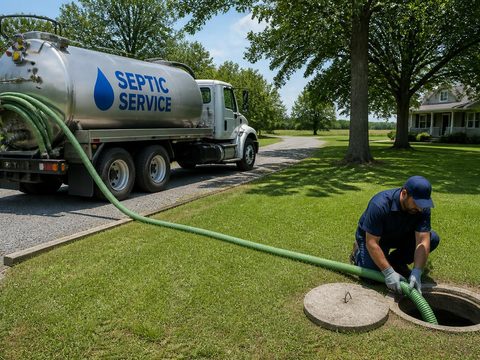
Emergency septic service involves unscheduled diagnostic visits, vacuum pumping, and targeted mechanical repairs intended to address active plumbing backups, tank overflows, or sudden pump assembly malfunctions.
6 possible tasks · typical 5-step process
What it is
This service involves responsive troubleshooting and servicing when an onsite wastewater system encounters an acute operational issue. Field technicians typically evaluate line blockages, pump tanks to lower liquid levels, and examine or repair mechanical components such as electrical pumps and float switches. The general scope often focuses on stabilizing system operation and addressing short-term fluid levels; it generally does not encompass long-term drain field reconstruction, structural redesign, or standard routine compliance evaluations.
What Emergency Septic Service can include
Emergency Tank Pumping
Removing accumulated wastewater, sludge, and scum layers using vacuum equipment, which can temporarily reduce liquid volume within the tank and relieve pressure on connecting lines.
Main Waste Line Clearing
Utilizing mechanical augers or hydro-jetting equipment to address blockages in the primary sewer lateral connecting a structure to the septic tank.
Effluent Pump and Float Replacement
Evaluating control panels and servicing or replacing submersible effluent pumps, float switches, or check valves within pressurized dose tanks or mound systems.
Baffle and Sanitary Tee Clearing
Addressing obstructions at the inlet or outlet sanitary tees to facilitate fluid movement between chambers or toward downstream components.
Effluent Filter Servicing
Removing, cleaning, and reinstalling particulate filters situated in the outlet baffle assembly to support gravity effluent flow.
Surface Overflow Containment
Assessing saturated surface areas, securing accessible riser lids, and applying temporary barrier methods where effluent has surfaced.
How the work is typically performed
- 1
Initial Site and System Evaluation
Technicians review visible system components, inspect accessible access ports, and assess liquid levels relative to the tank inlet and outlet pipes.
- 2
Hydraulic Load Management
Vacuum hoses are often connected to draw down elevated liquid levels in holding compartments, which can reduce fluid backup into attached plumbing fixtures.
- 3
Mechanical and Electrical Diagnostics
Service personnel evaluate electrical panels, measure current draw on pump circuits, inspect baffle assemblies, or utilize pipe cameras to locate obstructions.
- 4
Component Servicing and Line Clearing
Technicians clear detected obstructions using mechanical tools or jetters, clean filter elements, or replace faulty mechanical switches or pumps depending on availability.
- 5
System Testing and Observation
Water sources may be run to observe drainage patterns, control boxes are reset, access ports are secured, and findings are recorded for property records.
Common reasons customers look for this service
- Water or waste backing up into ground-level or basement plumbing fixtures
- Audible or visual alarm notifications activating on septic control panels
- Visible standing water or damp soil appearing near the tank or absorption field
- Sluggish drainage observed across multiple fixtures throughout a building
- Unusual sounds or odors originating from interior drain lines or vent stacks
About Emergency Septic Service
What factors are typically evaluated during an unscheduled septic service call?
Technicians generally examine tank liquid levels, the condition of inlet and outlet baffles, the status of effluent filters, and electrical components in the pump chamber. They may also inspect cleanouts and line connections to identify whether fluid flow is hindered within the building sewer lateral or further downstream.
How do service providers differentiate between a sewer line clog and a septic tank issue?
Providers typically inspect the liquid depth at the septic tank inlet. When liquid rests at standard operating levels while building fixtures demonstrate backup, the condition often points toward an obstruction in the line leading to the tank. Conversely, elevated liquid levels above the inlet pipe or near the riser often suggest reduced movement through the tank, pump failure, or downstream absorption field saturation.
What can emergency septic pumping address regarding drain field issues?
Pumping can temporarily lower liquid volumes in the septic tank, which creates holding space for incoming wastewater. However, an unscheduled pumping visit does not modify underlying soil absorption capacity, and longer-term drain field restoration or replacement typically involves separate site evaluations, specialized engineering, or planned excavation.
This page provides general information about Emergency Septic Service for reference only. It is not professional, safety, medical, legal or financial advice, and it does not describe the services of any particular provider. Scope, methods and timing vary by provider and situation. Kuldesac does not perform these services; contact a qualified provider directly to discuss your specific needs.