


Storm / Emergency Removal
Storm response tree services encompass the assessment, stabilization, and removal of fallen, broken, or uprooted trees and limbs that affect buildings, roadways, and residential grounds following severe weather events.
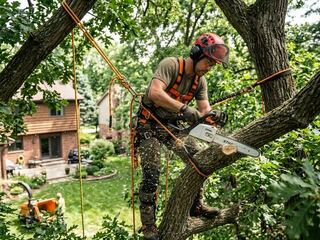
6 possible tasks · typical 5-step process
What it is
Storm-related tree services involve the physical management and removal of displaced, fractured, or fallen vegetation after weather occurrences. Projects commonly address trunks resting against physical improvements, vegetation blocking driveways or thoroughfares, and broken branches resting within the upper canopy. Standard operations can incorporate mechanical rigging, crane access, controlled sectioning, and on-site reduction of woody materials. This scope of work is typically centered on clearing woody debris and managing displaced tree mass, rather than ongoing arboricultural cultivation, aesthetic shaping, landscaping restoration, or municipal electrical network maintenance.
What Storm / Emergency Removal can include
Structure Extraction
Supporting, balancing, and sectioning tree trunks or branch wood resting on dwellings, outbuildings, fences, or vehicles through mechanical hoisting or controlled lowering techniques.
Hazardous Limb and Hanger Removal
Addressing cracked, severed, or hanging limbs positioned in tree canopies, which can involve mobile elevated work platforms or ascent equipment to segment and lower detached wood.
Access Route Clearance
Cutting and relocating down trunks and accumulated branch debris from roadways, driveways, parking zones, and walking paths to reopen travel areas.
Tree Stabilization and Winching
Securing leaning or partially displaced trees with mechanical cables, winches, earth anchors, or synthetic straps to guide movement during sectional dismantling.
Debris Chipping and Haul-Away
Passing limbs and foliage through mechanical chippers for conversion to mulch, alongside cutting larger wood sections for off-site transportation.
Tension and Compression Relieving Cuts
Utilizing specific cutting sequences to manage internal tension and compression stored within bent trunks, weighted branch systems, or shifted root plates.
How the work is typically performed
- 1
Site and Canopy Inspection
Personnel review the position of fallen or altered trees, noting trunk angles, compression characteristics, root plate position, and adjacent property elements to plan equipment staging and cutting sequences.
- 2
Rigging and Load Stabilization
Work crews attach lines, winches, straps, or crane equipment to hold the weight of substantial wood sections, which helps manage piece movement during sawing.
- 3
Sectional Deconstruction
Dismantling typically commences with exterior branch tips to reduce weight, followed by systematic cuts through larger limbs and the main trunk, using control ropes or mechanical arms to bring sections downward.
- 4
Ground Debris Processing
Ground personnel segment large wood into smaller lengths, route branch material into chipping machinery, and organize logs for cartage or on-site storage depending on property specifications.
- 5
Work Area Clearing
Workers sweep and gather stray twigs, leaves, and wood particles from the primary operational footprint, clearing major wood debris from previously covered surfaces.
Common reasons customers look for this service
- Tree trunks or substantial limbs are resting on houses, detached structures, fences, or automobiles
- Partially displaced trees display noticeable tilting with raised soil around the root zone
- Broken branch fragments remain suspended among canopy limbs following high-wind or winter weather events
- Downed timber or scattered limb debris covers entry points, driveways, parking zones, or pathways
- Trunks or primary branch unions show visible cracking or separation following adverse weather
About Storm / Emergency Removal
How is a fallen tree typically removed from a building or structure?
Crews often position crane straps, winches, or overhead cables to suspend the weight of the tree prior to initiating saw cuts. By supporting load points and lifting pieces away from the structure, operators can reduce further contact or shifting against the underlying surface.
How do tree service providers address trees near utility lines?
Providers commonly coordinate with regional utility entities when tree material interfaces with overhead infrastructure. Independent crews generally manage limbs and trunks located apart from utility lines, while tasks involving direct line contact are typically handled by utility operators.
Is stump grinding typically included in storm-related tree removal?
Stump grinding is often offered as an optional or separate operation rather than a standard inclusion in storm response work. Storm services typically focus on extracting surface wood, hanging limbs, and detached timber, with root plate or stump modification scheduled independently according to property preferences.
This page provides general information about Storm / Emergency Removal for reference only. It is not professional, safety, medical, legal or financial advice, and it does not describe the services of any particular provider. Scope, methods and timing vary by provider and situation. Kuldesac does not perform these services; contact a qualified provider directly to discuss your specific needs.