


Sprinkler System Install
Sprinkler system installation involves the planning and assembly of an underground irrigation network, which typically includes water supply lines, zone control valves, distribution heads, and an automated timer or controller.
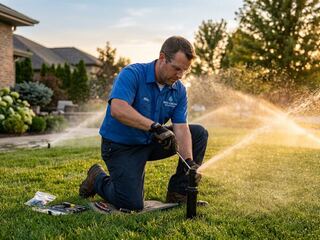
6 possible tasks · typical 4-step process
What it is
This service encompasses the layout and physical assembly of a below-ground landscape watering system. Work can involve evaluating site flow characteristics, excavating trenches or pulling pipe, assembling control valves and backflow devices, and positioning sprinkler heads or drip lines across turf and garden areas. The scope typically focuses on the irrigation components themselves and generally excludes broad landscape grading, utility meter modifications, or recurring seasonal maintenance.
What Sprinkler System Install can include
Hydraulic Assessment and System Layout
Installers measure static water pressure and flow rates to outline zone configurations and arrange head spacing intended to provide balanced coverage across the property.
Trenching and Supply Line Routing
Crews create channels across the property using trenching equipment or plows to place PVC or flexible polyethylene piping beneath the turf surface.
Manifold and Solenoid Valve Installation
Technicians construct an underground valve manifold, typically housed in protective valve boxes, to manage water delivery to individual watering zones.
Sprinkler Head and Emitter Placement
Installers mount pop-up spray bodies, rotary heads, or micro-irrigation drip lines matched to the dimensions and planting types of each zone.
Automated Controller and Sensor Wiring
Technicians mount the central irrigation timer, connect low-voltage wiring to the zone valves, and can integrate optional weather or soil moisture sensors.
System Flushing, Pressure Testing, and Calibration
Lines are flushed to clear debris before nozzles are secured, pressurized to inspect joints, and individual heads are adjusted to manage spray angles and coverage areas.
How the work is typically performed
- 1
Site Analysis and Zone Design
The layout process typically includes checking available water capacity, reviewing utility markings, mapping property boundaries, and segmenting the landscape into distinct watering zones based on exposure and vegetation.
- 2
Trenching and Pipe Installation
Crews open narrow trenches or use vibratory equipment to insert main and lateral lines beneath the ground, routing piping to each planned distribution point.
- 3
Component Assembly and Water Tie-In
Technicians connect the system piping to the designated water supply source, install backflow assemblies, wire the control valves inside protective boxes, and attach risers.
- 4
Controller Setup and Zone Commissioning
The installer mounts the controller, connects valve wiring and any environmental shutoff devices, refills trenches, and adjusts nozzle radii to align with intended landscape boundaries.
Common reasons customers look for this service
- Establishing new sod, seeded lawns, or extensive landscape planting beds
- Replacing an older, deteriorated irrigation network experiencing frequent line breaks
- Transitioning from manual hose or portable sprinkler watering to an automated system
- Addressing uneven lawn moisture patterns resulting from irregular hand watering
- Configuring dedicated delivery zones for different plant types, such as turf and garden beds
About Sprinkler System Install
What are the common differences between spray heads, rotary heads, and drip lines?
Spray heads typically provide a continuous pattern of water suited for smaller, uniform lawn spaces. Rotary heads emit moving streams designed to cover wider expanses at a slower delivery rate. Drip lines apply water directly at the soil level through small emitters, often used for shrubbery, trees, and garden beds.
What depths are irrigation pipes typically buried at during installation?
Burial depth can vary based on local conditions and site specifications. Lateral pipes leading to individual sprinkler heads are often placed roughly 8 to 12 inches below the surface, while main supply lines subject to continuous pressure are commonly placed 12 to 18 inches deep.
How does the installation process typically affect existing turf?
Trenching or pulling pipe involves temporary ground disturbance along the pipe routes. Installers may lift sod strips or use vibratory plows to limit surface disruption. Trenches are backfilled and compacted, and recovery times for the turf typically depend on the grass type, season, and overall site conditions.
This page provides general information about Sprinkler System Install for reference only. It is not professional, safety, medical, legal or financial advice, and it does not describe the services of any particular provider. Scope, methods and timing vary by provider and situation. Kuldesac does not perform these services; contact a qualified provider directly to discuss your specific needs.