


Wheelchair / Stretcher Transport
Wheelchair and stretcher transport involves pre-scheduled, vehicle-based transit tailored for individuals traveling with mobility equipment or in a recumbent position, utilizing modified vehicles, ramps, mechanical lifts, and dedicated transit staff.
7 possible tasks · typical 5-step process
What it is
Wheelchair and stretcher transport describes prearranged transit arrangements for individuals who use mobility devices or travel in a reclined posture. Services within this category frequently encompass physical accompaniment from interior locations, assistance across entryways, transfers between pieces of equipment, and passage inside vehicles configured with lift mechanisms, ramps, and floor-anchored fastening systems. Such transit options typically serve routine trips between residences, care settings, outpatient facilities, and community locations. Vehicle configurations, staff capabilities, and specific equipment options can vary among service providers, with offerings tailored around logistical specifications rather than acute clinical intervention.
What Wheelchair / Stretcher Transport can include
Door-Through-Door Transfers
Transit staff can escort passengers from interior residential or facility rooms, assisting through interior corridors, entryways, and exterior thresholds toward the vehicle and into the designated interior destination.
Bed-to-Stretcher Transfer Assistance
Staff members may assist with positioning passengers between a bed and a mobile transport stretcher using transfer aids such as slide sheets, transfer boards, or support belts, accompanied by position-securing straps on the cot.
Wheelchair Securement and Vehicle Boarding
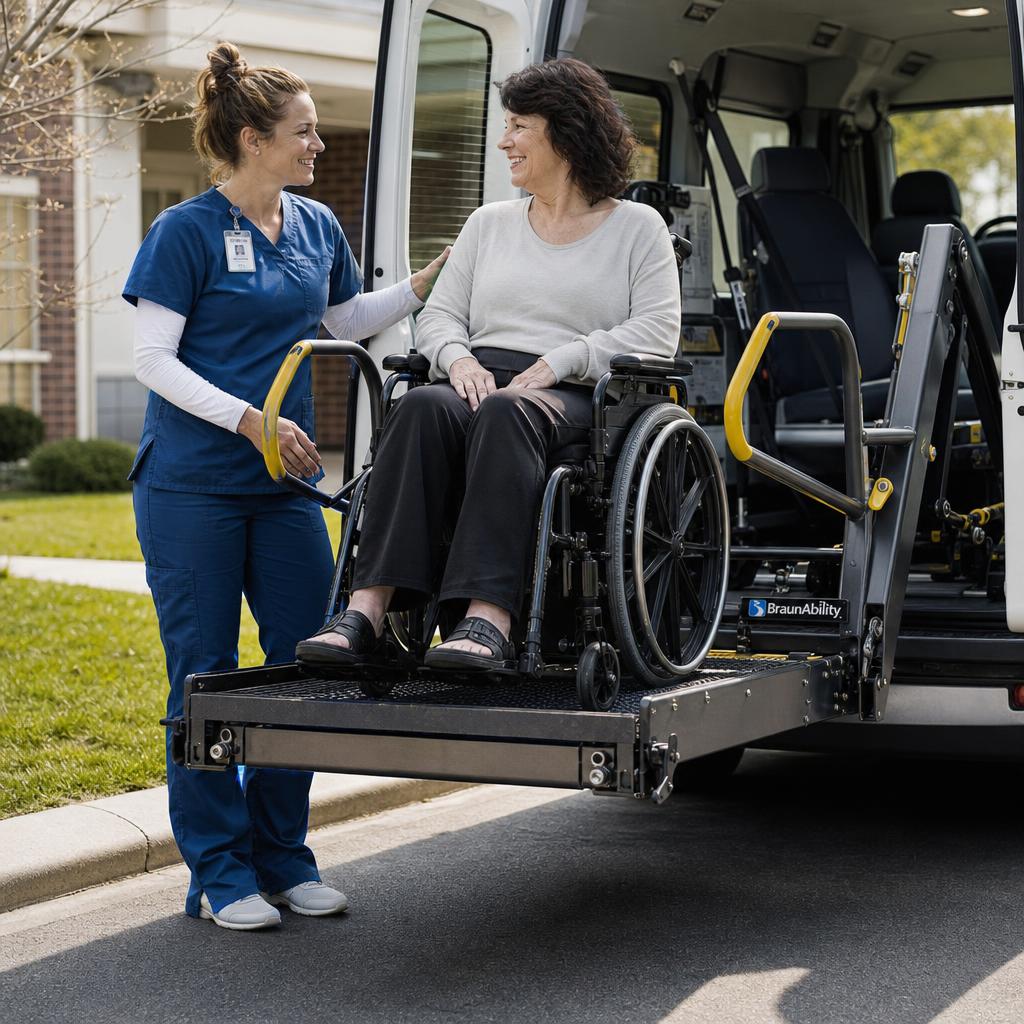
Vehicles often utilize motorized lifts or ramp systems to load manual wheelchairs or motorized seating systems, securing devices to vehicle floor tracks using specialized straps, lap restraints, and shoulder harnesses.
Stretcher Navigation Across Obstacles
Attendants can guide wheeled cots across various structural surfaces, which may include curbs, exterior walkways, incline ramps, and elevated door sills, using integrated mechanical brakes and tilt features.
Continuous Passenger Monitoring
Transit personnel can observe passenger positioning throughout transit, check on the stability of personal equipment or carry-on belongings, and adjust cabin temperature or seating supports as appropriate.
Bariatric Transport Accommodation
Certain providers make available reinforced vehicles featuring expanded doorway dimensions, broader lift platforms, and heavy-duty cots designed for higher weight ratings.
Round-Trip Appointment Waiting and Return
Arrangements can include scheduled vehicle standby periods while a passenger attends a consultation, treatment session, or personal event, followed by return transport to the departure location.
How the work is typically performed
- 1
Scheduling and Mobility Assessment
Transport dispatchers or intake staff gather journey specifications, address locations, equipment dimensions, passenger positioning requirements, and building access details.
- 2
Arrival and Passenger Transfer
Transit personnel arrive at the designated pickup address, evaluate pathways for accessibility, and assist the passenger onto the mobile stretcher or review the configuration of their personal mobility chair.
- 3
Vehicle Boarding and Restraint Application
The passenger enters the vehicle interior via a motorized lift platform or ramp, after which attendants secure the wheels and frame using track restraints and passenger vehicle harnesses.
- 4
Transit and Route Navigation
The driver navigates planned roads and surface routes, typically aiming for steady vehicle handling, managed turns, and steady interior temperature controls during travel.
- 5
Arrival and Destination Hand-Off
Upon arriving at the scheduled destination, staff release all vehicle restraints, assist the passenger out of the vehicle, and accompany them into the receiving facility or residence.
Common reasons customers look for this service
- Planned discharges from care facilities, hospitals, or therapy centers returning to private residences
- Routine travel to regular outpatient sessions, including dialysis centers, physical therapy locations, or specialized clinics
- Inter-facility relocations between independent living quarters, residential care centers, and diagnostic complexes
- Circumstances where personal passenger automobiles are unable to accommodate mobility equipment or recumbent positioning
- Transportation for family gatherings, social activities, civic engagements, or personal outings
- Transit requirements during periods involving temporary movement limitations or rehabilitation recovery
About Wheelchair / Stretcher Transport
What is the difference between curb-to-curb and door-through-door transport?
Curb-to-curb service generally involves passenger pickup and drop-off at the roadway or building driveway, while door-through-door service can involve personnel entering the building to assist the passenger from an interior room directly to the interior of the destination.
Can personal wheelchairs and medical equipment travel in the vehicle?
Many vehicles are configured to hold personal manual wheelchairs, power mobility units, and portable equipment such as oxygen containers, though actual capacity and equipment allowances can depend on vehicle layout and company policies.
What is typically involved when an escort or family member rides along?
Many transit providers permit a family member, caregiver, or companion to travel alongside the passenger, though available passenger seating and ride policies can vary depending on vehicle configuration and service provider rules.
This page provides general information about Wheelchair / Stretcher Transport for reference only. It is not professional, safety, medical, legal or financial advice, and it does not describe the services of any particular provider. Scope, methods and timing vary by provider and situation. Kuldesac does not perform these services; contact a qualified provider directly to discuss your specific needs.
More Mobile Health Services services
- Non-Emergency Medical Transport
- Senior Companion Transport
- In-Home Nursing Visit
- Mobile Blood Draw / Phlebotomy
- Mobile IV Hydration Therapy
- Mobile Vaccinations & Flu Shots
- Mobile Covid / Lab Testing
- In-Home Physical Therapy
- In-Home Occupational Therapy
- Home Health Aide / Personal Care
- Post-Surgery / Recovery Care
- Hospice Support Visits
- Wound Care Visit
- Medication Management Visit
- Mobile Chiropractic
- Mobile Massage Therapy
- Mobile Foot / Nail Care
- Mobile Dental / Hygiene
- Bedside Medical Notary