


Security & Fire Protection Services
Security & Fire Protection encompasses the installation, maintenance, evaluation, and monitoring of physical security hardware, detection devices, and fire suppression systems for properties.
7 services · typical 5-step process
What it is
Security and fire protection services cover specialized hardware and software configurations designed to assist with property monitoring, access management, and fire detection or suppression. Service providers typically design, install, program, and maintain interconnected detection and suppression systems. These integrated solutions can be configured to observe entry points, send notifications to designated contacts or monitoring centers, identify combustion byproducts, or distribute fire-suppressing agents.
Services that can fall within Security & Fire Protection
Alarm Systems
Intrusion detection networks that utilize motion sensors, glass-break detectors, door contacts, and control panels designed to identify unauthorized physical entry. Technicians can install, wire, calibrate, and service these detection devices across structural entry points and perimeter zones.
Learn moreCameras
Surveillance setups, including closed-circuit television (CCTV) and IP camera systems, that capture, transmit, and record video footage across designated interior and exterior areas. Technicians mount cameras, configure network video recorders (NVRs), adjust viewing angles, and establish local or network viewing access.
Learn moreAccess Control
Electronic entry systems designed to regulate and log access through doors, gates, and secure areas using keycards, fobs, biometric scanners, or PIN keypads. Providers install magnetic locks, electric strikes, readers, and corresponding administrative management software.
Learn moreMonitoring
Remote communication services that connect security, access, and fire systems to dedicated operational monitoring facilities or automated notification networks. Technicians configure cellular, radio, or IP communication bridges designed to facilitate alert transmission across varying network conditions.
Learn moreFire Alarms
Detection networks featuring smoke detectors, heat sensors, manual pull stations, notification sirens, and strobe lights. Technicians install central control panels, route signaling pathways, and perform operational checks across initiating and notification devices.
Learn moreSprinklers
Water-based fire suppression systems typically consisting of dedicated water supply piping, control valves, and thermal sprinkler heads. Work can include pipe routing, installing sprinkler heads, measuring water pressure, evaluating backflow preventers, and servicing pipes.
Learn moreFire Extinguishers
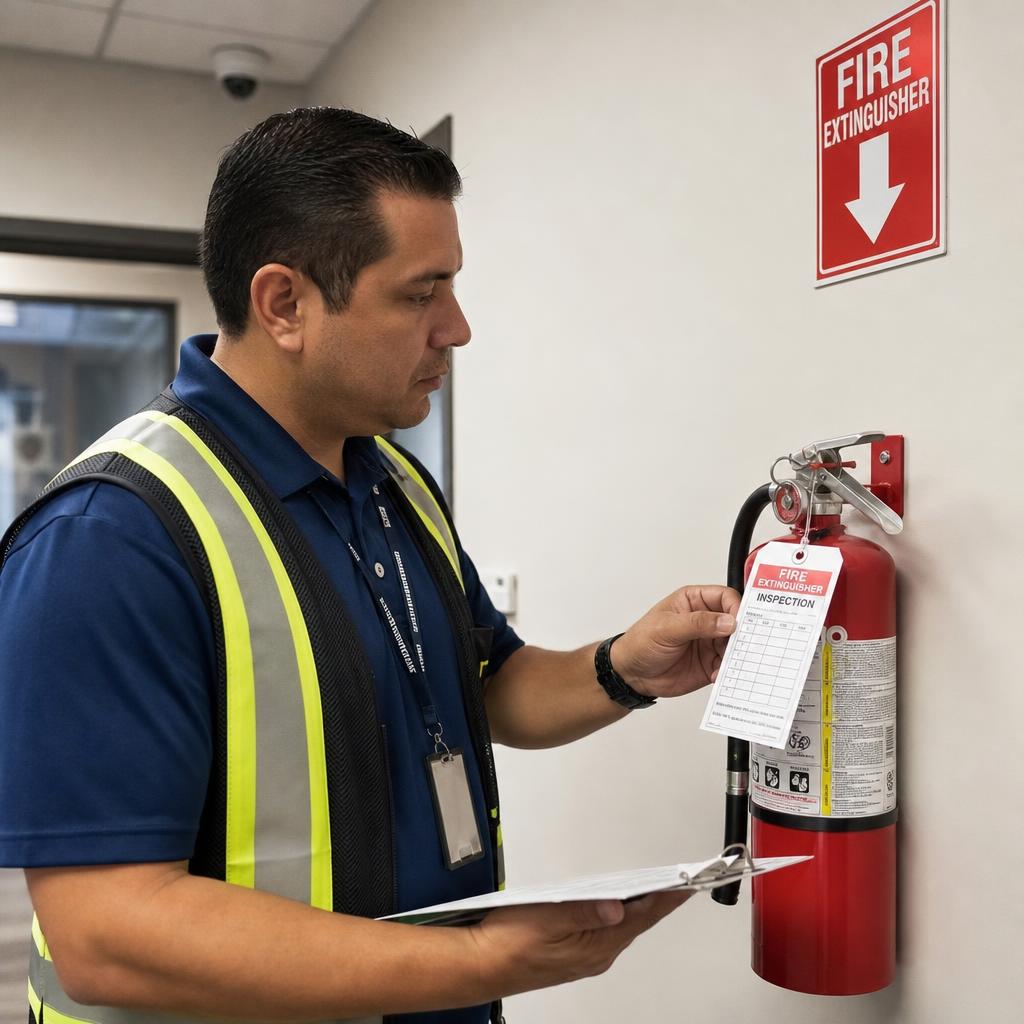
Portable canisters containing chemical extinguishing agents designed for initial fire containment. Technicians can mount brackets, inspect pressure gauges, check physical seals, perform hydrostatic testing, and refill or replace canisters.
Learn more
How the work is typically performed
- 1
Site Assessment
Technicians typically review property layouts, observe structural entry points, and assess potential equipment locations to draft an installation plan.
- 2
Infrastructure and Wiring
Installers run low-voltage communication cables, conduit, and piping through walls, ceilings, and chases to support system hardware and power connections.
- 3
Hardware Mounting and Connection
Technicians install control panels, sensors, cameras, access points, sprinkler heads, and signaling appliances at planned locations throughout the facility.
- 4
System Programming and Integration
Specialists configure device addresses, set up access permissions, establish recording parameters, calibrate sensors, and connect equipment to central management platforms.
- 5
Operational Testing and Handover
Technicians conduct simulated activation checks, observe signal transmission, check water pressure where applicable, and demonstrate general panel functions to the property representative.
Common reasons customers look for this service
- Occupying a newly acquired, renovated, or constructed building
- Modifying physical layouts, partition walls, or designated secure zones
- Transitioning from legacy or analog hardware to updated digital platforms
- Addressing recurring false alerts, trouble signals, or hardware error notifications
- Consolidating standalone security or fire detection components into a unified management interface
- Reviewing equipment physical condition, gauge readings, or suppression canister pressure
About Security & Fire Protection
Can existing wired security sensors be integrated into a new control panel?
In many instances, technicians can connect existing hardwired sensors to modern hybrid control panels using compatible expansion modules. Feasibility generally depends on the condition of the existing wiring, the type of sensors installed, and the technical specifications of the new panel.
What does the evaluation of fire alarm and sprinkler systems typically involve?
Evaluations typically involve visual inspections of physical hardware, checks of gauge pressures, and functional testing of signaling devices or flow switches. The specific procedures and testing cycles can vary depending on system design, manufacturer guidelines, and property usage.
What is the difference between an unmonitored alarm and a monitored alarm system?
An unmonitored alarm generally relies on on-site audible sirens and strobe lights to alert occupants on the premises. A monitored system communicates electronic signals to an off-site monitoring center or automated notification platform, which follows designated contact procedures.
This page provides general information about Security & Fire Protection for reference only. It is not professional, safety, medical, legal or financial advice, and it does not describe the services of any particular provider. Scope, methods and timing vary by provider and situation. Kuldesac does not perform these services; contact a qualified provider directly to discuss your specific needs.