


Winterization / Blowout
Sprinkler winterization and blowout describes the process of displacing residual moisture from subterranean irrigation conduits, valves, manifolds, and delivery nozzles utilizing controlled air volume, typically performed ahead of colder seasonal periods.
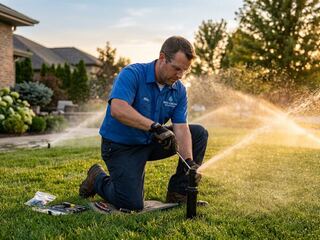
6 possible tasks · typical 5-step process
What it is
Irrigation shutdown, frequently termed a system blowout, encompasses the clearing of residual liquid from below-ground piping networks, backflow assemblies, and distribution fittings in conjunction with seasonal weather changes. The standard scope of work generally involves isolating the dedicated water feed, connecting high-volume pneumatic gear, and cycling through individual delivery zones until water volume is largely expelled. Ancillary services, such as piping repairs, head replacements, backflow verifications, or subsequent seasonal reactivation, are typically categorized separately from standard winter shutdown procedures.
What Winterization / Blowout can include
Main Water Supply Shutoff
Identifying and closing the primary interior or exterior irrigation control valve, which isolates the distribution network from active water sources.
Backflow Preventer Evacuation
Opening test ports and venting inner chambers on backflow preventer units to facilitate the release of trapped liquid from internal assemblies.
High-Volume Air Purge
Introducing regulated air volume through designated access points and advancing through line segments to encourage the movement of standing water out of the pipes.
Sprinkler Head and Emitter Clearing
Observing individual spray heads, rotators, and micro-irrigation lines during the air cycle to monitor the transition from liquid discharge to vapor.
Valve and Drain Positioning
Setting component valves, petcocks, and manual drain plugs to partly opened orientations intended to limit liquid accumulation within interior chambers.
Controller Winter Deactivation
Switching automated irrigation timers, smart controllers, or mechanical clocks to passive modes, such as seasonal standby or off settings.
How the work is typically performed
- 1
Supply Isolation and Inspection
Technicians typically locate and close the dedicated shutoff valve for the landscape system, followed by a general observation of accessible backflow units and connection points.
- 2
Compressor Hookup and Calibration
Pneumatic equipment is joined to the piping system downstream of the backflow prevention device, with pressure controls adjusted relative to the pipe composition and network configuration.
- 3
Sequential Zone Purging
Individual zones are activated consecutively via the central timer or manual solenoid controls, allowing pressurized air to circulate through lateral lines until visible water flow ceases.
- 4
Backflow and Component Adjustment
Service providers commonly place test cocks and isolation valves at partially open angles, allowing trapped moisture within valve body cavities an avenue for egress.
- 5
Final System Shutdown
Pneumatic lines are uncoupled, controllers are adjusted to non-operational or pause settings, and protective enclosures or exterior access boxes are returned to their closed state.
Common reasons customers look for this service
- The conclusion of the active vegetative watering cycle in autumn
- Anticipation of falling ambient temperatures within the regional environment
- Scheduled year-end seasonal maintenance plans for commercial properties or residential communities
- General end-of-season groundskeeping workflows across managed landscapes
- Regional weather transitions prompting seasonal deactivation of outdoor plumbing assemblies
About Winterization / Blowout
What differentiates specialized air equipment from domestic compressors for landscape line blowouts?
Specialized compressors deployed for landscape lines are engineered to provide high cubic-volume airflow at controlled pressures. In comparison, residential utility compressors generally supply smaller volumes of air, often at higher baseline pressures. Moving water through long subterranean lateral lines generally relies on sustained air volume rather than elevated pressure.
How are pressure levels managed during an irrigation blowout procedure?
Pneumatic settings are typically adjusted based on the composition of the network, whether constructed from rigid plastic, flexible tubing, or specialty drip lines, as well as the types of spray heads installed. Pressures are kept within regulated thresholds with the goal of moving water out of the lines while seeking to minimize mechanical strain on fittings and moving components.
How are exterior backflow assemblies typically configured following a winter blowout?
Procedures for backflow devices can vary according to local conditions and unit design. Certain configurations permit physical disconnection and relocation of the unit to an interior space. In alternate scenarios, the device stays attached outdoors with test cocks and shutoff handles maintained in partially open positions, occasionally paired with external insulation wraps or weather-resistant covers.
This page provides general information about Winterization / Blowout for reference only. It is not professional, safety, medical, legal or financial advice, and it does not describe the services of any particular provider. Scope, methods and timing vary by provider and situation. Kuldesac does not perform these services; contact a qualified provider directly to discuss your specific needs.