


Holiday Light Install
Holiday light installation refers to the seasonal placement, connection, and setup of exterior decorative lighting displays across rooflines, architectural elements, landscape foliage, and ground pathways.
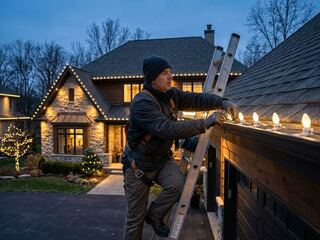
6 possible tasks · typical 5-step process
What it is
This service encompasses the physical positioning, basic electrical connection, and general arrangement of temporary decorative lighting systems on residential or commercial exteriors. Typical scopes can involve measuring and custom-fitting light strands to match architectural perimeters, utilizing non-penetrating fastening hardware, routing exterior-rated extension cords to existing outlets, and integrating automated timers or control units. Service arrangements often focus on seasonal display needs and generally do not involve permanent modifications to structural electrical systems, panel upgrades, or the repair of non-functioning vintage electrical elements.
What Holiday Light Install can include
Roofline and Fascia Fastening
Arranging and securing seasonal bulb strands, such as traditional C9 or C7 lines, along gutters, eaves, drip edges, and fascia boards using temporary mounting hardware designed to grip surfaces without penetrative drilling.
Tree, Bush, and Foliage Wrapping
Winding mini-lights, trunk wraps, or net lighting across tree trunks, primary structural branches, and landscaped shrubbery using spiral or canopy-layering configurations to distribute light coverage across outdoor foliage.
Architectural and Opening Outlining
Affixing linear lighting or accent displays around window frames, entry doorways, pillars, peaks, gables, and garage trims to highlight primary building features and symmetrical design elements.
Ground Stake and Pathway Perimeter Illumination
Inserting temporary ground stakes fitted with individual light sockets along walkways, driveways, garden borders, and planting beds to establish low-profile ground-level perimeter illumination.
Electrical Load Balancing and Cabling
Routing outdoor-rated extension cords and splitters across available exterior electrical outlets, incorporating covered connection blocks and distributing strand wattage across accessible circuits.
Timer Setup and Illumination Diagnostics
Connecting mechanical, digital, or light-sensing photocell timers to automate daily operational schedules, accompanied by an initial system check to adjust bulb alignment and identify unlit sections.
How the work is typically performed
- 1
Site Survey and Layout Planning
Service providers generally review architectural dimensions, identify accessible exterior power sources, examine potential attachment surfaces, and estimate total strand lengths and power distribution requirements.
- 2
Strand Preparation and Sizing
Lighting strings and lead lines are often measured and prepared to match the specific layout of the structure, attaching compatible male and female slide plugs to tailor wire lengths to the property lines.
- 3
Hardware Attachment and Light Hanging
Crews place ladders or lift devices to reach upper architectural zones and landscape elements, positioning temporary clips, brackets, or ties before seating individual sockets and light strands along the designated paths.
- 4
Power Line Routing and Timer Integration
Extension lines and jumper cables are directed along building corners or landscape edges toward designated ground-fault outlets, where automation controllers or timers are connected to manage display operation.
- 5
Display Illumination and Review
The completed arrangement is powered on to inspect overall visual coverage, confirm that all zones illuminate as intended, check timer functions, and make minor physical adjustments to individual bulbs or clips.
Common reasons customers look for this service
- Decorating multi-story structures, high roof peaks, or steep architectural profiles.
- Seeking custom-cut lighting configurations tailored to exact building dimensions.
- Arranging seasonal illumination throughout mature landscape trees or dense foliage.
- Coordinating multi-zone electrical connections and timers across complex displays.
- Addressing properties where elevated installation work or specialized access equipment is involved.
About Holiday Light Install
What types of lighting materials are typically used during an installation?
Depending on the provider, services may include commercial-grade LED strands, custom-cut wiring, and specialized clips, while some companies can also accommodate customer-provided lighting sets if compatible with their setup procedures.
How are seasonal lights typically attached to exterior building surfaces?
Installers generally use removable plastic or composite clips designed to grip gutter lips, slide beneath shingle overhangs, or clamp onto tile and parapets, minimizing the use of fasteners like staples, nails, or screws.
What does a holiday light service package typically cover regarding takedown and storage?
Service offerings vary by provider. Some packages are structured to cover only the initial setup, while others may include scheduled end-of-season removal, strand labeling, and seasonal packing or storage options.
This page provides general information about Holiday Light Install for reference only. It is not professional, safety, medical, legal or financial advice, and it does not describe the services of any particular provider. Scope, methods and timing vary by provider and situation. Kuldesac does not perform these services; contact a qualified provider directly to discuss your specific needs.