


Lawn Care Services
Lawn care encompasses turf cutting, nutrient distribution, weed management, aeration, and seasonal debris clearing. These services are commonly used to support turf appearance and maintain property grounds across residential and commercial settings.
5 services · typical 5-step process
What it is
Lawn care involves the cultural, mechanical, and agronomic management of maintained grass surfaces. The category includes turf upkeep, soil condition management, the reduction of competing vegetation, and organic debris removal. Service providers typically employ commercial equipment and timed inputs tailored to regional growing zones, seasonal shifts, soil types, and specific turfgrass varieties, such as cool-season or warm-season grasses.
Services that can fall within Lawn Care
Mowing
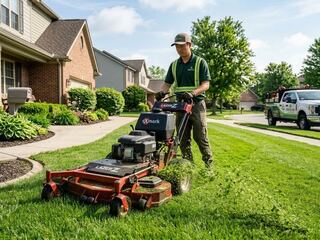
Mowing involves cutting grass to chosen heights using commercial rotary or reel equipment. The service typically includes trimming along borders, bed lines, and fences, as well as mechanical edging along walkways and clearing clippings from paved surfaces.
Learn moreFertilization
Fertilization involves applying macro- and micronutrients, such as nitrogen, phosphorus, and potassium, to the soil and root systems. Delivered as granular or liquid materials, these applications are intended to support plant vigor, color, and general root development.
Learn moreWeed Control
Weed control involves pre-emergent and post-emergent applications to manage unwanted broadleaf and grassy plants. These treatments are intended to reduce competition for light, water, and nutrients between invasive vegetation and established turfgrass.
Learn moreAeration
Aeration is the mechanical extraction of soil cores using hollow-tined machinery. This service is designed to relieve soil compaction, assist with thatch management, and facilitate the movement of air, water, and nutrients into the root zone.
Learn moreLeaf Removal
Leaf removal involves collecting, blowing, or vacuuming fallen leaves and deciduous debris from turf areas. Clearing organic debris allows sunlight to reach the grass canopy and can reduce prolonged surface moisture on the lawn.
Learn more
How the work is typically performed
- 1
Site Inspection
Technicians typically inspect the lawn to observe turf conditions, weed presence, soil moisture, and potential obstacles like sprinkler heads or landscape features.
- 2
Area Preparation
Crews generally survey the property to clear sticks, movable items, and surface debris that could obstruct equipment operation.
- 3
Equipment and Material Application
Technicians carry out designated services using calibrated mowers, spreaders, aerators, or sprayers adjusted for the property’s turf type and layout.
- 4
Perimeter Detailing
Perimeters are detailed by trimming along structures, edging hardscapes, and blowing displaced grass clippings and debris off paved areas.
- 5
Post-Service Review
Providers typically log the completed work, place notification markers if applications were made, and provide general documentation regarding the visit.
Common reasons customers look for this service
- Accumulation of leaves, branches, or organic debris on the lawn
- Presence of competing broadleaf or grassy weeds
- Turf growth exceeding desired height or appearance
- Soil compaction affecting water or air penetration
- Uneven grass color, density, or thinning turf areas
- Scheduled seasonal transitions in spring or autumn
About Lawn Care
What factors typically determine mowing frequency?
Mowing frequency is generally influenced by turf species, seasonal growth patterns, and moisture levels. During peak growth windows, lawns are often serviced on a weekly or bi-weekly cycle, with cutting heights adjusted based on the time of year and grass type.
What is typically involved in the lawn aeration process?
Aeration typically involves running specialized machinery with hollow tines across the turf to pull soil cores to the surface. These cores are generally left to break down naturally, helping to loosen compacted soil and improve resource penetration.
How are lawn care applications typically scheduled around weather conditions?
Application timing often accounts for rainfall, temperature, and wind. Certain liquid products may require dry foliage for proper contact, whereas granular materials often rely on subsequent moisture to dissolve and integrate into the soil.
This page provides general information about Lawn Care for reference only. It is not professional, safety, medical, legal or financial advice, and it does not describe the services of any particular provider. Scope, methods and timing vary by provider and situation. Kuldesac does not perform these services; contact a qualified provider directly to discuss your specific needs.