


Panel Upgrade
An electrical panel upgrade involves replacing an existing distribution panel with a unit configured to accommodate altered or expanded electrical service capacity within a structure.
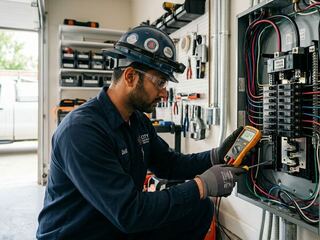
6 possible tasks · typical 5-step process
What it is
An electrical panel upgrade typically involves modifying or expanding a property's overall electrical service capacity, often shifting service ratings from lower levels, such as 60 or 100 amperes, to higher ratings like 200 amperes or more. This type of project commonly entails setting a new distribution cabinet, establishing a main service disconnect, and connecting associated grounding components. Work often involves coordinating a temporary service disconnection with the local electric utility, attaching the new enclosure, and moving existing branch circuits over to new circuit breakers. Standard panel upgrade projects typically focus on the main panel enclosure and its immediate connections, while broader modifications, such as extensive downstream branch circuit rewiring, separate subpanel additions, or dedicated appliance installations, generally fall outside a baseline upgrade scope unless separately specified.
What Panel Upgrade can include
Main Service Panel Replacement
Removing the existing fuse assembly or circuit breaker cabinet and mounting a new distribution enclosure configured with a main service disconnect mechanism.
Amperage Capacity Expansion
Updating service entrance conductors, meter sockets, and internal bus assemblies to accommodate higher utility service ratings, often moving to 200 amperes or higher depending on the project plan.
Grounding and Bonding Updates
Connecting grounding electrode conductors, installing grounding rods, and bonding available interior metallic piping systems to support the overall grounding infrastructure.
Circuit Breaker Installation
Placing new standard breakers, tandem breakers, or specialty types such as ground-fault or arc-fault units matched to the individual branch circuits being served.
Circuit Transfer and Panel Indexing
Routing existing branch wiring into the replacement cabinet, terminating wires at designated points, and compiling an updated circuit directory legend on the panel enclosure door.
Whole-Panel Surge Protection
Attaching a panel-compatible surge protective device (SPD) to the main distribution bus, designed to help reduce the impact of transient voltage spikes on connected circuits.
How the work is typically performed
- 1
Load Calculation and System Inspection
The technician assesses existing circuits, discusses planned power requirements, checks meter base conditions, and reviews physical space considerations to outline appropriate equipment specifications.
- 2
Utility Disconnection and Teardown
Service power is temporarily coordinated for shutoff with the utility provider or via an exterior disconnect, allowing the existing enclosure and older wiring connections to be dismantled.
- 3
Cabinet Mounting and Grounding Installation
The replacement cabinet or meter combination is mounted, new service conductors are positioned, and connections to the property grounding electrodes and bonding systems are established.
- 4
Circuit Wiring and Bus Bar Termination
Branch circuit cables are directed into the enclosure, neutral and equipment ground leads are terminated onto corresponding bus bars, and ungrounded conductors are landed on selected breakers.
- 5
Energization and Functional Testing
The utility re-energizes the service feed, after which standard diagnostic tests are conducted to verify line voltages, general circuit continuity, and proper mechanical breaker operation.
Common reasons customers look for this service
- Planning for additions of electrical equipment such as vehicle charging systems, heat pumps, or major appliances
- Experiencing repeated circuit breaker trips or blown fuses during standard household electrical usage
- Managing properties with older service configurations, obsolete fuse boxes, or specific discontinued panel types
- Encountering a shortage of physical space or breaker positions needed for new dedicated circuits
- Noting signs of localized wear, thermal discoloration, or unusual sounds near the distribution box
- Carrying out property renovations, building expansions, or reconfigurations of interior living spaces
About Panel Upgrade
What is the typical timeframe for power interruption during a panel upgrade?
Power interruption durations can vary depending on project complexity, existing site conditions, and utility coordination procedures. Disconnections often span several hours during the active working window while old components are removed and new connections are landed, though precise times vary by provider and local utility scheduling.
What is the difference between an electrical panel replacement and an electrical panel upgrade?
A panel replacement generally refers to swapping an existing enclosure with a new unit of similar amperage rating, often to address physical wear or obsolete components. An upgrade typically involves increasing the overall electrical capacity, which often entails changing service entrance conductors, utility connections, and meter hardware in addition to the panel itself.
How does a panel upgrade relate to issues like flickering lights?
Flickering lights can arise from several sources, including loose terminations at the main panel, utility supply fluctuations, or issues within specific downstream circuits. A panel upgrade can address panel-level connection or bus bar problems, though downstream wiring conditions or fixture-specific issues generally require independent investigation.
This page provides general information about Panel Upgrade for reference only. It is not professional, safety, medical, legal or financial advice, and it does not describe the services of any particular provider. Scope, methods and timing vary by provider and situation. Kuldesac does not perform these services; contact a qualified provider directly to discuss your specific needs.