


Aeration
Lawn aeration is a turf management service where machinery perforates soil with openings intended to help air, water, and nutrients reach grass root systems.
6 possible tasks · typical 4-step process
What it is
Aeration generally involves mechanically extracting soil cores or puncturing turf beds to address subsurface soil firmness across residential or commercial grounds. A typical service scope may encompass machine operation across designated turf zones, supplemental passes over high-traffic areas, or surface preparation for other lawn treatments. The service typically does not include mowing, power dethatching, chemical applications, topsoil delivery, or general debris clearing unless arranged as part of a broader service agreement.
What Aeration can include
Underground Obstacle Inspection and Flagging
Technicians may visually locate and mark visible surface items, such as sprinkler heads, shallow lines, valve boxes, or landscape lighting fixtures prior to operating machinery.
Core Aeration via Hollow Tine Machinery
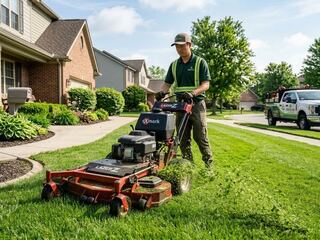
Operators often use walk-behind or ride-on equipment equipped with hollow tines to remove small plugs of soil and thatch from the ground at varying depth intervals.
Double-Pass High-Traffic Treatment
Providers can perform secondary passes across selected areas, such as walkways, play zones, or sloped areas that experience regular foot traffic.
Alternative Liquid or Spike Aeration Application
In certain soil conditions or where shallow subsurface lines exist, providers may utilize solid tines or liquid soil conditioning applications instead of hollow-tine coring.
Seedbed Preparation for Overseeding
Aeration passes can create openings in the soil surface that are intended to assist with seed-to-soil contact when overseeding services are performed.
Hardscape Clearing and Core Management
Crews may use blowers to sweep stray soil plugs and loose debris off adjacent walkways, driveways, or patios back onto the lawn surface.
How the work is typically performed
- 1
Site Evaluation and Moisture Assessment
The technician may observe soil moisture, turf variety, and site layout to determine if the ground can receive aeration equipment without excessive turf damage.
- 2
Equipment Calibration and Weight Adjustment
Tine settings, machine speed, and equipment weighting are typically adjusted to align with existing soil firmness and targeted core penetration depths.
- 3
Systematic Machine Passes
The machine is typically operated in directional rows across accessible lawn areas, aiming to provide spaced perforations throughout the designated turf.
- 4
Post-Service Debris Clearing and Walkthrough
Providers generally clear debris from adjacent hard surfaces, retrieve temporary marking flags, and review the treated turf areas.
Common reasons customers look for this service
- Heavily trodden soil from foot traffic, outdoor equipment, or recreation
- Surface water pooling or runoff observed on turf during rain or watering
- Presence of an accumulated thatch layer between turf foliage and the soil line
- Preparation of existing lawn areas in conjunction with planned overseeding
- Turf areas planted in dense or clay-heavy soils
About Aeration
What typically happens to the soil cores left on the lawn after aeration?
Plugs pulled during core aeration are commonly left on the turf surface where exposure to weather, foot traffic, and routine mowing breaks them down over time, returning soil matter back to the ground.
How is soil moisture typically managed prior to an aeration service?
Lawn aeration typically functions best when soil retains moderate moisture rather than being dry or fully saturated. Moisture preparation can vary depending on local weather, soil composition, and specific provider practices.
What is the difference between core aeration and spike aeration?
Core aeration uses hollow tines designed to physically remove plugs of soil from the ground. Spike aeration utilizes solid metal spikes to press holes into the soil without extracting material, and the chosen method often depends on turf conditions and equipment availability.
This page provides general information about Aeration for reference only. It is not professional, safety, medical, legal or financial advice, and it does not describe the services of any particular provider. Scope, methods and timing vary by provider and situation. Kuldesac does not perform these services; contact a qualified provider directly to discuss your specific needs.