


Mowing
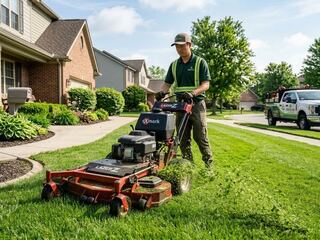
Professional mowing refers to the routine mechanical cutting of turfgrass to a uniform height, often accompanied by perimeter trimming, edge detailing along hard surfaces, and debris clearing from surrounding walkways.
6 possible tasks · typical 5-step process
What it is
Mowing provides ongoing mechanical maintenance for residential and commercial turf areas. The service is primarily intended to manage turf height, define borders between lawns and hardscapes, and maintain a consistent visual appearance across the grounds. A typical mowing visit may encompass cutting open grass areas with commercial rotary or walk-behind equipment, trimming around fences, posts, and landscape beds with string trimmers, establishing defined borders along driveways and sidewalks with vertical edgers, and blowing loose clippings off non-grass surfaces. Mowing agreements generally do not include supplemental lawn care services such as chemical weed control, core aeration, power dethatching, soil conditioning, fertilizer application, shrub pruning, or seasonal leaf clearing, which are usually handled under separate service categories.
What Mowing can include
Turfgrass Cutting
Service providers use rotary, reel, or walk-behind mowers to cut grass to a selected height based on turf variety, seasonal growth rates, and site conditions.
Perimeter String Trimming
Technicians use string trimmers to cut turf in areas inaccessible to standard mowers, including along fencing, around trees, near utility installations, and against structure foundations.
Hardscape Mechanical Edging
Crews can use mechanical vertical edgers to trim grass along the boundaries of concrete walkways, driveways, curbs, and paved borders, creating distinct separation lines.
Clipping Management
Operators may finely mulch grass clippings to distribute them across the lawn surface or collect and bag them when turf growth is particularly heavy or damp.
Directional Pattern Alternation
Providers often vary mowing patterns across recurring visits, which can assist in reducing visible wheel tracking and promote more uniform turf growth across the property.
Surface Blowdown and Cleanup
High-velocity blowers are used to clear stray clippings and fine turf debris off sidewalks, driveways, patios, and garden borders, returning the material back toward the lawn.
How the work is typically performed
- 1
Site Inspection and Debris Clearing
Crews typically walk the lawn area to identify and clear fallen branches, stones, or loose surface debris that could interfere with cutting machinery.
- 2
Edge Detailing and Border Trimming
Mechanical edgers are used along hardscape edges to establish defined borders, while string trimmers address turf around upright obstacles to match the intended cutting height.
- 3
Rotary Mower Passes
Operators navigate mowers across the lawn in overlapping passes to promote consistent coverage, with deck settings adjusted according to turf type and seasonal growth patterns.
- 4
Detail Passes and Clump Dispersal
Crews make secondary passes in areas with tight turning radii, dense turf, or excess moisture to help disperse clumped grass and achieve an even surface appearance.
- 5
Hardscape Clearing
Air blowers are used to clear residual clippings from impervious areas like patios, sidewalks, and driveways, moving loose material back onto turf areas or into collection bags.
Common reasons customers look for this service
- Active turf growth during spring and summer seasonal cycles
- Turf height exceeding preferred property or community standards
- Grass encroaching over paved areas such as curbs, sidewalks, and driveways
- Uneven blade growth affecting the visual uniformity of the lawn
- Preparation of outdoor grounds for real estate listings, gatherings, or property handovers
- Ongoing property management under regular weekly or bi-weekly maintenance arrangements
About Mowing
How is lawn cutting height typically determined?
Cutting height is generally selected based on the grass species, regional climate, and current weather conditions. For example, cool-season varieties such as fescue or bluegrass are often cut at higher settings than warm-season grasses such as Bermuda or zoysia. Providers also typically consider recent rainfall, seasonal growth rates, and sunlight exposure when setting mower deck heights.
What happens to grass clippings during a mowing service?
Clipping handling can vary based on service agreements, grass length, and weather. Many services utilize mulching mower decks that chop blades into fine pieces, leaving them on the lawn surface. In conditions involving heavy growth, excess dampness, or specific customer requests, crews may instead collect and bag clippings for off-site removal or on-site composting.
How does wet weather affect mowing services?
Wet turf and saturated soil can impact mowing equipment operation and the uniformity of the cut. Mowing during or shortly after heavy rain can sometimes lead to grass clumping or tire impressions in soft soil. For these reasons, service providers often monitor precipitation and may adjust schedules or wait until ground conditions dry adequately before proceeding.
This page provides general information about Mowing for reference only. It is not professional, safety, medical, legal or financial advice, and it does not describe the services of any particular provider. Scope, methods and timing vary by provider and situation. Kuldesac does not perform these services; contact a qualified provider directly to discuss your specific needs.