


General Pest Treatment
General pest treatment is a professional maintenance service designed to inspect, manage, and deter common crawling insects and spiders around indoor spaces and exterior perimeters.
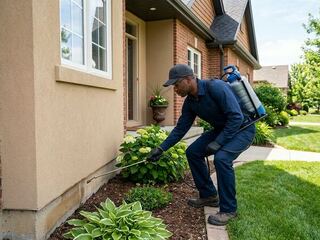
6 possible tasks · typical 5-step process
What it is
General pest treatment involves applying targeted physical and chemical barriers around a property to suppress common baseline insects, such as ants, spiders, crickets, and cockroaches. A typical scope can involve exterior perimeter treatments, targeted interior crack-and-crevice applications, exterior de-webbing, and inspection of building entry points. General services do not typically encompass specialized pest categories such as subterranean termites, bed bugs, active rodent infestations, wood-destroying beetles, or wildlife trapping, which generally require separate protocols.
What General Pest Treatment can include
Exterior Perimeter Barrier Application
Technicians apply liquid residual barriers around the exterior foundation wall and adjacent ground designed to intercept crawling insects near the building exterior.
Eave and Overhang De-Webbing
Technicians can brush and sweep exterior eaves, soffits, window frames, and porch ceilings to remove spider webs, egg cases, and visible insect debris.
Interior Baseboard and Crevice Treatment
Service providers may apply targeted crack-and-crevice products along baseboard seams, expansion joints, and utility penetrations where insects may travel.
Wall Void and Penetration Dusting
Application can involve introducing insecticidal dust into hollow wall voids, weep holes, or utility openings to address potential harborage zones.
Exterior Granular Baiting
Granular baits may be dispersed across perimeter landscaping, mulch beds, and turf margins to target foraging outdoor pests such as ants, crickets, or perimeter roaches.
Kitchen and Bathroom Gel Baiting
Technicians often place targeted gel baits in concealed areas, such as behind appliances and near plumbing access points, to address moisture-seeking pests.
How the work is typically performed
- 1
Site Inspection and Identification
A technician typically inspects accessible interior and exterior areas to identify visible insect activity, potential harborage areas, and structural gaps.
- 2
Targeted Interior Application
Service providers may introduce gel baits, dusts, or localized applications into wall voids, plumbing chases, and other common insect transit areas.
- 3
Perimeter Barrier and Eave Clearing
Work often involves brushing webs from exterior overhangs and applying liquid barrier products along the foundation base, door thresholds, and window margins.
- 4
Buffer Zone Granulation
Technicians may distribute granular formulations throughout mulch beds, groundcover, and exterior landscaping margins to help manage perimeter populations.
- 5
Post-Service Reporting and Exclusion Guidance
The provider generally outlines the areas treated, notes observed pest conditions, and may document physical entry points such as gaps or worn weatherstripping.
Common reasons customers look for this service
- Observations of crawling insects or spiders within living areas
- Changes in seasonal pest movement around exterior walls
- Accumulation of spider webs along exterior overhangs or entry points
- Property transitions, such as moving into a new residence
- Presence of insect residue or shed skins in basements, attics, or utility closets
- Exterior landscaping or mulch beds resting directly against foundation surfaces
About General Pest Treatment
What does re-entry timing typically involve after an interior treatment?
Re-entry intervals can depend on the specific products used and the treatment method. While exterior-only applications generally do not affect indoor access, providers often specify waiting periods for interior liquid or aerosol applications until treated surfaces have completely dried. Guidance depends on the provider and the product labeling.
Does a general pest treatment typically include termites or bed bugs?
General pest treatments are usually intended for surface-dwelling crawling insects such as ants, crickets, spiders, and common roaches. Pests like subterranean termites, bed bugs, and wood-destroying organisms typically require specialized inspection techniques, dedicated treatment methodologies, and distinct products.
Why can pest activity sometimes appear to increase after a treatment?
Certain formulations can act as flushing agents that disturb insects within concealed nesting spots, such as wall cavities or void spaces. This movement can lead to a temporary increase in visible insect activity as pests encounter treated zones before local numbers decrease.
This page provides general information about General Pest Treatment for reference only. It is not professional, safety, medical, legal or financial advice, and it does not describe the services of any particular provider. Scope, methods and timing vary by provider and situation. Kuldesac does not perform these services; contact a qualified provider directly to discuss your specific needs.