


Septic Tank Pumping
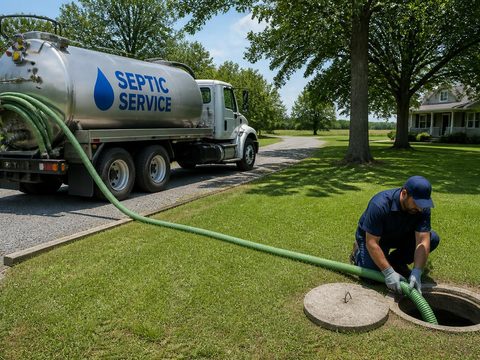
Septic tank pumping involves the extraction of accumulated solids, semi-solids, and liquid waste from an onsite wastewater containment tank using specialized vacuum equipment to manage liquid holding volume.
7 possible tasks · typical 4-step process
What it is
Septic tank pumping typically refers to the mechanical extraction of wastewater, floating scum, and settled sludge layers from an onsite septic vessel using vacuum equipment. Standard service scopes can involve uncovering tank access ports, agitating settled solids to facilitate pumping, drawing out materials from accessible compartments, and transporting the pumped waste off-site. The procedure generally focuses on waste extraction and does not routinely encompass soil absorption system repairs, component replacements, hydro-jetting of conveyance pipes, or major structural tank remediation.
What Septic Tank Pumping can include
Access Lid Excavation and Opening
Locating, uncovering, and exposing primary and secondary tank access ports or riser covers to provide entry into the tank compartments.
Scum and Liquid Evacuation
Using vacuum hoses to draw out the upper layers of floating matter, grease, and liquid wastewater located within the chamber.
Sludge Agitation and Liquefaction
Stirring or using water flow to blend settled particulate matter on the bottom of the tank into a pumpable slurry.
Dual-Compartment Waste Extraction
Extracting liquid and particulate content from both primary and secondary chambers when multi-compartment configurations are present.
Effluent Filter Washing
Removing and rinsing the outlet baffle filter, when installed, to clear accumulated debris prior to reinstallation.
Visual Structural Assessment
Observing interior surfaces, baffles, tees, and general tank conditions to note visible wear, structural shifts, or surface irregularities.
Waste Transport and Disposal
Transferring collected septage in a vacuum truck tank for transport to a designated regional wastewater processing location.
How the work is typically performed
- 1
Access and Level Verification
Service providers position equipment near the tank area, open access covers, and observe the visible liquid depth relative to the inlet and outlet pipes.
- 2
Mechanical Sludge Agitation
Suction hoses or blending devices may be introduced to mix floating surface crusts and lower settled layers into a liquid mixture suitable for pumping.
- 3
Complete Vacuum Evacuation
Vacuum suction is applied to draw out waste materials from the reachable sections and compartments of the septic vessel.
- 4
Inspection, Cleaning, and Closure
Technicians may rinse interior accessible areas, spray the effluent filter if present, observe visible internal components, and replace or resecure the access lids.
Common reasons customers look for this service
- Scheduled service intervals based on property occupancy and tank specifications
- Observation of slower drainage across household plumbing fixtures
- Unusual sounds or gurgling noticed within interior plumbing lines
- Odors present near plumbing vents, drains, or outdoor tank locations
- Surface dampness, pooling liquid, or altered ground conditions near the tank area
- Wastewater backing up into lower-level interior drains or plumbing appliances
About Septic Tank Pumping
What factors influence how often septic tanks are pumped?
Intervals between pumping services can vary based on the size of the holding tank, daily wastewater volume, household occupancy levels, and the volume of solids introduced into the system. Service timing often depends on how quickly solids accumulate relative to tank capacity.
What is the difference between septic tank pumping and septic cleaning?
Septic tank pumping generally focuses on vacuuming out the floating scum, liquid effluent, and loose sludge layers to free up holding capacity. Septic cleaning typically involves additional mechanical scrubbing or pressurized washing to dislodge compacted material from the walls and base of the vessel.
How can weather conditions affect septic tank pumping services?
Pumping operations can often take place under varying weather conditions, though rain, snow, or frozen ground may affect site access and lid excavation. If access points are buried under frozen soil or surface water accumulates near the opening, providers may use different procedures or equipment to access the tank.
This page provides general information about Septic Tank Pumping for reference only. It is not professional, safety, medical, legal or financial advice, and it does not describe the services of any particular provider. Scope, methods and timing vary by provider and situation. Kuldesac does not perform these services; contact a qualified provider directly to discuss your specific needs.