


Mosquito Treatment
Professional mosquito treatment involves managing insect activity on outdoor properties through targeted barrier applications, larvicides, and breeding site source reduction.
6 possible tasks · typical 4-step process
What it is
Mosquito treatment is an exterior pest management service intended to address mosquito populations across lawns, landscape vegetation, and standing water areas. Service providers typically evaluate outdoor grounds, apply residual treatments to common harborage zones, and introduce biological controls to stagnant water features where larvae may develop. This service generally focuses on adult mosquito activity and developing larvae, rather than complete elimination, agricultural pest management, or indoor structural pest control.
What Mosquito Treatment can include
Site Inspection and Harborage Mapping
This step can involve assessing property perimeters to identify adult resting zones, shaded areas, standing water reservoirs, and sensitive locations such as edible plants or flowering beds.
Foliage Residual Barrier Treatment
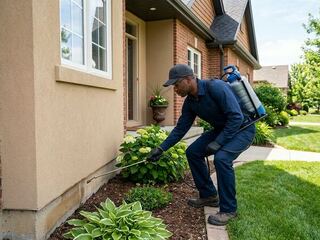
Service providers may apply adulticides or microencapsulated products to the undersides of leaves, dense shrubbery, groundcover, and tall grasses using backpack misting equipment.
Standing Water Larvicide Application
This component may include introducing biological growth regulators or microbial agents, such as Bacillus thuringiensis israelensis (Bti), into retention areas, drainage ditches, or catch basins to target mosquito larvae.
Source Reduction and Mechanical Clearing
Work can include identifying and tipping artificial water-holding containers, addressing minor debris in surface drains, and noting property features that retain stagnant moisture.
Structural Shaded Zone Treatment
Providers may treat shaded or sheltered structural locations, such as crawlspace vents, the undersides of elevated decks, outdoor stairwells, or roof overhangs where insects often rest.
Specialized Trap and Monitoring Deployment
This service can include the placement of self-contained oviposition devices or adult capture traps in perimeter areas where mist applications are not utilized.
How the work is typically performed
- 1
Property Assessment
The service provider typically evaluates the exterior boundary to observe common resting zones, moisture collection points, drainage patterns, and areas containing non-target flowering plants.
- 2
Water Treatment and Source Elimination
Providers may empty temporary standing water sources and apply larvicide rings, granules, or surface applications to water reservoirs that cannot be drained.
- 3
Barrier Mist Application
Using specialized misting equipment, technicians generally treat perimeter foliage, brush lines, and structural shade zones with residual formulations designed to adhere to plant surfaces.
- 4
Post-Service Inspection and Guidance
The provider typically reviews treated areas, monitors for off-target drift, and shares informational notes regarding product drying intervals and recurring water accumulation zones on the property.
Common reasons customers look for this service
- Observed mosquito activity around outdoor seating areas or landscape perimeters
- Upcoming outdoor events, gatherings, or seasonal patio use
- Properties located adjacent to standing water bodies, wetlands, or heavily wooded parcels
- Yards with slow-draining areas, recurring puddles, or low-lying landscape contours
- Desire for professional landscape applications alongside standard yard maintenance
About Mosquito Treatment
What is the typical duration of a barrier treatment application?
Residual barrier treatments often last between three and four weeks, though performance can vary based on sunlight exposure, temperature, and local rainfall levels. Service intervals vary by provider and local climate conditions.
What does the drying process involve for barrier sprays?
Liquid applications typically dry over a period ranging from 30 minutes to several hours, depending on relative humidity, temperature, and wind conditions. Providers generally provide product-specific information regarding the drying process.
How do treatment methods address non-target areas and beneficial insects?
Technicians typically direct applications toward shaded foliage, dense brush, and low groundcover where adult mosquitoes shelter, rather than blooming vegetation. Treatment protocols often exclude flowering ornamental plants, vegetable gardens, and active apiaries to limit contact with foraging pollinator species.
This page provides general information about Mosquito Treatment for reference only. It is not professional, safety, medical, legal or financial advice, and it does not describe the services of any particular provider. Scope, methods and timing vary by provider and situation. Kuldesac does not perform these services; contact a qualified provider directly to discuss your specific needs.