


Local Moving
Local moving involves the structured handling, loading, vehicular transit, and unloading of household items, furnishings, and boxed personal property between locations situated in a shared geographic region.
6 possible tasks · typical 5-step process
What it is
Local moving generally encompasses the physical conveyance and positioning of domestic or commercial property items between sites within a defined geographic territory. Typical service arrangements can incorporate lifting substantial objects, wrapping furnishings in protective fabric coverings, and utilizing dedicated cargo transport vehicles. Certain activities, such as relocating specialized materials, disposing of surplus goods, making modifications to structural entryways, or arranging extended freight logistics, are commonly excluded from base service agreements. The exact configuration of equipment, vehicle size, and personnel count tends to vary depending on property access factors, moving company practices, and the overall volume of inventory involved in the relocation.
What Local Moving can include
Furniture Disassembly and Reassembly
Moving teams can take apart common modular furniture, bed frames, and dining tables prior to transport, reassembling those same items after arrival at the destination site.
Protective Padding and Wrapping
Teams often cover furnishings with fabric moving blankets and plastic wrap, which can assist in cushioning exterior finishes and upholstery against friction throughout the transit process.
Property Protection Setup
Crews can place temporary floor coverings, doorway wraps, and railing cushions, which can help reduce surface marks along interior hallways during the item relocation process.
Truck Loading and Cargo Securing
Household items are placed into the transport vehicle and stabilized with interior straps or ties, a method intended to limit unintended movement while the vehicle navigates roads.
Safe Local Transit
Drivers navigate transport vehicles along surface roads between origin and destination addresses, addressing common driving logistics, staging areas, and site parking access.
Room-by-Room Unloading and Placement
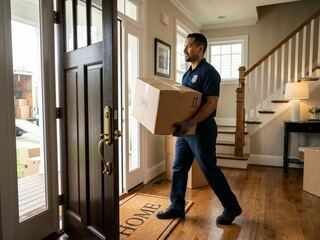
Relocation workers carry boxes and furniture directly into specified rooms according to inventory labels or owner directions, rather than leaving items in a central entryway.
How the work is typically performed
- 1
Initial Walkthrough and Site Protection
The moving crew typically reviews the layout of the property, identifies pathways for transporting large furnishings, and sets up surface shields along entry points, walls, and flooring.
- 2
Item Preparation and Disassembly
Crew members dismantle designated multi-part furnishings, pack loose hardware separately, and apply fabric pads to large goods to simplify transit through doorways and stairwells.
- 3
Systematic Truck Loading
Workers load items into the transit vehicle, frequently placing denser furnishings and appliances at the base before stacking lighter containers and securing rows using logistics straps.
- 4
Transport to New Location
The vehicle proceeds between the origin and arrival properties along area roadways, with the driver managing arrival positioning, vehicle clearance, and parking arrangements.
- 5
Unloading, Reassembly, and Inspection
Personnel unload items into designated interior living spaces, put disassembled furniture back together, retrieve moving blankets or equipment, and review placement before concluding the appointment.
Common reasons customers look for this service
- Transitioning between residences such as single-family houses, apartments, or townhomes located within the same general area
- Transferring boxed inventory, personal goods, or furniture sets into or out of nearby storage facilities
- Moving substantial or awkwardly sized furniture pieces that do not fit into private passenger automobiles
- Shifting household contents between properties during a regional move, downsizing, or home expansion
- Coordinating the transport of belongings between lease transitions or property transactions across a shared community
About Local Moving
What differentiates a local move from a long-distance relocation?
Local moving typically occurs across a nearby community or defined regional radius, with operations planned around direct point-to-point transit. In contrast, long-distance moving covers wider intercity or interstate territories, which can involve coordinated regional hubs, separate logistical phases, and variable scheduling.
What is typically involved with major appliance relocation during a local move?
Moving providers generally handle the physical lifting, transport, and basic positioning of heavy appliances like clothes washers or refrigerators. Work involving the disconnection or reconnection of utility supply lines, such as water valves, gas fixtures, or electrical wiring, is often handled separately outside of standard moving services.
How are delicate or breakable items managed during a local move?
Delicate belongings are commonly protected with packing paper, cellular bubble material, or padded wrapping and placed into partitioned or reinforced boxes. Inside the transport vehicle, these containers are typically positioned in upper tiers or partitioned bays away from heavier items and secured against shifting.
This page provides general information about Local Moving for reference only. It is not professional, safety, medical, legal or financial advice, and it does not describe the services of any particular provider. Scope, methods and timing vary by provider and situation. Kuldesac does not perform these services; contact a qualified provider directly to discuss your specific needs.